Sisilia Frederika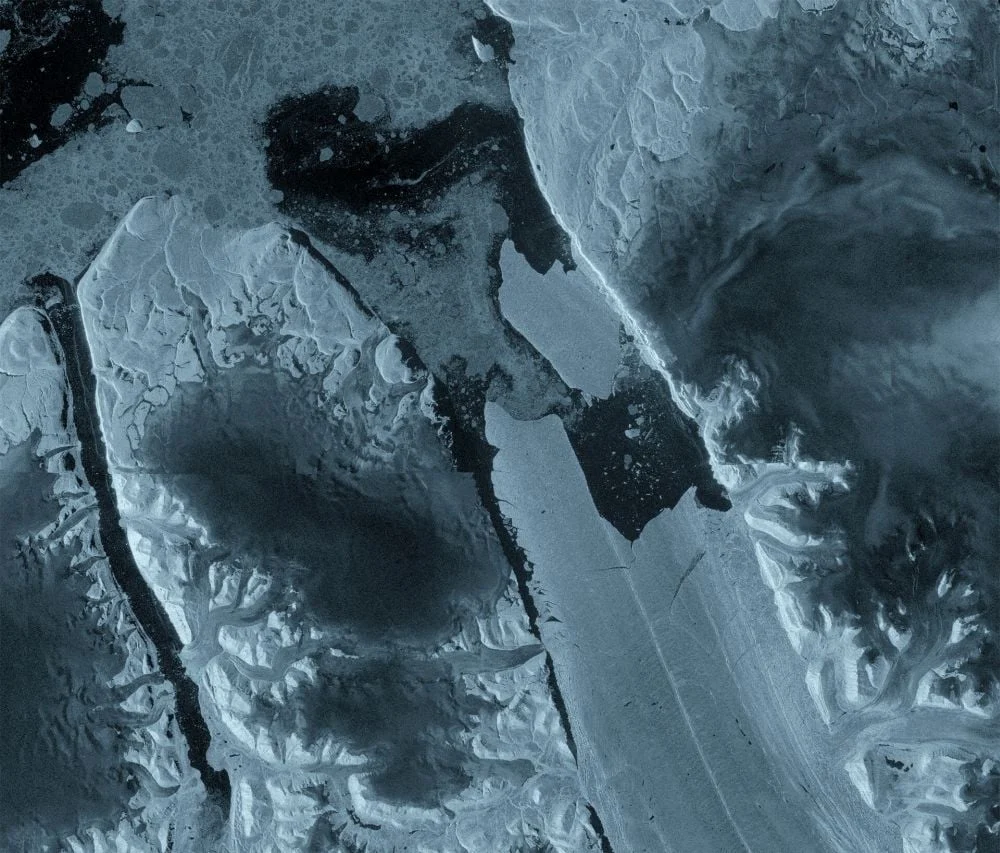
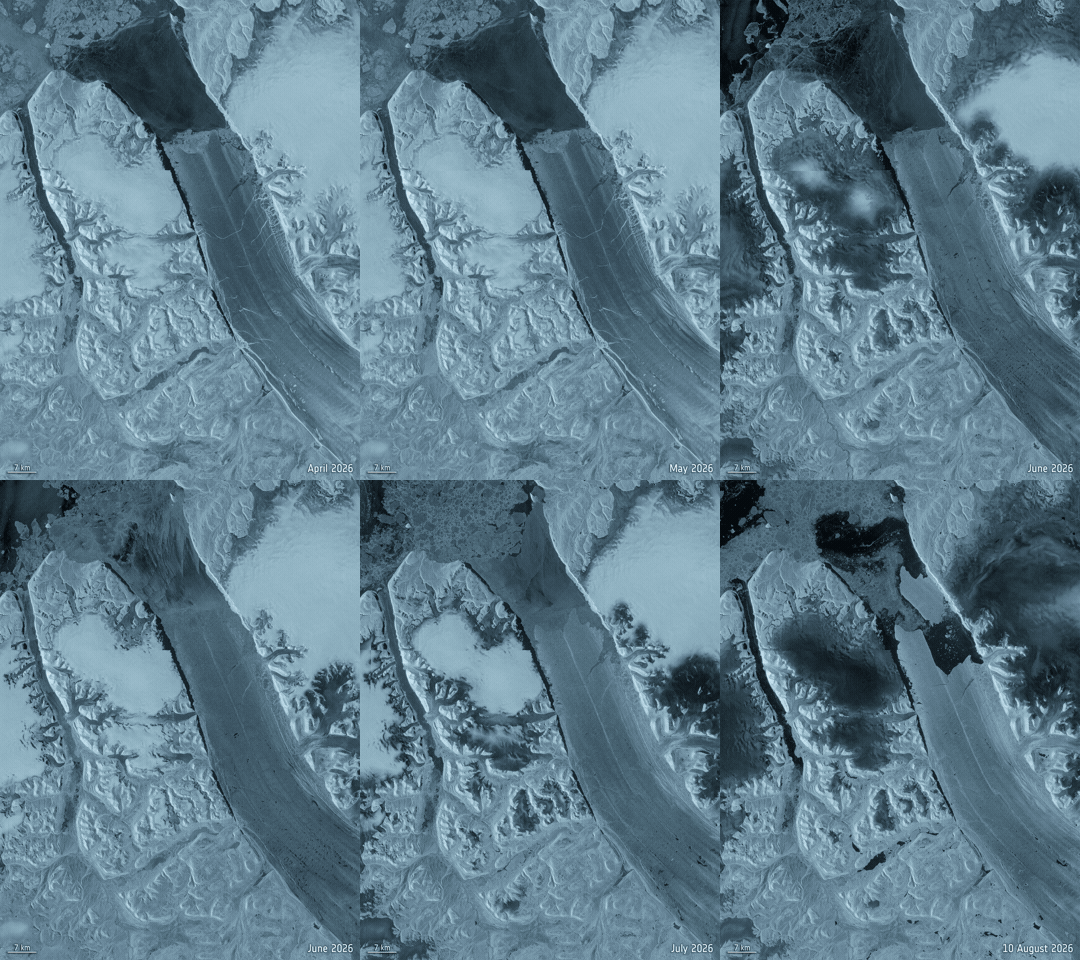
The Petermann Glacier, a critical marine-terminating glacier located in northwest Greenland, has undergone a significant transformation following a major calving event in early August that saw a 76-square-kilometer chunk of ice detach from its floating tongue. Data captured by the European Space Agency’s (ESA) Copernicus Sentinel-1 satellite mission confirmed the separation, marking the glacier’s largest loss of floating ice since 2012 and the most substantial calving event recorded in the Arctic region since 2020. This development has sparked renewed concern among glaciologists and climate scientists regarding the stability of Greenland’s ice sheet and the accelerating pace of ice discharge into the global oceans.
The Petermann Glacier is one of the few remaining glaciers in Greenland with a substantial floating ice tongue, a feature that extends from the grounded ice on land out into the deep waters of a fjord. For decades, this tongue has acted as a structural "plug," providing back-pressure that slows the seaward flow of the interior glacier. With the loss of this 76-square-kilometer section, scientists anticipate a reduction in this buttressing effect, which will likely lead to an acceleration of the glacier’s flow across the grounding line—the point where the ice transitions from resting on the bedrock to floating on the sea.
Technological Surveillance and the Copernicus Sentinel-1 Mission
The detection of this calving event was made possible through the systematic monitoring provided by the Copernicus Sentinel-1 satellite constellation. Operating from a near-polar orbit approximately 700 kilometers above the Earth’s surface, these satellites are equipped with advanced C-band Synthetic Aperture Radar (SAR) technology. Unlike optical satellites, which require sunlight and clear skies to capture images, radar sensors can penetrate cloud cover and operate during the months-long darkness of the polar winter. This "all-weather, day-and-night" capability is essential for tracking rapid changes in the cryosphere, where visibility is frequently obstructed by extreme weather and seasonal light cycles.
Since 2019, the ESA has maintained a specific monitoring campaign focused on the Petermann Glacier. By utilizing radar interferometry—a technique that involves comparing multiple radar images of the same location taken at different times—researchers can detect minute deformations and fractures in the ice surface. This high-frequency data allowed scientists to observe the propagation of cracks in the Petermann ice tongue in near-real time.
Molly Hammond, a doctoral researcher at the University of Leeds who processed the Sentinel-1 data, emphasized the importance of this high-temporal resolution. She noted that the changes leading up to the calving event occurred with remarkable speed. The ability to monitor crack propagation with one-day repeat synthetic aperture data provided an unprecedented look at the mechanical failures that precede the birth of a massive iceberg.
The Mechanics of Calving and the Grounding Line
To understand the gravity of the August calving event, it is necessary to examine the physical relationship between the glacier and the ocean. The Petermann Glacier functions as a drainage channel for the Greenland Ice Sheet, moving ice from high-elevation accumulation zones toward the Nares Strait. The "grounding line" is the most sensitive region of this system. When a glacier is "grounded," its friction against the bedrock slows its movement. Once the ice crosses the grounding line and begins to float, it forms an ice tongue.
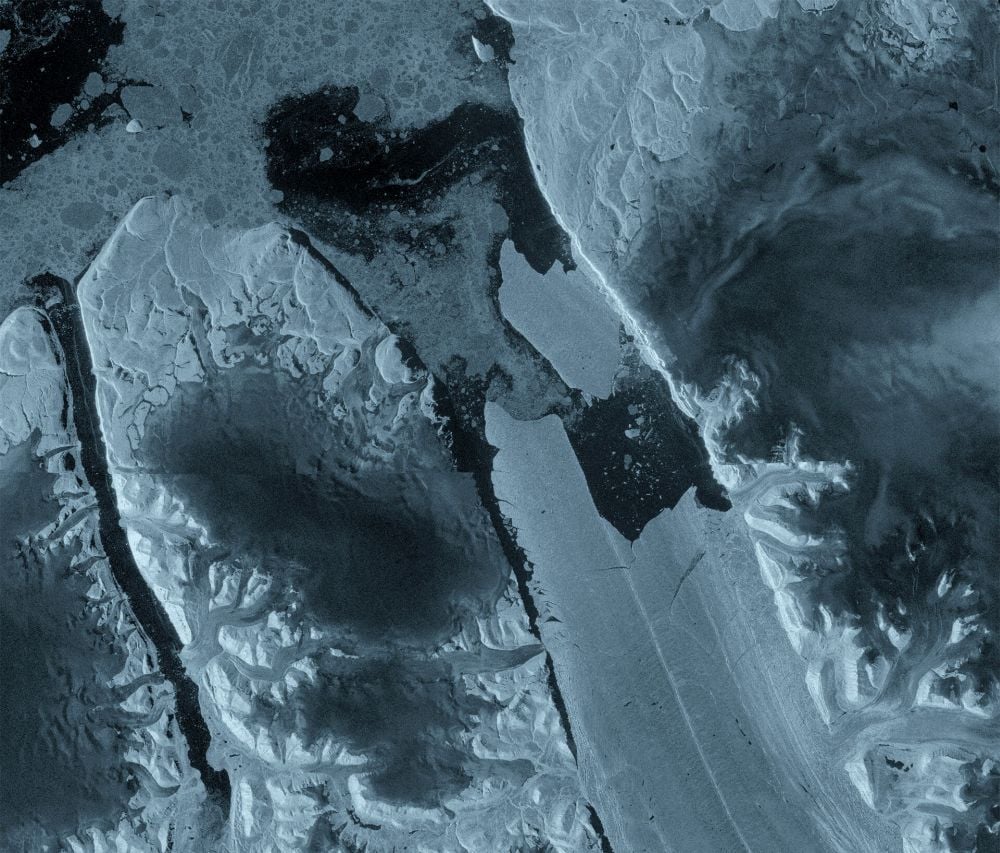
The 70-kilometer-long floating tongue of the Petermann Glacier has historically provided significant resistance against the ice stream behind it. However, as the tongue shortens through calving events, the "back-stress" is diminished. This allows the grounded portion of the glacier to slide more rapidly into the ocean. The faster the ice moves across the grounding line, the more the glacier thins, and the more global sea levels rise.
The 76-square-kilometer iceberg that has now detached is a "tabular iceberg," characterized by its flat top and steep sides. Estimated to be up to 150 meters (500 feet) thick, this massive block of ice represents a significant volume of freshwater. While it may temporarily run aground in the shallow waters of the fjord or the Nares Strait, it is expected to eventually drift south into warmer Atlantic waters, where it will fracture and melt.
Historical Context and a Timeline of Retreat
The recent event at Petermann is part of a broader, decades-long trend of instability. While the glacier’s floating tongue had remained relatively stable for the last decade, punctuated only by minor calving, its history suggests a trajectory of significant retreat:
- 2010: A massive calving event saw a 250-square-kilometer iceberg—roughly four times the size of Manhattan—break away from the Petermann Glacier. This was one of the largest calving events ever recorded in the Northern Hemisphere.
- 2012: Only two years later, another 130-square-kilometer chunk detached, further reducing the length of the ice tongue.
- 2012–2023: A period of relative stability followed, though scientists noted the gradual thinning of the ice tongue from beneath due to the influx of warm ocean currents.
- August 2024: The current 76-square-kilometer calving event occurs, signaling that the period of relative dormancy has ended.
The 2024 event is particularly notable when compared to other Arctic glaciers. It represents the most significant loss of ice in the region since the 2020 breakup of the Nioghalvfjerdsfjorden (79N) Glacier in Northeast Greenland. These events collectively underscore a shift in the Arctic environment, where large-scale structural failures of ice shelves and tongues are becoming more frequent.
Scientific Perspectives and Future Risks
The scientific community views the Petermann calving as both a warning and a unique research opportunity. Martin Wearing, a Digital Twin Earth Scientist at the ESA’s Centre for Earth Observation, highlighted the rarity of such large tabular icebergs in the Arctic. He noted that the event provides a "unique opportunity to study how such a vast ice mass drifts, evolves, and eventually breaks apart." Tracking the lifecycle of this iceberg will yield data on ocean currents, melting rates, and the mechanical properties of aged glacial ice.
Furthermore, the iceberg poses potential logistical challenges. As it drifts south toward the North Atlantic, it will be monitored closely to ensure it does not enter busy shipping lanes. Large icebergs can remain a hazard for years as they fragment into smaller "bergy bits" and "growlers," which are harder to detect via traditional ship radar but remain dense enough to damage maritime vessels.
Perhaps more concerning is the evidence of future instability. Satellite imagery has already identified two additional large cracks further upstream on the Petermann Glacier. These fractures define two more potential icebergs, measuring approximately 97 and 87 square kilometers, respectively. If these sections break away in the near future, the Petermann Glacier’s floating tongue will be reduced to its shortest extent in recorded history, potentially leading to an unprecedented acceleration of the glacier’s land-based ice into the sea.
The Broader Impact of a Warming Arctic
The calving at Petermann Glacier is a visible symptom of the systemic warming of the Greenland Ice Sheet. For a glacier to remain in "mass balance," the amount of snow falling at high elevations must equal the amount of ice lost through melting and calving at the coast. Currently, this balance is heavily skewed toward loss.
Evidence of this imbalance has become increasingly stark. In 2021, for the first time since records began in 1989, rain was observed at the "Summit Station," the highest point on the Greenland Ice Sheet. This shift from snow to rain at high altitudes reduces the "input" side of the glacial equation while simultaneously darkening the ice surface, causing it to absorb more solar radiation and melt faster.
The historical data provided by satellite observations since the late 1990s confirms this trend. A landmark 1997 study published in the Journal of Climate utilized early satellite data to show a 4.4% annual increase in Greenland’s melt area between 1979 and 1991. By 2000, research published in Science demonstrated that ice at elevations below 2,000 meters was thinning rapidly. A subsequent 2006 study revealed that the mass deficit of the Greenland Ice Sheet had doubled in a decade, jumping from 90 to 220 cubic kilometers of ice lost per year.
Today, the consensus among scientists is that the Greenland Ice Sheet is losing approximately 270 to 280 billion tons of ice annually. The calving of the Petermann Glacier is a localized manifestation of this global phenomenon. As the Arctic warms at nearly four times the global average rate, the structural integrity of these ancient ice formations is being compromised by both warming atmospheric temperatures and "basal melting" caused by warming subsurface ocean waters.
Conclusion
The 76-square-kilometer calving event at Petermann Glacier serves as a definitive indicator of the rapid changes occurring within the Arctic cryosphere. While the immediate result is a massive new iceberg drifting in the Nares Strait, the long-term consequence is the further destabilization of one of Greenland’s most important glacial outlets.
As satellite missions like Sentinel-1 continue to provide systematic, long-term observations, they deliver more than just data; they provide a visual and empirical record of a planet in transition. The conclusion drawn from decades of satellite monitoring and field research is clear: the polar landscape is being fundamentally altered. The loss of ice at the Petermann Glacier is not an isolated incident, but a precursor to a future where the acceleration of glacial discharge becomes a primary driver of global environmental change. Scientists will continue to watch the remaining cracks on Petermann, knowing that the next major calving event is likely not a matter of "if," but "when."