Sisilia Frederika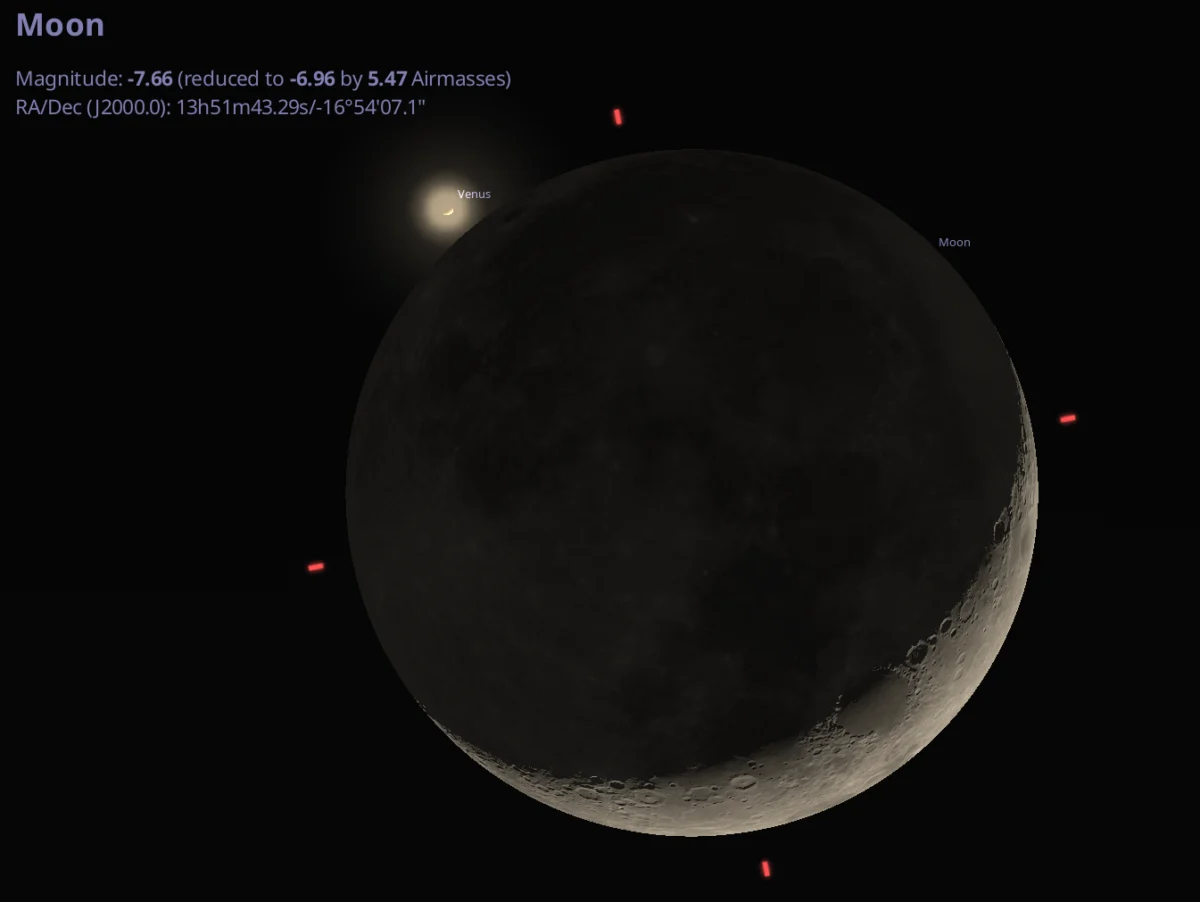
The month of September 2026 is set to provide a remarkable series of celestial displays as the Moon prepares for a highly active period along the ecliptic, featuring a sequence of occultations involving two major planets, two first-magnitude stars, and a prominent open star cluster. Following the conclusion of the August eclipse season, the lunar cycle in September will serve as a prelude to the Full Harvest Moon on September 26, offering astronomers and amateur observers alike a rare opportunity to witness the Moon passing directly in front of significant celestial bodies. These events, known as occultations, occur when a foreground object—in this case, the Moon—temporarily obscures a more distant object from the perspective of an observer on Earth. While the term may sound esoteric, the phenomenon provides a unique, split-second window into the mechanics of the solar system, allowing for precise measurements of lunar topography and the refinement of orbital calculations.
The Mechanics of Lunar Occultations
An occultation is fundamentally an alignment of three celestial bodies in space. Because the Moon subtends an angle of approximately half a degree in the sky, its monthly transit across the celestial sphere frequently brings it into the path of stars and planets that lie near the ecliptic plane. The ecliptic is the apparent path of the Sun across the sky, which also serves as the approximate plane for most planetary orbits. As the Moon bobs above and below this plane during its 27.3-day sidereal orbit, it creates a "path of occultation" across the Earth’s surface.
For observers located within the specific path of an occultation, the event begins with "ingress," the moment the background object disappears behind the leading limb of the Moon, and ends with "egress," its reappearance on the opposite side. During the waxing phases of the Moon, the dark, unlit limb leads the way, often causing stars to vanish instantaneously—a visual testament to the Moon’s lack of a substantial atmosphere. Conversely, during the waning phases, the dark limb follows, meaning objects suddenly pop into view from behind the lunar shadow.
Chronology of September 2026 Celestial Events
The month’s astronomical calendar is densely packed, with events distributed across various geographic regions. The following timeline outlines the primary occultations and lunar milestones expected throughout September.
September 8: The Occultation of Jupiter
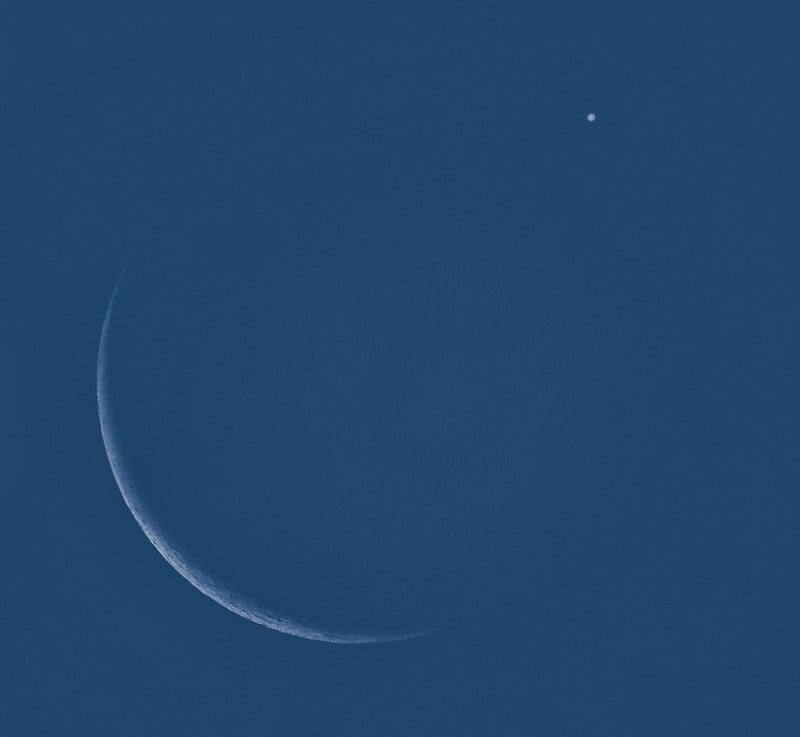
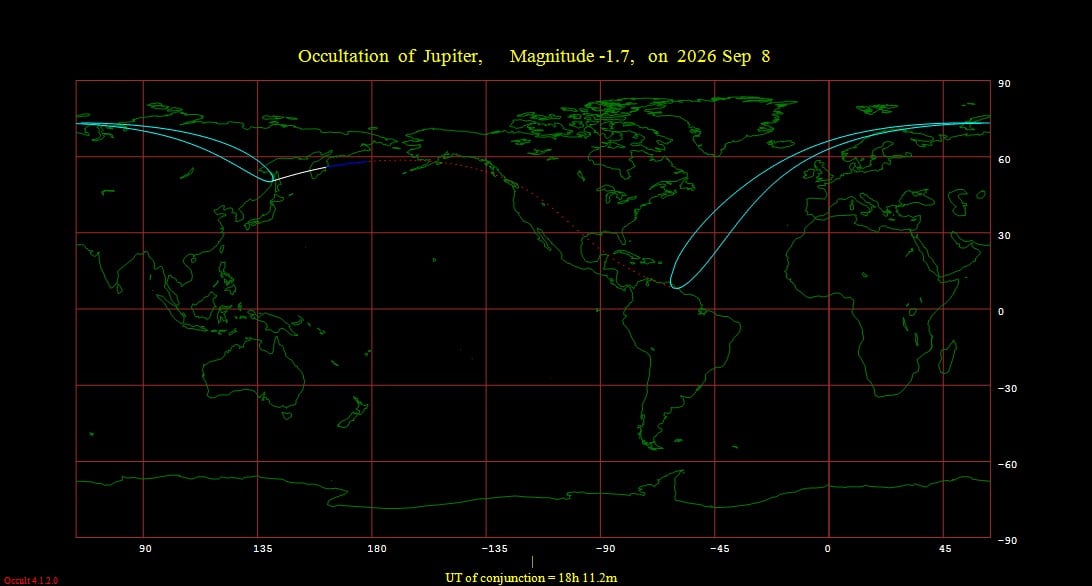
The first major event occurs on September 8, when a waning crescent Moon, illuminated at approximately seven percent, passes in front of Jupiter. This event is of particular interest to the scientific community due to the sheer size of the Jovian system. Jupiter, shining at magnitude -1.8, will take just over a minute to be fully obscured by the lunar limb.
Geographically, the event is split between night and day. Observers in Northeastern Asia will witness the occultation during the predawn hours, providing high-contrast views of the gas giant against the dark lunar limb. In contrast, eastern North America will experience the event during the daytime, shortly after sunrise. While observing a planet during the day requires specialized equipment or steady binoculars, the proximity of the Moon provides a crucial reference point for locating Jupiter in the washed-out blue sky. Astronomers note that this event serves as a penultimate rehearsal for a more widely visible occultation of Jupiter scheduled for the contiguous United States on October 6, 2026.
September 9: Regulus and the Leo Alignment
Immediately following the Jupiter event, the Moon will shift toward the constellation Leo. On September 9, a razor-thin waning crescent Moon, only two percent illuminated, will occult Regulus (Alpha Leonis), a first-magnitude star. This event is geographically restricted to the South Pacific, with the best viewing conditions centered over New Caledonia. Regulus is one of the few bright stars that lie close enough to the ecliptic to be occulted by the Moon. We are currently in the midst of a multi-year cycle of Regulus occultations, a sequence that is projected to conclude on December 27, 2026.
September 14: The Venusian Encounter
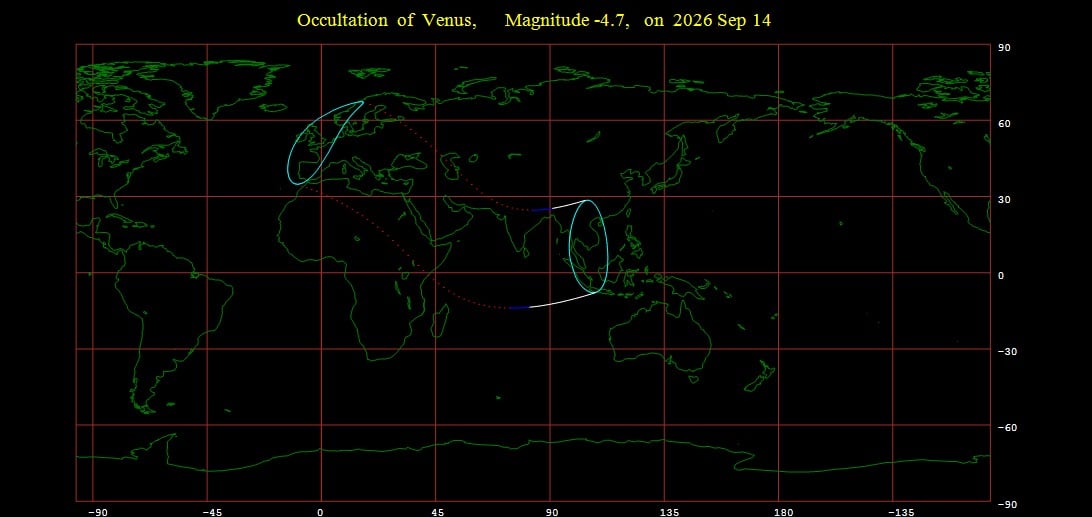
Mid-month brings one of the most visually stunning events: the occultation of Venus. On September 14, a 12 percent waxing crescent Moon will cover Venus for observers in Southeast Asia at dusk. For those in Europe, the United Kingdom, Northeast Africa, and the Middle East, the event will occur during the day.
Venus is currently at a brilliant magnitude of -4.7, making it the brightest object in the sky after the Sun and Moon. At the time of the occultation, Venus will appear as a 29 percent illuminated crescent disk. This creates a unique "double crescent" effect. Observers using telescopes may see the "horns" of the Venusian crescent disappear incrementally behind the lunar edge, a process that will take approximately 60 seconds.
September 17: Antares in the Southern Indian Ocean
On September 17, the 38 percent waxing crescent Moon will occult the red supergiant Antares. This event is primarily visible from the Southern Indian Ocean. Antares, known as the "Heart of the Scorpion," is a distinctively red star, and its disappearance behind the Moon provides a stark color contrast that is highly prized by astrophotographers.
September 26: The Full Harvest Moon
The Moon reaches its full phase on September 26. In the Northern Hemisphere, this is designated as the Harvest Moon, the full moon closest to the autumnal equinox. Historically, the Harvest Moon allowed farmers to continue working late into the night due to the "Harvest Moon Effect," where the Moon rises only 20 to 30 minutes later each night rather than the usual 50 minutes, providing several consecutive evenings of strong moonlight shortly after sunset.
September 30: The Pleiades (M45) Occultation
The month concludes with a second occultation of the Pleiades star cluster on September 30. A waning gibbous Moon, 80 percent illuminated, will plow through the "Seven Sisters" cluster. This event will be visible across Northern Europe. Because the Pleiades is a broad cluster, the Moon will occult several stars in succession over the course of an hour, providing a dynamic display of orbital motion.
Supporting Data and Observational Analysis
The frequency of these events in 2026 is tied to the 18.6-year lunar nodal cycle. During certain periods of this cycle, the Moon’s path reaches its maximum northern and southern deviations from the ecliptic, a period often referred to as a "Major Lunar Standstill." During these "hilly years," the Moon is more likely to encounter clusters like the Pleiades, which sit slightly off the main ecliptic path.
Data from the International Occultation Timing Association (IOTA) emphasizes the importance of precise location-based timing. Because the Moon is relatively close to Earth, parallax causes the path of an occultation to shift significantly based on the observer’s latitude and longitude. An event that is a "total occultation" in one city might be a "grazing occultation"—where the star or planet skims along the lunar mountains—just a few dozen miles away.
Scientific and Educational Significance
While amateur astronomers view these events for their aesthetic beauty, professional organizations utilize occultations for high-precision science. The timing of a star’s disappearance can be used to map the lunar profile with incredible accuracy. By comparing the observed time of disappearance with predicted times based on a smooth sphere, scientists can measure the height of lunar mountains and the depth of craters at the Moon’s limb.
Furthermore, planetary occultations allow researchers to study planetary atmospheres. As a planet like Jupiter or Venus disappears, its light passes through the uppermost layers of its own atmosphere and then the vacuum of space before being blocked by the Moon. This can provide data on the atmospheric pressure and temperature gradients of the occulted planet.
Educational institutions are expected to use the September 14 Venus occultation as a primary teaching tool. "The ability to see a planet in broad daylight using the Moon as a guide is a powerful pedagogical moment," notes an inferred statement from astronomical educators. "It demystifies the mechanics of the solar system and brings the scale of our local neighborhood into sharp focus."
Broader Impact and Global Participation
The global nature of these events ensures that almost every continent has a "front-row seat" to at least one major celestial occurrence this month. The rise of digital planetarium software, such as Stellarium and mobile sky-mapping apps, has democratized access to this data, allowing individuals to simulate the events from their specific GPS coordinates.
The International Occultation Timing Association (IOTA) continues to encourage citizen science participation. By recording these events with GPS-time-stamped video, amateur observers contribute to a global database that helps refine the orbital elements of both the Moon and the target objects. As the astronomical community looks toward October 2026, which promises even more frequent occultation activity, the events of September serve as both a rigorous scientific opportunity and a profound reminder of the clockwork precision of the celestial sphere.