Sisilia Frederika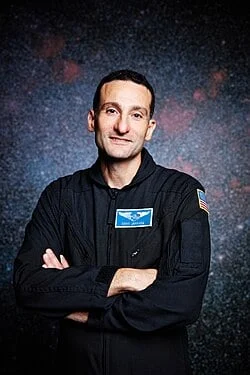
The landscape of the global space industry has undergone a radical transformation over the last two decades, evolving from a field dominated exclusively by government agencies to a burgeoning commercial frontier. This shift has not only altered the economics of orbital and suborbital flight but has also expanded the demographic profile of those who can claim the title of "astronaut." Among the most recent additions to this elite group is Dr. Eiman Jahangir, a Nashville-based cardiologist whose journey to the edge of space culminated in August 2024 aboard Blue Origin’s New Shepard rocket. His experience, detailed in his recently released book, A Heart for Space, serves as a blueprint for the "New Space" era, illustrating how the convergence of private enterprise, decentralized funding, and personal persistence is dismantling traditional barriers to the cosmos.
The Dual Ambitions of a Nashville Cardiologist
Dr. Eiman Jahangir’s path to the Kármán line—the internationally recognized boundary of space at 100 kilometers altitude—began far from the launch pads of West Texas. Born in Iran during the height of the Iran-Iraq War, Jahangir’s early childhood was marked by the instability of conflict. When he was four years old, his family immigrated to the United States, settling in Nashville, Tennessee. It was during these formative years that Jahangir developed two distinct, seemingly disparate ambitions: to practice medicine and to travel into space.
The pursuit of a medical career followed a traditional, albeit rigorous, academic trajectory. Jahangir completed his medical education and specialized in cardiology, eventually joining the faculty at Vanderbilt University Medical Center. As a cardiologist, he focused on the complexities of the human heart, a discipline that requires precision, long-term dedication, and an understanding of physiological limits. However, while his medical career flourished, his secondary goal of becoming an astronaut remained elusive for decades, constrained by the highly selective nature of government-run space programs.
The Traditional Barrier: NASA and the Selection Bottleneck
For much of the 20th and early 21st centuries, the National Aeronautics and Space Administration (NASA) was the sole gateway to space for American citizens. The selection process for the NASA Astronaut Corps is famously one of the most competitive in the world. During selection cycles, the agency typically receives between 12,000 and 18,000 applications for a class that may include fewer than a dozen candidates.
Dr. Jahangir applied to NASA multiple times, reaching the final rounds of the selection process on several occasions. Despite his qualifications as a medical professional—a background highly valued by NASA for long-duration missions—he was never selected for a flight. These rejections occurred alongside personal and professional setbacks that, in a previous era, would have signaled the end of his astronautic aspirations. The traditional "Right Stuff" era required not only exceptional talent but also the specific alignment of government priorities and timing, leaving many qualified individuals behind.
The Rise of New Space and the Commercial Alternative
The emergence of the private space sector, led by companies such as Blue Origin, SpaceX, and Virgin Galactic, fundamentally changed the math of space access. Blue Origin, founded by Jeff Bezos, developed the New Shepard flight system specifically to provide frequent, reusable access to suborbital space. Unlike the Space Shuttle or the Apollo capsules, which were designed for multi-week orbital missions or lunar landings, New Shepard was designed to carry "space tourists" and researchers on a 10-to-11-minute journey that provides several minutes of microgravity.
This shift created a "New Space" industry characterized by shorter development cycles and a broader range of entry points. For Jahangir, this meant that the dream of spaceflight no longer rested solely in the hands of a government selection board. However, the cost of commercial flight remained a significant hurdle. While orbital seats on SpaceX missions can cost upwards of $50 million, suborbital tickets on Blue Origin or Virgin Galactic are estimated to range between $450,000 and several million dollars, depending on the auction or booking window.
MoonDAO and the Democratization of Funding
A pivotal moment in Dr. Jahangir’s journey was his partnership with MoonDAO, a Decentralized Autonomous Organization (DAO) focused on the mission of "decentralizing" space exploration. MoonDAO utilizes blockchain technology and a community-governed treasury to fund space-related projects and purchase tickets for commercial spaceflights.
In a departure from the traditional model of corporate sponsorship or personal wealth, MoonDAO held a community-based selection process to choose an individual to represent the organization on a Blue Origin flight. By securing his seat through MoonDAO, Jahangir highlighted a new mechanism for space access: community-led funding. This model suggests that in the future, space travelers may be chosen by global communities or specialized organizations rather than just government agencies or the ultra-wealthy. This democratization of funding is a cornerstone of the argument Jahangir presents in his book—that the path to space is becoming a systematic process of networking and community engagement rather than a lottery of government selection.
The NS-26 Mission: Reaching the Kármán Line
In August 2024, Dr. Jahangir joined the crew of Blue Origin’s NS-26 mission. The flight profile of New Shepard involves a vertical takeoff from Blue Origin’s Launch Site One in West Texas. The rocket accelerates to speeds exceeding Mach 3 (approximately 2,300 mph) before the crew capsule separates from the booster.
During the mission, Jahangir and his fellow crew members crossed the Kármán line, experiencing approximately four minutes of weightlessness. From this vantage point, the curvature of the Earth is visible against the blackness of space—a phenomenon often referred to as the "Overview Effect." This cognitive shift, frequently reported by astronauts, involves a profound realization of the Earth’s fragility and the lack of visible political borders.
For Jahangir, the mission was more than a personal milestone; it was a professional observation. As a cardiologist, he was uniquely positioned to observe the physiological effects of rapid acceleration and microgravity, even within the short duration of a suborbital flight. The successful completion of the NS-26 mission officially designated Jahangir as a commercial astronaut, fulfilling a dream 40 years in the making.
Analysis of "A Heart for Space" and the Systematic Dream
In his book A Heart for Space, Jahangir reflects on the evolution of his journey. The text is structured as part memoir and part strategic guide. He posits that the modern era of spaceflight requires a different mindset than the one popularized during the Cold War. He moves away from the concept of the "Right Stuff"—a term coined by Tom Wolfe to describe the specific blend of bravado and skill found in early test pilots—and replaces it with a "systematic, repeatable process."
Jahangir emphasizes several key tenets for modern aspirants:
- Defining the Dream: A rigorous clarification of goals.
- Public Advocacy: The concept of "Saying It Out Loud" to build a network of supporters.
- Resilience in the Face of Rejection: Using the five NASA rejections as data points rather than failures.
- Leveraging New Technology: Identifying non-traditional paths like DAOs and private research stints, such as his time in the Biosphere 2 habitat.
The book suggests that as the frequency of commercial launches increases, the "astronaut" title will become more accessible to specialists—doctors, artists, and educators—who can contribute to the human experience in space beyond the technical operation of the spacecraft.
Global Cooperation and Industry Implications
The NS-26 mission and Jahangir’s broader narrative also touch upon the geopolitical and social implications of the New Space movement. During his journey, Jahangir interacted with other prominent figures in the industry, including private astronaut Jared Isaacman (commander of the Polaris Dawn mission) and Eytan Stibbe, an Israeli entrepreneur and astronaut.
The interaction between an Iranian-American and an Israeli astronaut underscores a recurring theme in space exploration: the potential for extraterrestrial environments to foster cooperation between individuals from regions often in conflict. This "space diplomacy" is an unintended but significant byproduct of the commercialization of space, where shared goals of exploration and research can occasionally transcend terrestrial politics.
The broader implications for the aerospace industry are significant. The success of individuals like Jahangir proves that there is a viable market for "citizen astronauts." However, critics point out that while the demographic is broadening, the financial barrier remains high. The transition from "exclusive government programs" to "expensive commercial tickets" is only the first step in a long-term goal of making space truly accessible to the general public.
The Future of Commercial Spaceflight
As of late 2024, the commercial spaceflight industry is at a crossroads. Blue Origin continues to refine the New Shepard for more frequent flights, while also developing the New Glenn rocket for orbital missions and the Blue Moon lander for NASA’s Artemis program. The data gathered from flights like NS-26 helps engineers and medical professionals understand how a wider variety of body types and age groups react to the stresses of spaceflight.
Dr. Jahangir’s story, as detailed in A Heart for Space, serves as a contemporary case study for this transition. It marks the shift from an era where space was a theater for national prestige to one where it is a platform for personal achievement, scientific research, and community-driven initiatives. For those looking to follow in his footsteps, the message is clear: the gatekeepers have changed, the funding models have evolved, and the "impossible" dream of reaching space is now a matter of persistence, systemization, and the courage to pursue a path that did not exist a generation ago.