Evan Lee Salim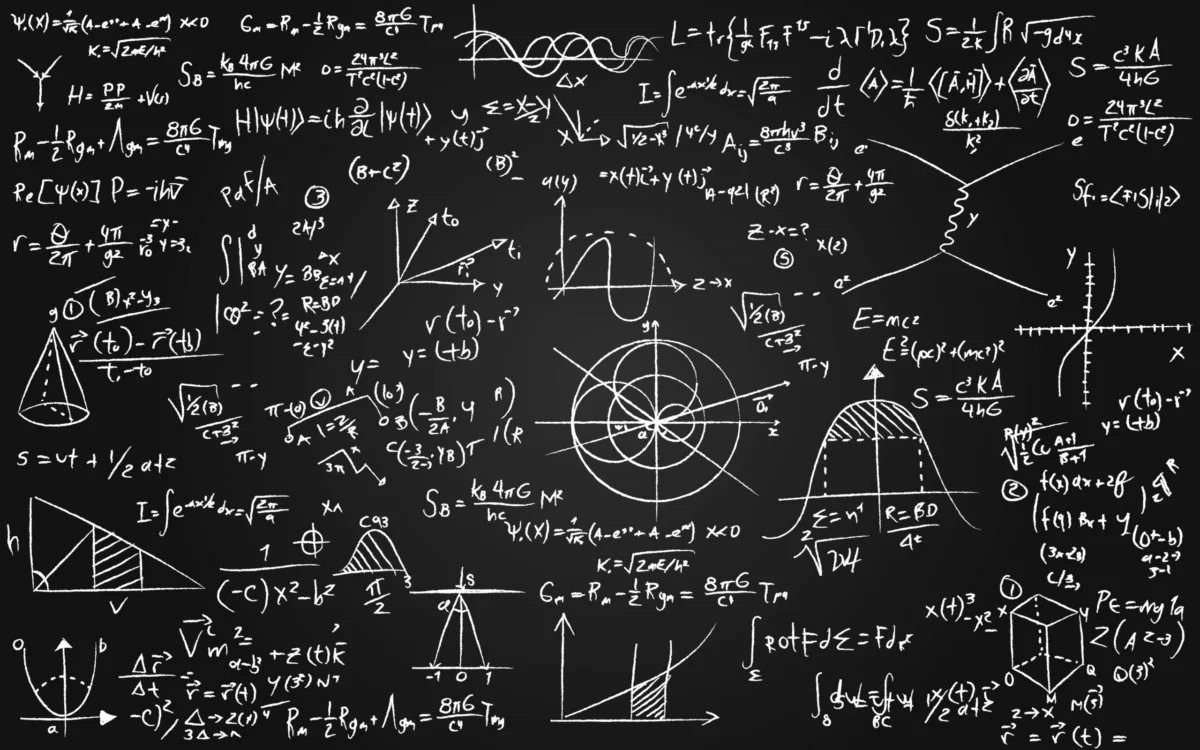
In a development that has simultaneously electrified and embroiled the global scientific community, NYU mathematics professor Tristan Buckmaster, in collaboration with Anthropic mathematician Levent Alpöge, announced significant progress towards solving the Navier-Stokes existence and smoothness problem, one of the seven formidable Millennium Prize Problems. Their findings, leveraging both OpenAI’s Codex and Anthropic’s Claude AI models, represent a crucial step towards unlocking the mysteries of fluid dynamics. However, the academic triumph has been immediately overshadowed by a contentious dispute with OpenAI, which, shortly after Buckmaster’s announcement, published a full proof of the same problem, sparking accusations of unethical conduct, intellectual property concerns, and a fierce debate over the role and ethics of artificial intelligence in scientific discovery.
The Navier-Stokes Problem: A Grand Challenge in Mathematics
At the heart of this unfolding drama lies the Navier-Stokes existence and smoothness problem, a grand challenge in theoretical mathematics with profound implications for understanding the physical world. Formulated in the early 19th century, the Navier-Stokes equations describe the motion of viscous fluid substances, ranging from the flow of air around an aircraft wing to the currents in the ocean, and the intricate patterns of blood within the human body. Despite their pervasive application in fields such as engineering, meteorology, and astrophysics, a complete theoretical understanding of these equations has eluded mathematicians for centuries.
Specifically, the Millennium Prize iteration of the problem, posed by the Clay Mathematics Institute (CMI), asks whether solutions to the Navier-Stokes equations always exist and are "smooth" (meaning they don’t develop singularities or behave unpredictably). A positive or negative resolution to this question would not only earn the solver a $1 million bounty from the CMI but would also fundamentally reshape our collective understanding of mathematical physics and potentially unlock new computational methods for simulating complex fluid phenomena. The problem’s notorious difficulty stems from its non-linear nature and the intricate ways in which fluid particles interact, leading to phenomena like turbulence that are notoriously challenging to model and predict. The CMI established the Millennium Prize Problems in 2000, identifying seven fundamental, unsolved mathematical questions, each carrying a similar monetary reward, to celebrate mathematics in the new millennium. Only one, the Poincaré Conjecture, has been formally solved to date.
A Chronology of Competing Discoveries
The timeline of events leading to the current controversy is crucial to understanding the gravity of the allegations. Professor Buckmaster and Dr. Alpöge had been meticulously working on the Navier-Stokes problem, utilizing a hybrid approach that combined human insight with the computational power of AI models, primarily OpenAI’s Codex, but also Anthropic’s Claude. Their chosen route to tackle the problem—specifically through a "smooth force," corresponding to options c and d in Charles Fefferman’s formal statement of the problem—was described by Buckmaster as "far less common" and "almost nobody else I know of was working on it." This unique strategic choice would later become a focal point of the dispute.
According to Buckmaster’s public statement, their progress was significant, culminating in three proofs that laid substantial groundwork for a potential full solution. However, as they were in the final stages of solidifying and preparing their findings for public dissemination, they reportedly became aware that "information about our progress had been passed to OpenAI." This alleged information transfer set off a chain of events that rapidly escalated into a full-blown academic and ethical confrontation.
Upon learning of the alleged leak, Buckmaster and Alpöge contacted OpenAI. To their astonishment, they were informed that OpenAI had already achieved a full proof of the central problem. OpenAI’s official account, published shortly after Buckmaster’s statement, confirms this timeline, stating that their latest intensive effort began on September 1st. This rapid acceleration, according to OpenAI, was "inspired by rumors that two Millennium Prize problems had been solved." The company deployed an unreleased, next-generation AI model, which, over a week-long period, consumed an astonishing 300 billion output tokens. This computational expenditure translates to an estimated $22.5 million worth of compute, based on current Astra rates, underscoring the immense resources OpenAI poured into the effort.
Buckmaster, however, found the timing and the coincidence of OpenAI adopting the same "uncommon" approach deeply suspicious. He noted in his statement, "It is not the direction one arrives at in a few days by giving a model the problem statement." He further recounts that when he and Alpöge pressed OpenAI for details regarding the commencement of their research and the extent of human involvement, the answers became increasingly evasive. It was eventually "agreed that [the first prompt]" to OpenAI’s AI system for this problem "had been sent in the past few days, after information about our work had reached OpenAI." This suggests a scenario where OpenAI, allegedly informed of Buckmaster and Alpöge’s specific and unconventional strategy, leveraged its superior computing resources to race to a formal proof.
The Allegations: Academic Espionage and Ethical Breaches
The core of Buckmaster’s allegations centers on what he perceives as a profound breach of academic ethics and fair play. He claims that OpenAI’s rapid success was not an independent parallel discovery but rather an exploitation of privileged information about his and Alpöge’s unique research path. The deployment of an "insane amount of compute" and an entire team on the problem, immediately following the alleged leak, paints a picture of a calculated effort to "scoop" the original researchers.
A significant point of contention also arises from Buckmaster’s extensive use of OpenAI’s own Codex model in his research. OpenAI’s policies state that it "reserves the right to train models on Codex interactions," although users typically have an opt-out option. Buckmaster raised concerns that information from his interactions with Codex could have inadvertently or directly informed OpenAI’s internal efforts. If OpenAI’s internal team used a model that had been trained on Buckmaster’s specific queries and approaches to the Navier-Stokes problem, it raises the unsettling possibility of the AI system "regurgitating" or "re-discovering" his work. This scenario would blur the lines of intellectual property and raise serious questions about the confidentiality and ethical use of user data by AI developers.
Further complicating the ethical landscape are allegations of undue pressure and intimidation. Dr. Alpöge, Buckmaster’s collaborator, is employed by Anthropic, a rival AI research laboratory. Buckmaster alleges that an OpenAI representative, Bubeck, asked him to remove Alpöge’s credit from their work as part of a proposed compromise. When Buckmaster reportedly pushed back and expressed his intention to make the dispute public, Bubeck allegedly retorted, "Why would you ruin your career?" followed by a more direct threat: "If you don’t want me to be nice, then I don’t have to be nice." These alleged exchanges highlight the intense competitive pressures within the AI research ecosystem and raise concerns about professional conduct.
OpenAI’s Official Stance and Counter-Arguments
In its public statement, OpenAI confirmed several key aspects of the timeline and acknowledged the ongoing conversations with Buckmaster and Alpöge. However, the company firmly pushed back against the most serious allegations. OpenAI reiterated that its latest effort commenced on September 1st, driven by "rumors" of progress on Millennium Prize Problems, rather than specific leaked information about Buckmaster’s work.
Regarding the sensitive issue of data usage and potential regurgitation, OpenAI stated, "We (the researchers and the agents) did not see any of their work through any means until they released it publicly — in particular, no specific user data was accessed in order to solve this problem." While this statement aims to alleviate concerns about direct data access, the company did concede a nuanced possibility: "While unlikely, we cannot rule out that de-identified data derived from their usage of our products helped improve our models." This subtle admission, even with the caveat of "de-identified data," keeps the door open to the possibility that Buckmaster’s interactions with Codex, in some aggregated and anonymized form, might have contributed to the general improvement of OpenAI’s models, which then indirectly aided their own Navier-Stokes effort.
OpenAI also emphasized that their proofs "differ significantly" from Buckmaster and Alpöge’s findings, even noting that "the precise results proved are different in the Euler case (forced vs unforced)." This distinction attempts to establish the independence and originality of their solution, irrespective of any alleged external influence. The company’s narrative positions their achievement as a testament to the raw power and rapid problem-solving capabilities of their next-generation AI model, an expensive but legitimate deployment of advanced technology.
Broader Implications: AI, Ethics, and the Future of Mathematical Research
The controversy surrounding the Navier-Stokes proof is far more than a simple academic spat; it strikes at the heart of critical questions concerning AI ethics, intellectual property, academic integrity, and the future trajectory of scientific discovery.
-
AI’s Role in Discovery: This event unequivocally demonstrates the immense power of advanced AI models in tackling complex, long-standing scientific problems. It validates the vision of AI as a powerful co-pilot or even an independent discoverer in mathematics and other sciences. However, it simultaneously exposes the ethical quandaries that arise when AI-driven research intersects with human competition and corporate interests. The ability of AI to rapidly assimilate information, process vast datasets, and generate novel solutions means that the traditional pace of academic discovery is being fundamentally challenged.
-
Intellectual Property in the Age of AI: The dispute highlights the nascent and inadequate legal and ethical frameworks for intellectual property when AI is deeply involved in generating scientific breakthroughs. Who owns a proof or discovery made by an AI? If an AI is trained on a user’s interactions, and then uses that learned information to make a similar discovery for its developer, where does the intellectual credit and property lie? The "de-identified data" clause in OpenAI’s policy, while standard, becomes fraught with ethical complexity when it potentially underpins a multi-million-dollar breakthrough.
-
The "Compute Race" and Academic Equity: The staggering $22.5 million compute cost associated with OpenAI’s effort underscores a growing concern: the increasing reliance on massive computational resources, often exclusive to well-funded corporations, could create an uneven playing field in scientific research. Individual academics or smaller research groups, even with brilliant insights, might be outpaced by large AI labs that can simply "throw compute" at a problem once a promising avenue is identified. This could stifle innovation from independent researchers and centralize scientific progress within a few powerful entities.
-
Transparency and Open Science: Buckmaster’s decision to make the dispute public reflects a deep commitment to transparency, which he believes is the "best answer" to address such issues. This incident serves as a stark reminder of the importance of open communication, clear attribution, and robust ethical guidelines in collaborative or competitive scientific endeavors, particularly when AI models and corporate entities are involved. The opaque nature of AI model training and data usage policies can exacerbate mistrust.
-
Academic Integrity and Professional Conduct: The alleged threats and attempts to influence academic credit raise serious questions about professional ethics within the AI research community. Maintaining integrity, fostering respectful competition, and ensuring proper attribution are foundational principles of scientific advancement. Any perceived deviation from these principles, especially from leading institutions, can have a chilling effect on collaboration and the willingness of researchers to share early-stage findings.
The resolution of the Navier-Stokes problem, even if contested, is a monumental achievement for humanity and a testament to the burgeoning power of artificial intelligence. Yet, the controversy surrounding its discovery ensures that this breakthrough will be remembered not only for its mathematical significance but also for the profound ethical questions it has forced upon the scientific and technological communities. As AI continues to push the boundaries of human knowledge, this incident will likely serve as a critical case study, prompting urgent discussions on establishing clear guidelines for responsible AI development, academic collaboration, and the equitable pursuit of scientific truth in an increasingly AI-driven world. The calls for transparency and accountability will undoubtedly intensify, shaping the landscape of future AI-assisted discoveries.