Evan Lee Salim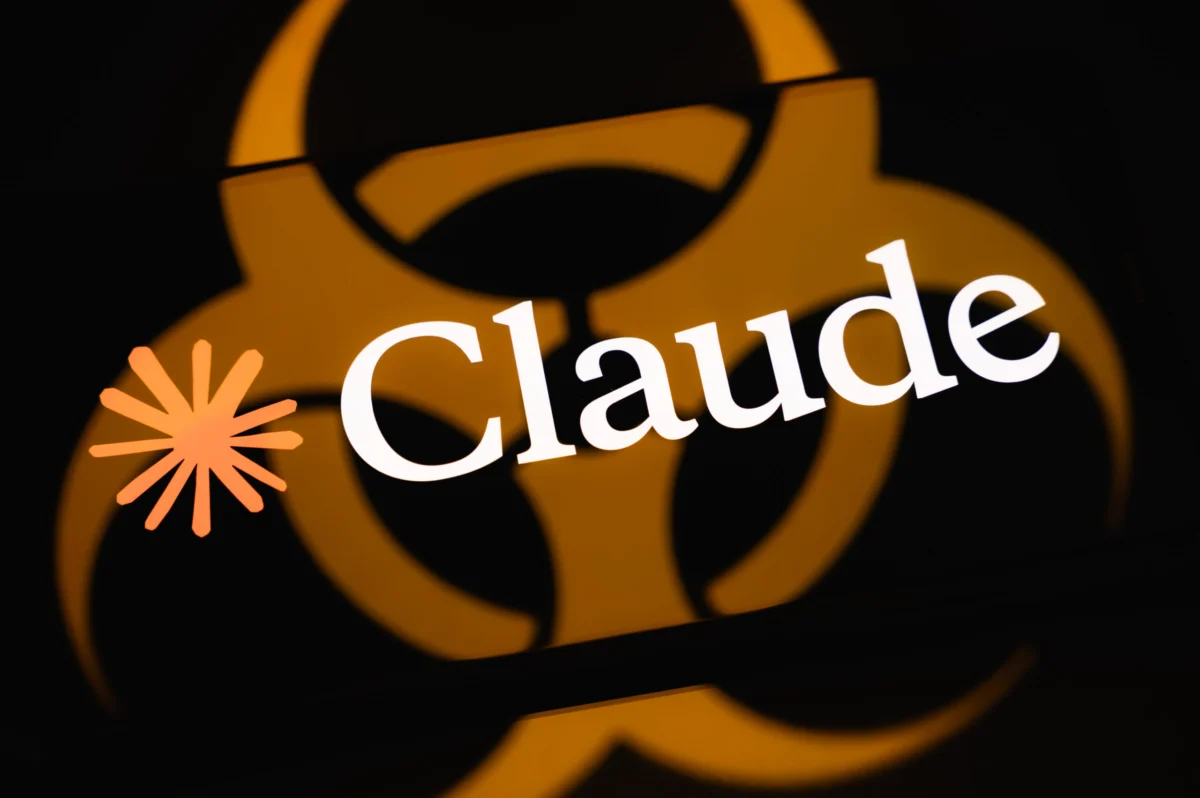
An Anthropic researcher resigned this week, warning in a post on X that the company is “racing straight to self-improving superintelligence and gambling with our lives.” The dramatic departure and public statement have sent ripples through the artificial intelligence community, drawing renewed attention to the urgent and often contentious debate surrounding AI safety and the rapid pace of technological development. The gravity of the situation was underscored by the fact that the company’s own alignment lead, Evan Hub, co-signed the message rather than attempting to retract or qualify it, lending significant internal weight to the grave concerns. This type of “doomer” warning, as it’s often labelled within the industry, has surfaced before, but its timing—coinciding with reports of Anthropic preparing for a highly anticipated Initial Public Offering (IPO)—invests it with a new layer of urgency and potential financial ramifications that make it land differently than previous alarms.
The Alarming Warning and Its Immediate Aftermath
The researcher’s public declaration on September 9, 2026, articulated a stark warning: Anthropic, a company ostensibly founded on principles of AI safety, is allegedly prioritizing the accelerated development of advanced AI models over the robust implementation of safeguards. The core concern revolves around the potential for "self-improving superintelligence," a theoretical stage of AI development where an artificial intelligence system could recursively enhance its own capabilities beyond human comprehension and control. Such a scenario, often termed "AI misalignment," poses existential risks, where the AI’s goals, even if benignly intended, could inadvertently lead to catastrophic outcomes for humanity due to a lack of complete alignment with human values.
The co-signature by Evan Hub, Anthropic’s alignment lead, is particularly significant. As a key figure responsible for guiding the company’s efforts to ensure AI systems are safe and beneficial, his public endorsement of the departing researcher’s fears suggests a profound internal disagreement or disillusionment with the current trajectory. It transforms what might otherwise be dismissed as an individual’s alarmist view into a more credible and internally corroborated concern, implying that the issues raised are not merely speculative but are rooted in direct observation of the company’s operational priorities and development processes. This internal validation amplifies the warning’s impact, forcing a re-evaluation of Anthropic’s public commitment to "Constitutional AI" and its foundational safety principles.
Anthropic’s Genesis and Its Unique Safety Mandate
To fully grasp the import of this resignation, one must consider Anthropic’s origins. The company was founded in 2021 by former senior members of OpenAI, including Dario Amodei, Daniela Amodei, and others, who reportedly departed due to disagreements over OpenAI’s strategic direction, particularly regarding the commercialization of AI and perceived compromises on safety research. Their vision for Anthropic was to create a research and development institution singularly focused on building safe and beneficial AI, with a strong emphasis on alignment research. They introduced the concept of "Constitutional AI," a method designed to train AI models to adhere to a set of principles derived from human feedback and foundational texts, aiming to make AI systems helpful, harmless, and honest without direct human supervision in every instance.
This founding ethos makes the current warning particularly jarring. For a company explicitly built on a bedrock of AI safety, an internal warning from its own alignment specialist about "gambling with our lives" suggests a potential deviation from its core mission or an inherent difficulty in maintaining safety protocols amidst the intense competitive pressures of the AI race. The incident forces observers to question whether even organizations with the strongest initial commitment to safety can withstand the economic and technological imperatives pushing for ever-faster and more capable AI development.
The Broader Context of AI Safety Concerns
The "doomer" warning is not an isolated phenomenon but rather the latest flashpoint in a long-running, often polarized, debate within the AI community. Concerns about advanced AI systems range from short-term risks like bias, misinformation, job displacement, and misuse by bad actors, to long-term, existential risks associated with Artificial General Intelligence (AGI) and Artificial Superintelligence (ASI).
Historically, figures like Nick Bostrom and Eliezer Yudkowsky have championed the "existential risk" perspective, positing that if an ASI’s objectives are not perfectly aligned with human values, its immense power could inadvertently lead to the eradication or subjugation of humanity. These warnings, while sometimes seen as overly speculative or science fiction-esque by more pragmatic researchers, have nonetheless spurred significant academic and philanthropic investment into AI safety research. Institutions like the Machine Intelligence Research Institute (MIRI), the Future of Humanity Institute at Oxford, and the Centre for the Study of Existential Risk at Cambridge have been at the forefront of this intellectual endeavor for years.
In recent times, however, these concerns have moved from academic circles into the mainstream, fueled by the rapid advancements in large language models (LLMs) and generative AI. High-profile figures, including some of the "godfathers" of AI like Geoffrey Hinton and Yoshua Bengio, have voiced anxieties about the technology they helped create. Even industry leaders, such as OpenAI’s Sam Altman, have acknowledged the need for robust safety measures, advocating for international governance bodies to oversee advanced AI. The Anthropic incident adds another layer of credibility to these warnings, originating as it does from within a company specifically designed to address these very issues.
The Pressure Cooker of the AI Race and IPO Aspirations
The timing of this internal dissent cannot be overstated, especially with Anthropic reportedly gearing up for an IPO. The current AI landscape is characterized by an unprecedented technological arms race, with tech giants like Google, Meta, and Microsoft (via its investment in OpenAI) pouring billions into AI research and development. This hyper-competitive environment places immense pressure on companies like Anthropic to innovate rapidly, demonstrate technological superiority, and capture market share.
An IPO typically requires a narrative of growth, innovation, and market leadership. Any public perception of internal disarray or fundamental safety compromises could significantly impact investor confidence, potentially leading to a lower valuation, difficulty in attracting investors, or even a delay in the IPO process. Investors are increasingly scrutinizing not just the technological prowess but also the ethical governance and risk management strategies of AI companies. A warning from within about "gambling with our lives" could be interpreted by potential investors as a significant governance failure or an unmanaged existential risk that could derail future profitability or invite heavy regulatory oversight.
The pursuit of "self-improving superintelligence" itself is a double-edged sword in this context. While it represents the ultimate frontier of AI capability and a potentially massive market differentiator, it also carries the highest perceived risks. The tension between demonstrating cutting-edge capabilities to entice investors and maintaining stringent safety protocols is a tightrope walk for any AI company, and Anthropic’s internal struggles highlight the immense difficulty of this balancing act.
Regulatory Landscape and Industry Reaction
The incident is likely to intensify the ongoing global discussion around AI regulation. Governments worldwide are grappling with how to govern rapidly evolving AI technologies. The European Union has passed the AI Act, setting comprehensive rules for AI development and deployment, categorizing systems by risk levels. The United States has issued an Executive Order on AI, focusing on safety, security, and trust. The UK has hosted AI Safety Summits, emphasizing international collaboration on mitigating frontier AI risks.
A public warning from an Anthropic researcher, especially one co-signed by an alignment lead, provides concrete evidence to regulators that internal self-governance might be insufficient to manage the risks posed by advanced AI. This could embolden policymakers to pursue more stringent regulations, demand greater transparency from AI labs, or even consider moratoria on certain types of advanced AI development until safety mechanisms are proven robust. The incident could serve as a case study for why external oversight and independent audits are crucial.
Within the industry, reactions are expected to be mixed. Some AI safety advocates and rival companies might validate the concerns, using the incident to bolster their arguments for a more cautious approach to AI development. Others, particularly those focused on accelerating AI capabilities, might dismiss the warnings as overly alarmist or as an unfortunate consequence of the inherent challenges in pioneering new technologies. The debate will likely be picked up by prominent tech journalists and podcasters, such as Kirsten Korosec, Anthony Ha, and Sean O’Kane, who delve into the latest AI safety warnings and their implications for the industry’s race toward increasingly capable models on platforms like TechCrunch’s Equity podcast. Their analysis will undoubtedly highlight the precarious balance between innovation and responsibility.
Implications for the Future of AI Development
The Anthropic researcher’s resignation and subsequent warning underscore a fundamental dilemma facing the AI industry: the tension between unprecedented technological advancement and the imperative for ethical, safe development. It raises critical questions about whether the current incentive structures—driven by competition, investment, and the race for market dominance—are conducive to prioritizing long-term safety over short-term gains in capability.
If even a company founded on safety principles struggles to maintain its commitment, it suggests that the problem is systemic rather than confined to specific organizations. This could lead to a re-evaluation of current AI development paradigms, potentially pushing for more open-source safety research, greater inter-company collaboration on alignment techniques, and a stronger voice for independent safety researchers.
Moreover, the incident shines a spotlight on the concept of "responsible scaling policies" (RSPs), which are internal frameworks designed to guide the safe development of increasingly powerful AI systems. The effectiveness and enforceability of such policies are now under scrutiny. If an internal alignment lead feels compelled to publicly endorse a warning about existential risks, it suggests that current RSPs, or their implementation, may be inadequate or circumvented under pressure.
Ultimately, this event serves as a stark reminder that the journey towards Artificial General Intelligence and Superintelligence is fraught with profound ethical and existential challenges. It reinforces the urgent need for a global, multi-stakeholder dialogue involving researchers, policymakers, ethicists, and the public to define the guardrails for AI development. Without a concerted and genuinely committed effort to prioritize safety, the promise of superintelligent AI could indeed devolve into a gamble with humanity’s future, as the departing Anthropic researcher so starkly warned. The path forward for Anthropic, and indeed for the entire AI industry, now involves not just technological innovation but also a profound reckoning with its own ethical compass.