Chandra Wibowo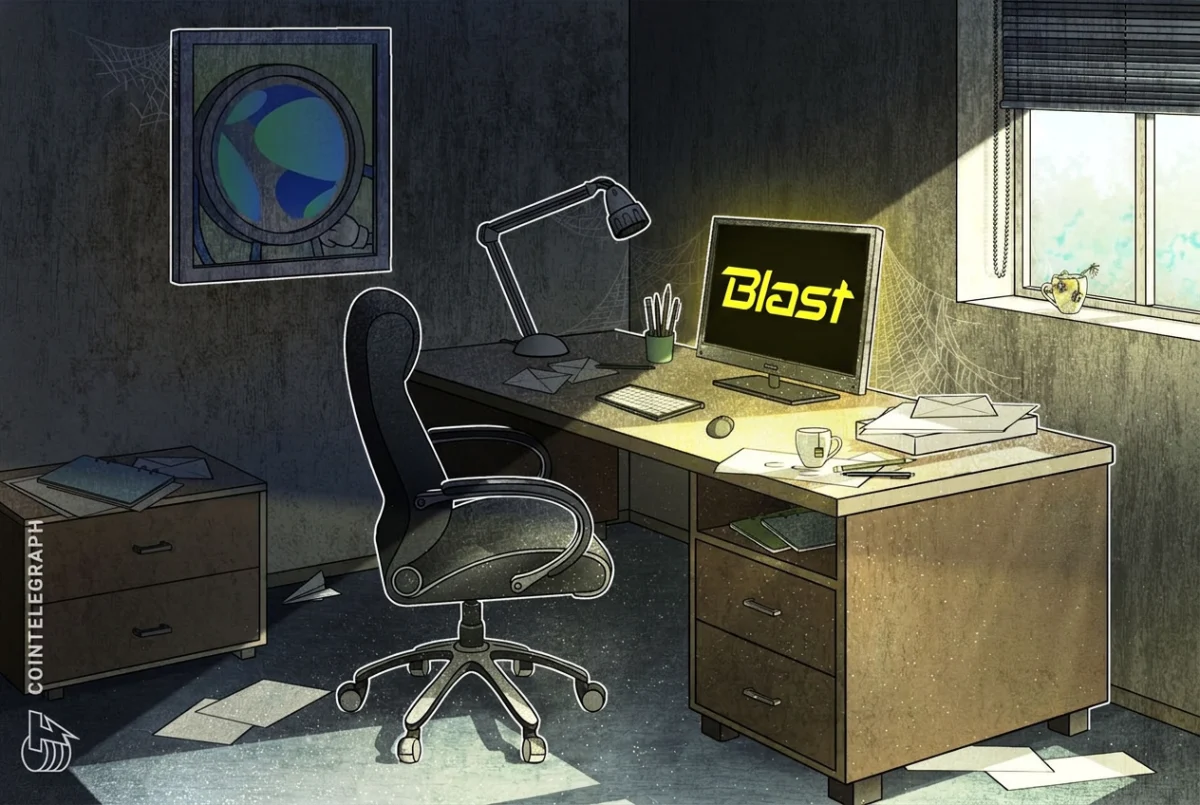
The Ethereum layer-2 scaling solution, Blast, has announced it is shutting down its network, citing insurmountable operational costs that have surpassed its revenue generation capabilities. The decision marks a significant development in the rapidly evolving landscape of blockchain scalability solutions and highlights the economic challenges inherent in maintaining and operating such infrastructure.
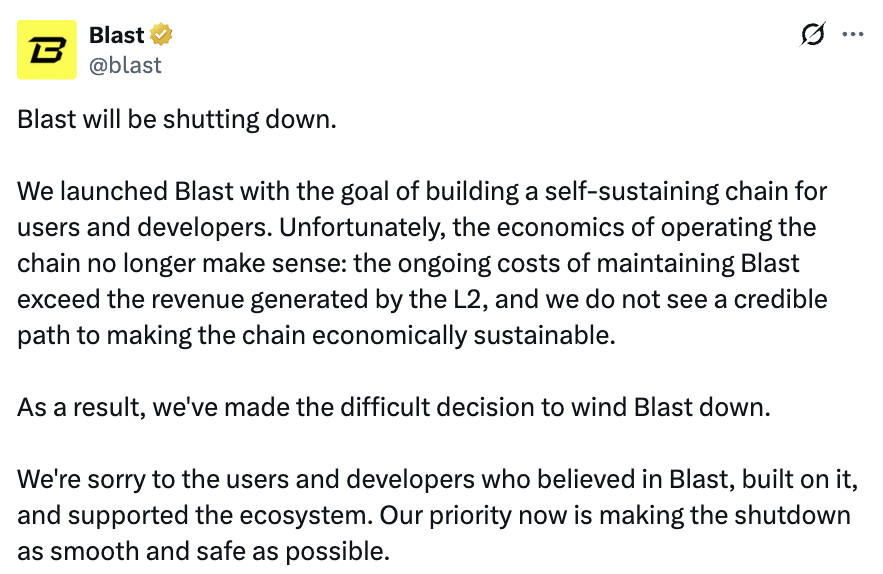
In a formal statement released on the social media platform X (formerly Twitter) on Friday, the Blast team communicated their inability to identify a "credible path" toward achieving economic sustainability for the network. Consequently, they have urged users to initiate the withdrawal of their assets back to the Ethereum mainnet. The core message from the Blast team conveyed a sense of regret and realism, stating, "We launched Blast with the goal of building a self-sustaining chain for users and developers. Unfortunately, the economics of operating the chain no longer make sense." This candid admission underscores the complexities of balancing technological innovation with financial viability in the decentralized ecosystem.
The announcement has sent ripples through the cryptocurrency community, particularly among the users and developers who had entrusted their assets to the Blast network. The immediate implication is a need for swift action to secure these funds. Blast has committed to facilitating this transition by adjusting its withdrawal process to accommodate users’ needs during this period of unwinding.
Timeline of Withdrawal and Network Closure
Blast has stated that it will reduce its withdrawal delay to 24 hours. However, withdrawals will be temporarily suspended while the network undertakes the process of unwinding its holdings in Lido, a prominent liquid staking protocol. This unwinding process is estimated to take approximately one week to complete.
Users have a defined window to withdraw their assets through Blast’s native interface. This period extends until October 26. Following this deadline, while assets will remain accessible, the withdrawal process will become more complex, requiring users to interact directly with the Blast bridge contracts on the Ethereum mainnet. To aid users in this transition, Blast has pledged to publish detailed instructions for these direct bridge contract interactions well in advance of the October 26 cutoff. The network strongly advises all users to complete their asset withdrawals to the Ethereum mainnet before this critical date to avoid potential complications.
Background and Genesis of Blast
Blast emerged from the fervor surrounding the non-fungible token (NFT) market, specifically linked to the success of its founder, Tieshun "Pacman" Roquerre. Roquerre is also the visionary behind Blur, an NFT marketplace that launched in October 2022. Blur rapidly disrupted the established NFT trading landscape, challenging dominant players like OpenSea by strategically targeting professional traders with an incentive-driven model, including token rewards. By the close of 2022, Blur had demonstrably surpassed OpenSea in trading volume, a lead it further solidified in early 2023, largely attributed to its token airdrop and ongoing trader rewards.
Building on this momentum, Roquerre unveiled Blast in November 2023. The layer-2 network was designed with a unique value proposition, incorporating native yield generation on Ether (ETH) and stablecoins, coupled with a points program anticipating a future token airdrop. This innovative approach, promising enhanced returns for users, proved highly effective in attracting capital. Before its mainnet launch in February 2024, Blast had amassed over $2 billion in deposits, showcasing a strong initial investor and user confidence.
Economic Performance and Decline
Despite the promising start, Blast’s trajectory encountered significant headwinds, mirroring a broader market downturn impacting the NFT sector. The initial surge in total value locked (TVL) on the Blast network proved difficult to sustain. According to data from DeFiLlama, a leading blockchain analytics platform, Blast’s DeFi TVL has experienced a dramatic decline. After reaching a peak of approximately $2.2 billion in June 2024, the TVL has plummeted by over 98%, indicating a substantial outflow of assets and a significant reduction in network activity.
This decline in TVL is not an isolated incident; it is part of a wider trend affecting platforms associated with Roquerre. Blur, the NFT marketplace that served as the incubator for Blast, has also witnessed a considerable contraction. Its TVL, which had peaked above $200 million in early 2024, has fallen to around $27 million, reflecting a similar pattern of diminished market engagement and capital inflow.
The economic unsustainability cited by Blast can be attributed to several potential factors. Operating a layer-2 network involves ongoing costs related to infrastructure, security, development, and marketing. If the revenue generated from transaction fees, protocol fees, or other monetization strategies falls short of these operational expenditures, the network faces a deficit. In the case of Blast, the significant drop in TVL likely translated into reduced fee generation, making it increasingly difficult to cover its operational expenses. Furthermore, the broader market sentiment and the specific performance of the NFT sector may have contributed to the reduced demand for layer-2 solutions focused on these asset classes.
Implications for the Layer-2 Ecosystem
The shutdown of Blast carries several important implications for the broader layer-2 scaling ecosystem on Ethereum:
-
Economic Viability as a Critical Factor: Blast’s closure serves as a stark reminder that technological innovation alone is insufficient for long-term success. Economic sustainability is paramount. Projects must develop robust revenue models that can support operational costs and incentivize continued development and user participation. The reliance on speculative incentives like token airdrops, while effective for initial traction, may not be a sustainable long-term strategy if not complemented by genuine utility and revenue generation.
-
Market Maturity and Consolidation: The cryptocurrency market, particularly the layer-2 sector, is still in a phase of maturation. Projects that fail to demonstrate a clear path to profitability or a strong value proposition are likely to face challenges. This situation may lead to a period of consolidation, where more sustainable and well-funded projects gain dominance, while less viable ones fade away.
-
Investor Due Diligence: The rapid rise and subsequent fall of Blast highlight the importance of thorough due diligence for both users and investors. While initial hype and promising yields can attract capital, a deeper understanding of the underlying economic model, revenue streams, and long-term sustainability is crucial.
-
User Trust and Asset Security: The need for users to withdraw their assets emphasizes the inherent risks associated with decentralized finance (DeFi) and blockchain networks. While Blast is facilitating withdrawals, the process itself can be a source of anxiety for users. It underscores the importance of choosing platforms with a proven track record of security and operational stability.
-
Innovation in Layer-2 Design: The challenges faced by Blast may prompt developers to re-evaluate the economic models of future layer-2 solutions. There might be increased focus on diversified revenue streams, more efficient operational structures, and a stronger emphasis on organic growth driven by utility rather than solely speculative incentives.
Official Statements and Community Reactions
The official announcement from Blast on X was direct and devoid of jargon, aiming to clearly communicate the situation to its user base. The team expressed their initial ambition to create a self-sustaining ecosystem and lamented the inability to achieve this goal. The prompt and clear instructions for asset withdrawal are a testament to their commitment to minimizing user impact during this transition.
While specific direct reactions from other related parties were not immediately available at the time of reporting, the broader cryptocurrency community is likely to engage in discussions about the lessons learned from Blast’s experience. Analysts and commentators will undoubtedly dissect the economic factors that led to this outcome, offering insights into best practices for layer-2 development and investment. The founder’s previous success with Blur provides a significant backdrop, suggesting that the failure of Blast is not necessarily indicative of a lack of innovation or market understanding, but rather a testament to the extreme difficulty in achieving sustained economic viability in a highly competitive and volatile sector.
The narrative surrounding Blast’s operational closure is a crucial case study for the ongoing evolution of blockchain technology. It underscores the intricate interplay between technological advancement, market dynamics, and fundamental economic principles in the pursuit of decentralized innovation. As the industry matures, such events will continue to shape the development of more resilient and sustainable blockchain infrastructures.