Chandra Wibowo
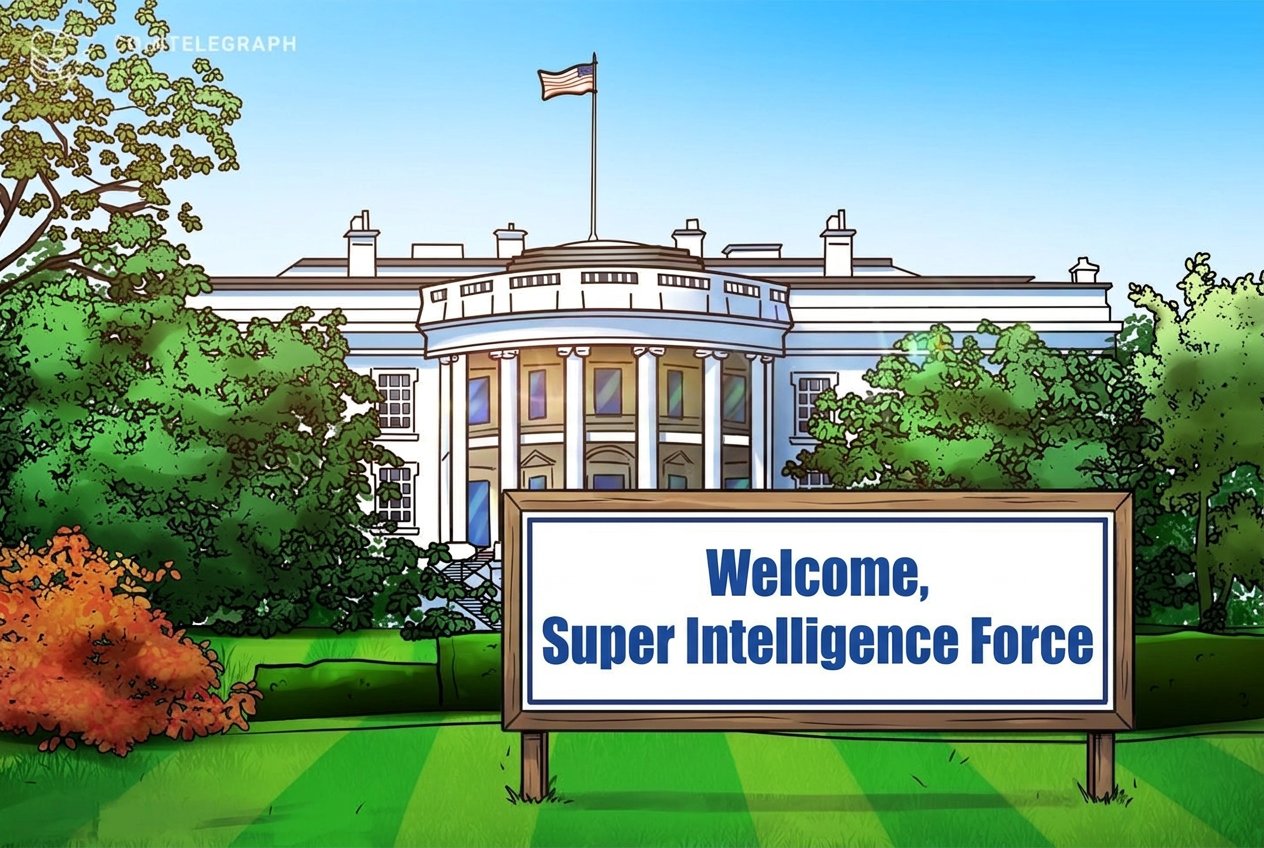
President Donald Trump has officially designated Jay Clayton, the current U.S. Director of National Intelligence, to spearhead the newly established "Super Intelligence Force," a pivotal initiative aimed at solidifying America’s global leadership in advanced artificial intelligence. The announcement, made via a post on the Truth Social platform on Sunday, follows weeks of speculation and media reports hinting at the creation of such a specialized governmental entity. This move underscores a significant commitment by the Trump administration to proactively address the burgeoning landscape of artificial intelligence and its profound implications for national security, economic competitiveness, and societal advancement.
The genesis of this initiative can be traced back to earlier reports, notably by Cointelegraph on September 20th, which detailed President Trump’s intention to establish an "AI Force," explicitly modeled after the success and organizational structure of the U.S. Space Force. This comparison highlights a strategic intent to create a dedicated, robust, and highly specialized branch of government focused on a critical emerging domain. The concept of appointing an "AI czar" or a designated leader with overarching authority was also a central theme in these early reports, setting the stage for the eventual appointment of Jay Clayton.
President Trump articulated the core mission of the Super Intelligence Force in his Truth Social post, stating, "The Super Intelligence Force is tasked with coordinating the effort of the Federal Government to ensure that America continues to lead the World in Super Intelligence." This statement clearly defines the Force’s mandate as a central coordinating body, emphasizing a unified federal approach to AI development and deployment. The goal is not merely to keep pace but to maintain and extend American preeminence in a field rapidly transforming global power dynamics.
Joining Clayton in this critical endeavor will be a distinguished group of individuals with significant experience in government, technology, and national security. The announcement revealed that Andrew Ferguson, Chairman of the Federal Trade Commission (FTC), will also be part of this leadership team. Ferguson’s background at the FTC, an agency often involved in regulating emerging technologies and ensuring fair competition, suggests a focus on the ethical and competitive aspects of AI. Additionally, Scott Kupor, Director of the Office of Personnel Management (OPM), brings expertise in human capital and governmental operations, crucial for building and managing the talent required for such a sophisticated force. Rounding out the initial leadership group is Emil Michael, serving as Under Secretary of War for Research and Engineering and Chief Technology Officer for the Department of War. His dual role signifies a direct integration of AI advancements into the nation’s defense research and development apparatus, highlighting the military and security implications of advanced intelligence.
Jay Clayton’s appointment carries significant weight, given his prior service and extensive experience in high-stakes regulatory and national security roles. During President Trump’s first term, Clayton served as the Chairman of the U.S. Securities and Exchange Commission (SEC), where he navigated complex financial markets and the integration of new technologies into the financial sector. His tenure at the SEC provided him with a deep understanding of regulatory frameworks and the challenges of overseeing rapidly evolving industries. Furthermore, Clayton previously held the position of interim U.S. Attorney for the Southern District of New York, one of the nation’s most prominent federal prosecutor’s offices, demonstrating his legal acumen and experience in handling critical national issues.
Sources cited by CNN in Friday’s reports indicated that Clayton is expected to retain his current role as Director of National Intelligence while also leading the Super Intelligence Force. This dual responsibility underscores the interconnectedness of AI development with the broader national intelligence apparatus. The Senate’s confirmation of Clayton in July to lead the intelligence community further solidifies his credentials and readiness for this expanded mandate. His leadership within the intelligence community suggests a strategic alignment between AI capabilities and the nation’s intelligence-gathering and analytical functions, aiming to leverage AI for enhanced national security assessments and operations.
Background and Context: The Rise of the AI Imperative
The establishment of the Super Intelligence Force arrives at a critical juncture in the global AI landscape. The past decade has witnessed an unprecedented acceleration in AI research and development, with breakthroughs in machine learning, natural language processing, and computer vision fundamentally altering various sectors, from healthcare and finance to transportation and defense. This rapid progress has ignited both immense optimism regarding AI’s potential to solve complex global challenges and profound concerns about its ethical implications, potential for misuse, and the risk of an AI arms race.
Nations worldwide are actively investing in AI, recognizing its strategic importance. China, in particular, has made AI a national priority, with ambitious goals for global leadership in AI by 2030. The United States, historically a leader in technological innovation, has been keen to maintain its competitive edge. Previous administrations have initiated various AI-related strategies and task forces, but the creation of a dedicated "Force" with a clear mandate and high-profile leadership signifies a more assertive and centralized approach.
The analogy to the Space Force is particularly instructive. The Space Force was established to address the increasing importance of space as a distinct military domain, requiring specialized capabilities, doctrine, and organizational structures. Similarly, the Super Intelligence Force aims to carve out AI as a critical domain requiring dedicated focus, coordination, and expertise, recognizing its unique challenges and opportunities that may not be adequately addressed by existing governmental structures.
Timeline and Chronology of the Announcement
The timeline leading up to this announcement reveals a calculated and deliberate approach to forming the Super Intelligence Force.
- Late August/Early September 202X: Initial internal discussions and planning likely began within the administration regarding the establishment of a dedicated AI leadership entity.
- September 20, 202X: Cointelegraph reports that President Trump plans to create an "AI Force" modeled after the Space Force and appoint an AI czar. This report serves as an early indicator of the administration’s strategic direction.
- September 22, 202X: Further media reports emerge, building on the initial Cointelegraph story, suggesting the potential appointment of key individuals to lead this initiative.
- Sunday (Date of Article): President Donald Trump officially announces Jay Clayton’s appointment as the leader of the Super Intelligence Force via a post on Truth Social. The announcement also details the composition of the initial leadership team.
This chronology suggests that while the concept was being explored and reported on, the formal announcement was strategically timed to coincide with the completion of necessary appointments and the consolidation of the initial leadership structure.
Supporting Data and the Global AI Landscape
The urgency behind establishing a dedicated AI force is underscored by global investment and research trends in artificial intelligence. According to various industry reports, global AI spending is projected to reach hundreds of billions of dollars annually in the coming years. For instance, some projections estimate the global AI market size to grow from approximately $150 billion in 2023 to over $1.3 trillion by 2030, reflecting a compound annual growth rate (CAGR) exceeding 30%.
Key areas of AI investment and development include:
- Machine Learning (ML) and Deep Learning: These are the foundational technologies driving many AI applications, enabling systems to learn from data without explicit programming.
- Natural Language Processing (NLP): Advancements in NLP are powering sophisticated chatbots, translation services, and content analysis tools.
- Computer Vision: This field allows machines to "see" and interpret images and videos, with applications in autonomous vehicles, medical diagnostics, and security surveillance.
- Robotics and Automation: AI is increasingly integrated into robotics to enhance their capabilities in manufacturing, logistics, and even healthcare.
The United States has historically been at the forefront of AI research, with leading universities and tech companies driving innovation. However, competition from countries like China, which has a strong state-backed approach to AI development and a vast pool of data, necessitates a coordinated and strategic national response. The establishment of the Super Intelligence Force can be seen as an attempt to consolidate and amplify the nation’s efforts in this critical technological race.
Official Responses and Broader Implications
While the initial announcement comes directly from President Trump, it is anticipated that further statements and clarifications will emerge from the appointed individuals and relevant government agencies in the coming weeks. The inclusion of leaders from the FTC, OPM, and the Department of War suggests a multi-faceted approach, aiming to address not only the technological development but also the regulatory, workforce, and national security implications of advanced AI.
The appointment of Jay Clayton, a figure with a background in financial regulation and national intelligence, signals a focus on ensuring that AI development is both innovative and responsible. His experience at the SEC suggests an understanding of the potential for disruptive technologies to impact markets and the need for robust oversight. His role as Director of National Intelligence further emphasizes the security dimensions of AI, from cybersecurity threats to the potential for AI in intelligence analysis and defense capabilities.
The creation of the Super Intelligence Force has several potential implications:
- Enhanced National Security: By centralizing AI efforts, the U.S. can better leverage AI for intelligence gathering, threat detection, and advanced defense systems, potentially deterring adversaries and protecting national interests.
- Economic Competitiveness: A coordinated national strategy could foster innovation, support the growth of AI industries, and ensure that American businesses remain competitive in the global AI market.
- Ethical AI Development: With representatives from agencies like the FTC, there is an implied commitment to addressing the ethical challenges of AI, such as bias, privacy, and accountability. The Force may play a role in setting standards and guidelines for responsible AI deployment.
- Talent Acquisition and Development: The involvement of the OPM suggests a focus on building and nurturing a skilled workforce capable of developing and managing advanced AI technologies.
- International Collaboration and Diplomacy: While focused on American leadership, the establishment of such a force could also pave the way for international discussions on AI governance and cooperation.
However, the success of the Super Intelligence Force will depend on its ability to effectively coordinate diverse governmental efforts, secure adequate funding, and navigate the complex ethical and societal debates surrounding AI. The challenge lies in fostering innovation while simultaneously ensuring that AI is developed and deployed in a manner that benefits humanity and upholds democratic values. The appointment of Jay Clayton to lead this ambitious initiative marks a significant step in that direction, signaling a new era of strategic focus on the nation’s AI future.