Sonny Valindra
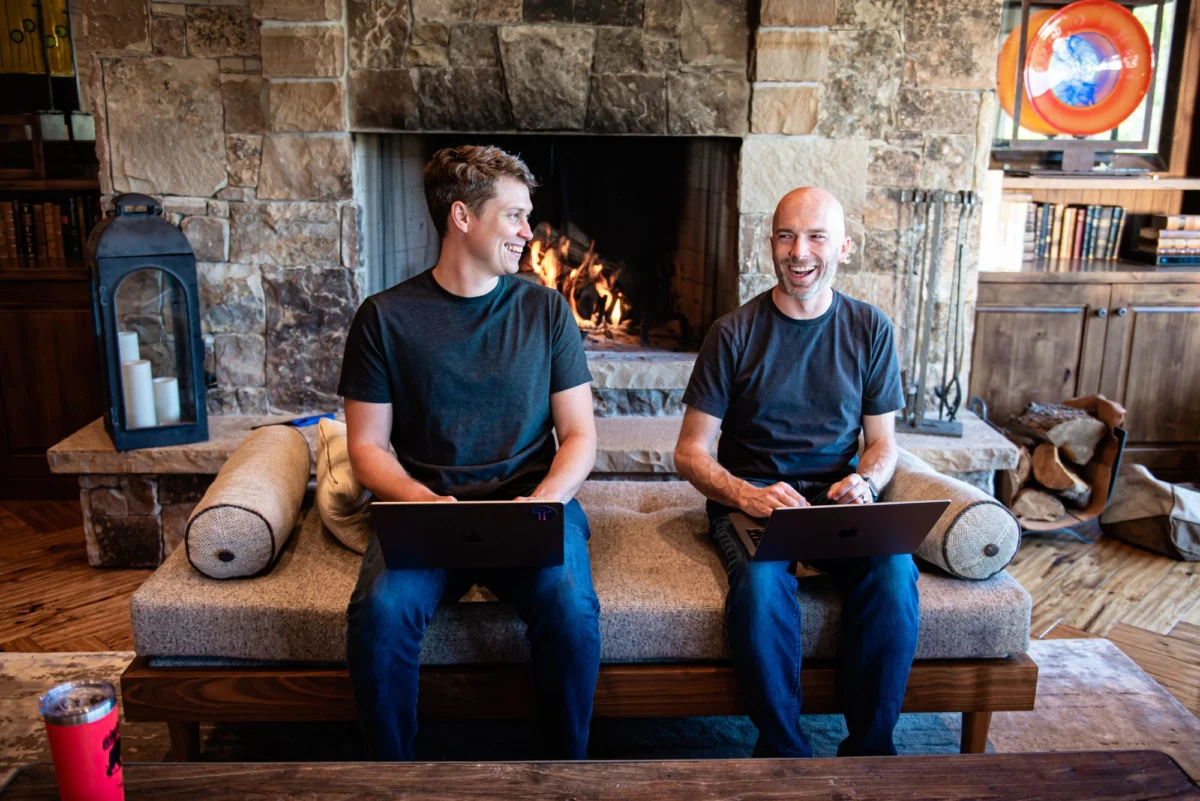
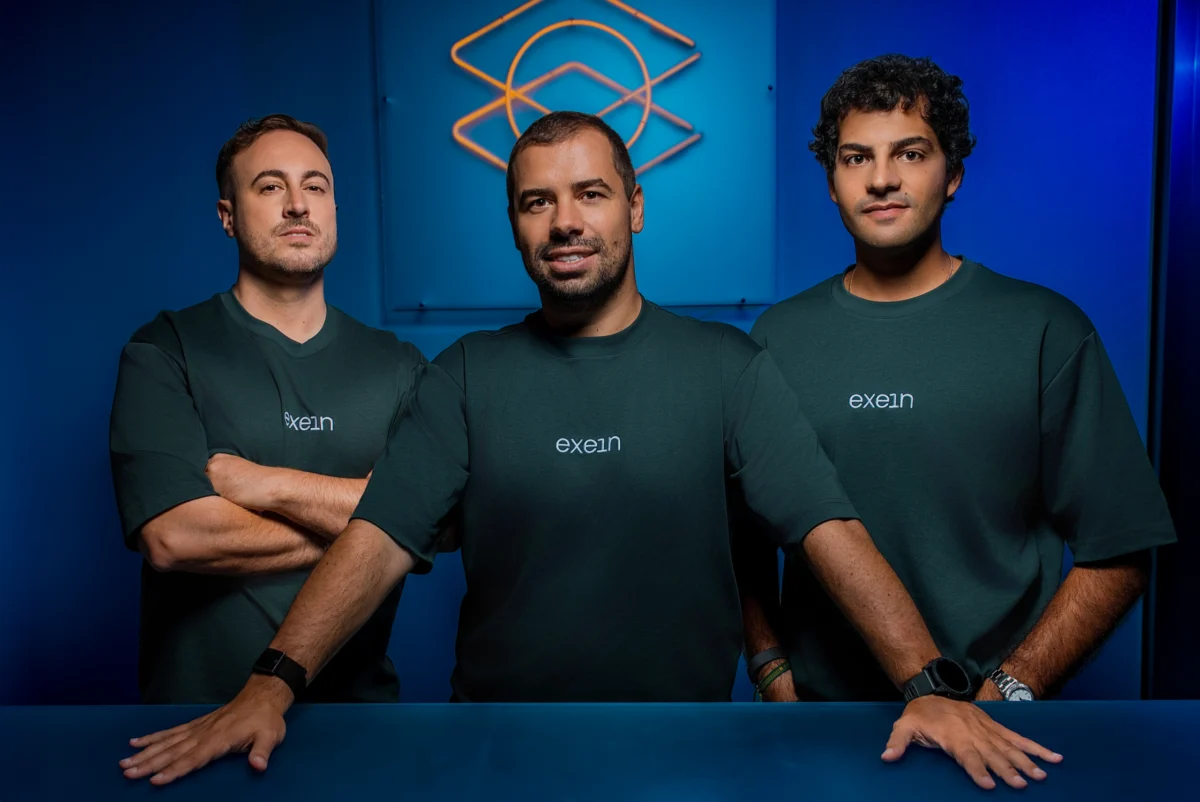
The artificial intelligence chip startup Etched, founded in 2022 by three Harvard University dropouts, has successfully closed a substantial $300 million Series C funding round, achieving a remarkable valuation of $10.3 billion. This significant financial milestone underscores the company’s rapid ascent and the immense investor confidence in its groundbreaking AI hardware solutions. Robert Wachen, co-founder and Chief Operating Officer of Etched, confirmed the details of the funding round to TechCrunch.
The Series C round was spearheaded by the prominent venture capital firm Sequoia, with significant participation from other leading investors including Andreessen Horowitz, SK Hynix, Jane Street, and Diffusion Capital. A host of earlier investors also contributed to this latest funding push, signaling sustained belief in Etched’s long-term vision. The company’s impressive backing extends to influential figures in the tech and AI landscape, such as Peter Thiel, Andrej Karpathy, Dylan Field, and Amjad Masad, among others, further validating Etched’s technological prowess and market potential.
This latest funding round represents a dramatic acceleration in Etched’s valuation trajectory. In December of the previous year, the company secured $500 million in funding at a $5 billion valuation. The recent Series C round effectively doubles that valuation in approximately seven months, a feat that Etched asserts is the highest valuation ever achieved by a Sequoia-led Series C funding round. This rapid appreciation in value comes on the heels of a significant announcement last month: Etched had successfully manufactured its proprietary, homegrown AI chips. Furthermore, the company revealed that its initial full systems were undergoing client testing and had already garnered $1 billion in pre-orders.
Genesis of a Visionary Startup: Challenging Conventional Wisdom in AI Hardware
Etched emerged onto the scene at a time when the concept of designing specialized AI chips, particularly those optimized for transformer-based models, was met with considerable skepticism. Transformer architectures form the bedrock of most contemporary AI systems, powering influential models like ChatGPT and Claude. At its inception, the idea of creating hardware exclusively for such models was considered ambitious, if not audacious, by many in the industry. Etched continues to navigate a perception challenge, with some still believing its offerings—which are sold as complete systems, not just standalone chips—are exclusively designed for specific large language models (LLMs).
However, Wachen clarified this misconception, explaining that Etched’s systems are engineered for broad AI model compatibility. They are capable of running a diverse range of AI models, including Mixture of Experts (MoE) architectures, exemplified by models like DeepSeek and Qwen. MoE models differentiate themselves by distributing computational tasks across specialized sub-models, rather than relying on a single, monolithic model. Beyond MoE, Etched’s hardware also supports non-transformer designs such as Mamba, which leverages a distinct underlying architecture known as a state-space model. This versatility highlights Etched’s commitment to building a foundational AI hardware platform rather than a narrowly focused solution. Notably, the concept of embedding specific AI model components directly into silicon for enhanced performance, a core tenet of Etched’s approach, is gaining traction. Reports indicate that Google is exploring a similar strategy with its purported "Frozen v2" chip, which is rumored to integrate Gemini’s architecture directly into the silicon.
Technological Innovation: Redefining AI Inference Efficiency
Etched’s primary claim to innovation lies in its development of two novel components meticulously designed to accelerate inference, the critical computational process that occurs after a user submits a query to an AI model. Wachen detailed the two-stage nature of AI inference: "prefill and decode." The "prefill phase" is computationally intensive, involving the AI’s comprehension of the user’s prompt and its associated context. Conversely, the "decode" phase focuses on generating the output tokens, which constitute the AI’s response. This latter stage demands less computational power but requires substantial memory access.
To optimize the prefill stage, Etched has engineered a new prefill chip that operates with unprecedented speed. Wachen emphasized its efficiency, stating it runs "dramatically faster… by running at a much lower voltage than any other AI chip. We call this low-voltage inference." Operating at lower voltages not only reduces heat generation, a significant constraint in chip design, but also allows for a higher density of transistors on the chip, further boosting performance.
For the decode process, Etched has introduced a novel memory and interconnect technology they term "cluster-scale memory." This innovative system enables numerous chips to interoperate seamlessly, accessing a shared memory pool with exceptionally low latency. The synergy of these advancements, according to Etched, delivers not only high-speed AI processing but also a more cost-effective solution for deploying AI at scale.
Navigating Skepticism and Proving the Concept
The journey for Etched’s founders—CEO Gavin Uberti, Wachen, and Chris Zhu—has been marked by a persistent battle against skepticism. Launching the company at a time when the broader tech industry, with the notable exception of NVIDIA, was still grappling with understanding the specialized compute demands of AI, meant facing considerable doubt. Even after announcing the successful manufacturing of their initial silicon by TSMC, a globally recognized leader in semiconductor fabrication, the doubters persisted.

A significant factor contributing to this lingering skepticism has been the limited access to Etched’s systems. Until recently, hands-on experience with the hardware was largely confined to investors and a select group of early customers. This exclusivity, however, also played a role in securing Etched’s impressive roster of high-profile investors. Potential backers were often granted private demonstrations, allowing them to witness the technology’s capabilities firsthand.
"Andrej Karpathy from Anthropic, Noam Brown from OpenAI, Geoffrey Hinton, as well as all the investors in the funding round—these are all people who actually tried the hardware and are very excited about it," Wachen remarked, highlighting the impactful nature of these private viewings. The validation from such esteemed figures in the AI field lends significant weight to Etched’s technological claims.
A Chronicle of Grit and Determination: From Dorm Room to Data Center
The path to Etched’s current success has been arduous, a testament to the founders’ resilience and unwavering belief in their vision. The trio’s decision to leave Harvard University to pursue their entrepreneurial ambitions was a bold one, undertaken without a clear roadmap for fundraising or scaling a hardware company.
"We had no idea how hard it was going to be," Wachen candidly admitted. "I think we still have to be humbled by what it will take to actually get to scale." He recounted the stark realities of their early days in the Bay Area after informing his parents of his departure from university. Arriving with no pre-arranged office space or accommodation, Wachen found himself sleeping on the floor of a friend’s unfurnished house. "I remember staying in my friend’s house that they were about to sell, using a towel as a blanket," he recalled with a laugh.
The founders’ initial operational setup was equally rudimentary. The servers required for their chip-design tools were housed in the garage of an early employee. "Every time it needed to be rebooted, he would call his wife, and she would go and hit the reboot button," Wachen explained, illustrating the DIY spirit and resourcefulness that characterized Etched’s nascent stages.
Scaling Up: From Humble Beginnings to Industry Powerhouse
Today, Etched operates on a vastly different scale. The company has grown to employ 400 individuals and manages a 2-megawatt data center on its premises. In a significant expansion of its operational capacity, Etched recently inaugurated a new 80,000-square-foot facility in Milpitas, located conveniently close to its main San Jose headquarters. This new site boasts an impressive 10-megawatt power capacity, signaling a readiness for significant growth and large-scale deployment.
"We’re running tokens in our lab today, working with some of the largest AI companies in the world," Wachen stated, underscoring the company’s current engagement with major players in the AI industry. The contrast between the early days of sleeping on the floor and the current operational scale is striking. Wachen humorously noted his improved living situation, joking, "Wachen also has a blanket now, and a mattress—and a pillow even. Multiple pillows."
More importantly, the founders have remained steadfast in their mission, refusing to be deterred by early doubters. "It’s come a long way. It’s a very, very different world. But I think, when you really think something’s possible, and you just work at it for a long time, you can do it," Wachen reflected, encapsulating the essence of Etched’s journey. The company’s trajectory serves as a powerful narrative of innovation, perseverance, and the transformative potential of visionary technology in the rapidly evolving landscape of artificial intelligence.
Note: This article has been updated to include details regarding the newly opened 10MW facility.
Disclaimer: When you purchase through links in our articles, we may earn a small commission. This does not affect our editorial independence.