admin
admin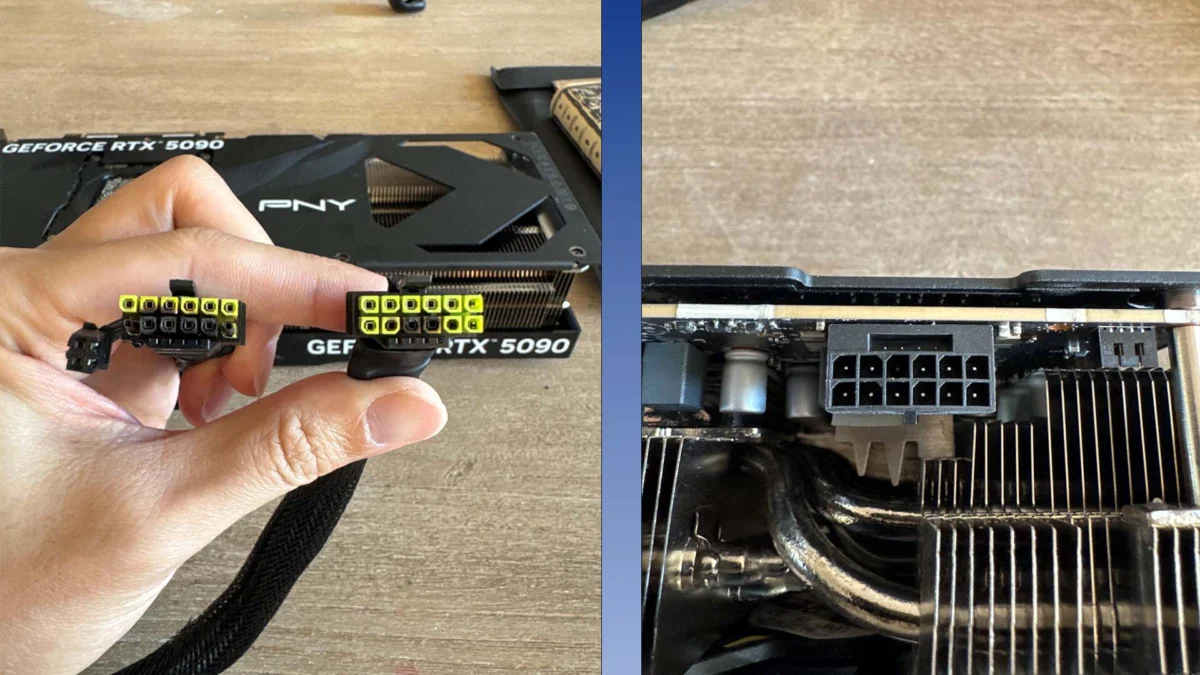
A high-profile hardware failure involving a PNY GeForce RTX 5090 has ignited a significant debate within the PC enthusiast community after the manufacturer officially denied a warranty claim for a melted 12VHPWR connector. The incident, which occurred while the graphics card was reportedly running at an idle state, has brought PNY’s warranty policies under intense scrutiny, particularly regarding the use of native power supply unit (PSU) cables versus the company-provided adapters. The denial of service highlights a growing friction between component manufacturers and the standards established by the ATX 3.1 power specification, raising questions about consumer protection and the transparency of warranty documentation in the high-end hardware market.
The controversy began when a user, identified as "Melodic_Initial_1767" on Reddit, reported that their flagship RTX 5090 suffered a catastrophic connector failure. According to the owner, the graphics card was operating under highly conservative conditions: it was using a stock VBIOS, and a power limit had been applied to ensure the GPU ran below its default factory specifications. Most notably, the failure did not occur during a period of high stress or intensive gaming; rather, the connector began to melt while the system was sitting idle. This detail is particularly concerning for the hardware community, as the 12VHPWR (and its successor, the 12V-2×6) connector is designed to handle significant current, and a failure at idle suggests either a deep-seated manufacturing defect or a fundamental flaw in the contact interface.
Upon discovering the damage, the owner initiated a Return Merchandise Authorization (RMA) process with PNY. However, the request was met with a swift rejection. The official response from PNY stated that the warranty was void because the user had utilized a native 12VHPWR cable provided by their power supply manufacturer instead of the PNY-branded adapter or cable included in the GPU box. PNY’s correspondence explicitly stated that only the configuration provided in the retail box is covered under their warranty terms. The company further asserted that any damage resulting from the use of third-party cables—even those from reputable PSU manufacturers—falls under the liability of the cable or power supply manufacturer, effectively absolving PNY of responsibility for the hardware failure.

The Technical Context: Native Cables vs. Bundled Adapters
The technical irony of PNY’s stance lies in the industry-wide consensus regarding the 16-pin power connector. Since the introduction of the 12VHPWR standard with the NVIDIA GeForce RTX 40-series, hardware experts and PSU manufacturers have generally recommended the use of native, direct-to-PSU cables over the use of multi-dongle adapters. Native cables, such as the one used by the affected Redditor, reduce the number of physical connection points, thereby minimizing electrical resistance and the potential for heat buildup.
The user in question was utilizing an ASRock PG-1600G, a high-end 1600W modular power supply that adheres to the ATX 3.1 standard. This PSU is specifically designed to handle the transient power spikes associated with Blackwell-architecture GPUs like the RTX 5090. It includes a high-quality, native 12VHPWR cable intended to provide a cleaner and more secure connection than the 3×8-pin or 4×8-pin adapters often bundled with graphics cards. By denying the warranty based on the use of a superior native cable, PNY is taking a position that contradicts the prevailing technical recommendations of the power supply industry.
Discrepancies in Official Warranty Documentation
The most contentious aspect of the denial is the apparent lack of supporting language in PNY’s public-facing warranty documents. Following the rejection of the claim, the owner performed a thorough review of PNY’s published warranty terms, specifically looking at "Rev 02.28.2025." Despite the company’s insistence that the use of third-party cables voids the warranty, the user reported finding no mention of such a restriction. There were no specific clauses related to 12VHPWR accessories, native PSU cables, or the mandatory use of the included adapter to maintain warranty eligibility.
The documentation does state that the graphics card must be installed "in accordance with the installation guide provided herewith." However, when the user consulted the installation guide for the RTX 5090, they found further inconsistencies. The guide allegedly only contained instructions for traditional 6-pin and 8-pin power connectors, failing to provide specific guidance or warnings regarding the 16-pin 12VHPWR interface that the card actually uses. This lack of clear, updated documentation suggests a disconnect between PNY’s legal terms and its customer service enforcement policies.

Chronology of the Dispute
The timeline of the incident reflects a rigid stance from PNY’s support hierarchy:
- The Failure: The RTX 5090 connector melts while the system is at idle.
- Initial Claim: The user submits an RMA request to PNY, disclosing the use of a native ASRock PSU cable.
- First Denial: PNY issues a statement claiming that only PNY-approved cables are covered.
- User Inquiry: The owner challenges the denial, citing the lack of specific exclusionary language in the provided warranty documentation and installation guide.
- Final Verdict: A "Senior Technician" at PNY responds, stating that the company’s decision is final and that the support ticket will be closed without further recourse.
This sequence has drawn criticism for its perceived lack of transparency. In many jurisdictions, including the United States under the Magnuson-Moss Warranty Act, manufacturers are generally prohibited from conditioning a warranty on the use of a specific brand of peripheral or accessory unless that accessory is provided free of charge or the manufacturer can prove that the third-party component caused the damage. PNY’s blanket denial, without providing evidence that the ASRock cable was at fault, may sit in a legally gray area.
Historical Context and the 12VHPWR Legacy
To understand the gravity of this situation, one must look back at the launch of the NVIDIA RTX 4090. That generation was marred by "Melting-Gate," where numerous users reported scorched connectors. Investigations by groups like Gamers Nexus and PCI-SIG eventually concluded that many of these failures were due to "user error" (connectors not being fully seated) or the high mechanical stress placed on the 12VHPWR adapters.
In response, the industry shifted toward the 12V-2×6 standard, which features shorter sense pins to ensure that power is only delivered if the cable is fully inserted. The RTX 5090 was expected to fully implement these safeguards to prevent a recurrence of the previous generation’s issues. However, if flagship cards are still failing at idle—and if partners like PNY are using these failures to narrow the scope of their warranty coverage—it suggests that the transition to the new power standard remains fraught with risk for the consumer.

Broader Market Implications and Consumer Reaction
The reaction from the PC building community has been overwhelmingly supportive of the user. Many enthusiasts argue that if a manufacturer sells a product that adheres to a universal industry standard (like ATX 3.1), they should honor the use of other components that adhere to that same standard. The refusal to support native PSU cables is seen by some as an attempt to "lock in" users to inferior bundled accessories or to create a loophole for denying expensive RMAs on high-margin products.
For PNY, the fallout could be significant. As a prominent Add-in Board (AIB) partner for NVIDIA, PNY relies on its reputation for reliability and professional-grade support. By taking a hardline stance against a user who appears to have followed best practices for high-end system assembly, the company risks alienating the enthusiast market. Furthermore, this incident may prompt other RTX 50-series owners to reconsider their choice of brand, gravitating toward manufacturers with more flexible or transparent warranty terms.
Analysis of Manufacturer Liability
From a legal and technical standpoint, the burden of proof in such cases often rests on the manufacturer to demonstrate that the third-party cable was the direct cause of the failure. In this instance, the ASRock PG-1600G is a premium component, and its native cable is theoretically less likely to fail than a bundled adapter. If the failure was caused by a defect in the GPU’s own header—such as poor soldering or a loose pin—the choice of cable would be irrelevant to the root cause.
The situation also raises questions about NVIDIA’s role. As the architect of the RTX 5090 and the primary proponent of the 16-pin power standard, NVIDIA has a vested interest in ensuring that its partners handle failures gracefully. If PNY’s policy becomes a trend among AIB partners, it could lead to a fragmented market where consumers must navigate a minefield of conflicting cable requirements just to keep their warranties intact.

Conclusion
The denial of the RTX 5090 warranty claim by PNY serves as a cautionary tale for the current era of high-power computing. It exposes a critical gap between industry standards and corporate policy, leaving consumers caught in the middle of a dispute between GPU and PSU manufacturers. As hardware continues to push the limits of power delivery, the need for clear, documented, and fair warranty terms becomes paramount.
For now, the affected user is left with a flagship graphics card that is non-functional and a manufacturer that has closed the door on repairs. The incident remains a focal point for discussions on consumer rights, with many calling for a re-evaluation of how warranty clauses are communicated and enforced in the tech industry. Whether PNY will bow to public pressure and reconsider the claim remains to be seen, but the precedent set here will undoubtedly influence the purchasing decisions of enthusiasts for the remainder of the RTX 50-series lifecycle.