Sisilia Frederika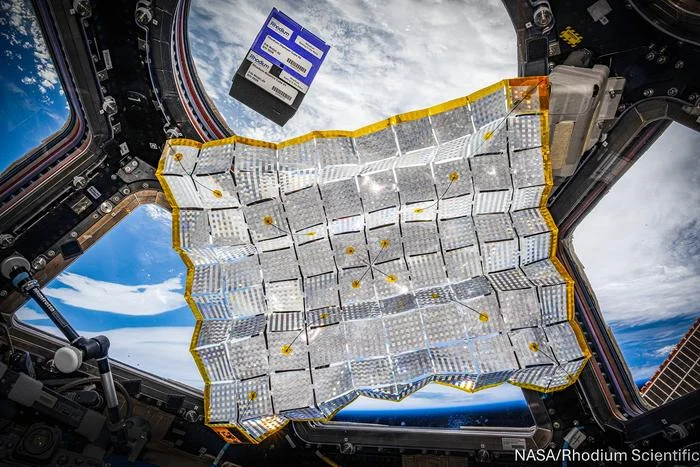
The dream of reaching the nearest stars within a human lifetime has moved a step closer to reality following the successful deployment of two pioneering lightsail experiments from the International Space Station (ISS). Developed by engineers at Cornell University’s Space System Design Studio (SSDS), the Alpha CubeSat and Sailing to the Stars missions represent a critical milestone in the development of gram-scale spacecraft and directed-energy propulsion. These missions, which utilize "origami-style" folding techniques and off-the-shelf technologies, are designed to prove that miniature satellites can survive and communicate in the harsh environment of Earth orbit, paving the way for future relativistic travel to Alpha Centauri and beyond.
The Dawn of Lightsail Technology and Interstellar Ambition
Interstellar exploration presents a challenge of scale that traditional chemical rockets cannot meet. To reach the nearest star system, Proxima Centauri, located approximately 4.24 light-years away, a conventional spacecraft would require tens of thousands of years. Lightsail technology offers a radical alternative. By utilizing massive ground- or space-based laser arrays to push ultra-reflective sails, tiny spacecraft could theoretically be accelerated to relativistic speeds—fractions of the speed of light. At 20% of the speed of light, a journey to the Alpha Centauri system could be completed in roughly 20 years, a duration compatible with human research timelines.
However, the transition from theoretical physics to engineering reality requires a series of incremental "proof of concept" missions. The Cornell experiments, Alpha CubeSat and Sailing to the Stars, were conceived to address these early-stage hurdles. Specifically, they aimed to test the deployment mechanisms of large, thin-film sails from compact CubeSat architectures and to verify the communication capabilities of "ChipSats"—tiny, gram-scale satellites that carry the essential sensors and transmitters for such missions.
Mission Chronology: From Concept to Orbit
The trajectory of these missions began nearly a decade ago. In 2016, the Museum of Science Fiction launched its CubeSat Competition, challenging students and engineers to design next-generation spacecraft using commercially available, off-the-shelf (COTS) technologies. The Cornell SSDS team emerged as a leader in this initiative, securing support and funding through NASA’s CubeSat Launch Initiative (CSLI). This program is designed to provide low-cost access to space for educational institutions and non-profits, fostering innovation in the small-satellite sector.
The hardware was integrated into two separate launch manifests in late 2025. The first components reached the ISS aboard the Northrop Grumman NG-23 resupply mission, while the remainder followed on the SpaceX Crew-11 mission. Once aboard the station, the experiments awaited their window for deployment into Low Earth Orbit (LEO).
On December 2, 2025, the Sailing to the Stars project, which served as a companion experiment to Alpha CubeSat, was deployed from the ISS as part of the Nanoracks CubeSat Deployer mission (NRCSD-29). This deployment included AlphaCube and five additional lightsail prototypes. The deployment was a high-stakes operation, as the lightsails were stowed in a highly compressed, "origami-style" configuration to minimize the volume occupied within the launch vehicle. Upon release, the sails unfurled, expanding from their compact storage state into their full functional geometry.
Engineering Innovation: Origami Sails and 3D-Printed Chassis
The technical success of the Cornell missions is rooted in several engineering "firsts" for spacecraft of this scale. To fit within the standardized dimensions of a CubeSat—a 10-centimeter cube—the lightsails had to be folded with extreme precision. The SSDS team employed complex folding algorithms to ensure that the delicate reflective material could expand without tearing or tangling. This "origami" approach is essential for future interstellar missions, where sails measuring hundreds of square meters must be launched inside relatively small rockets.
Beyond the sails themselves, the Alpha CubeSat mission demonstrated the viability of several novel subsystems:
- 3D-Printed Modular Chassis: The spacecraft utilized a fully 3D-printed chassis, constructed using a "CubeSat-LEGO" modular philosophy. This approach significantly reduces manufacturing costs and allows for rapid prototyping and iteration.
- Spin-Stabilization via Laptop Components: In an ingenious use of COTS technology, the team used reaction wheels salvaged from laptop hard disk drives to provide spin-stabilization. This was supplemented by a magnetorquer-only algorithm, which uses the Earth’s magnetic field to orient the spacecraft.
- RockBLOCK Iridium Modem: The mission marked the first spaceflight of the RockBLOCK Iridium modem. Originally designed as a waterproof global tracker for extreme terrestrial environments, the modem proved capable of maintaining a data link between the satellite and the ground.
- Holographic Message Plaques: In a nod to the cultural significance of interstellar travel, the spacecraft carried the first-ever holographic-image message plaques sent into space, echoing the legacy of the Voyager Golden Records.
Communication and Data Acquisition
A primary objective of the mission was to demonstrate that gram-scale ChipSats could transmit meaningful data back to Earth. Historically, the low power output of such small devices made ground communication difficult. However, the Cornell team successfully established a link using TinyGS, an open-source global network of satellite ground stations.
Joshua Umansky-Castro, the mission lead and a recent Ph.D. graduate from Cornell’s Aerospace Engineering program, highlighted the significance of this achievement. He noted that this was the first time a spacecraft of this diminutive size had transmitted complete data packets from orbit to the ground. This milestone validates the "ChipSat" platform as a viable tool for future exploration, proving that miniaturized electronics can survive the vacuum and radiation of space while maintaining functional telemetry.
Simultaneously, the Sailing to the Stars project captured critical video footage and Inertial Measurement Unit (IMU) data during the deployment phase. This data allowed engineers to analyze the dynamics of the sail unfurling in microgravity. Understanding these dynamics is vital for scaling up to larger sails, where any irregularity in deployment could cause the sail to tumble or fail under the pressure of a high-powered laser.
Statements from the Project Leadership
The success of the missions has been met with acclaim from the academic and engineering communities. For the students and researchers involved, the project represented the culmination of years of rigorous design and testing.
Verena Padres, an engineering graduate and the manager of the Sailing to the Stars project, expressed the team’s sense of accomplishment. "Going into college, it was my dream to work on something that would fly in space," Padres stated. She emphasized the value of the hands-on experience gained by the team, which managed the project from the initial conceptual stages through to the final launch and orbital operations.
The collaboration between Cornell, NASA, and the Museum of Science Fiction underscores a broader trend in the aerospace industry: the democratization of space. By using off-the-shelf components and open-source communication networks, the cost of entry for space exploration is falling, allowing universities to conduct high-impact research that was once the exclusive domain of national space agencies.
Analysis of Implications: The Path Forward
The data gathered from Alpha CubeSat and Sailing to the Stars will serve as a foundation for the next generation of lightsail demonstrations. While these missions were conducted in Earth orbit and did not utilize laser propulsion, they solved the "packaging and deployment" problem that has long hindered lightsail designs.
The next logical steps in this technology roadmap include:
- Active Steering and Orbit-Raising: Future CubeSats will need to demonstrate the ability to change their trajectory by tilting their sails relative to sunlight or laser beams.
- Laser Propulsion Testing: Ground-based laser facilities will eventually be used to "push" these sails in orbit, testing the thermal limits of the sail materials and the precision of the laser pointing systems.
- Swarm Missions: Because ChipSats are inexpensive, they can be deployed in "swarms." Even if a significant percentage of the swarm is lost to interstellar dust or radiation, the remaining units can still complete the mission and transmit data.
These developments are being closely watched by international initiatives such as Breakthrough Starshot, a $100 million research and engineering project aiming to develop a proof-of-concept fleet of light-propelled "StarChips." Similarly, Project Lyra has proposed using similar technology to intercept interstellar objects (ISOs) like ‘Oumuamua, which pass through our solar system at speeds too high for conventional rockets to catch.
Conclusion
The successful burn-up of Alpha CubeSat in the Earth’s atmosphere marked the end of its physical journey, but the data it transmitted remains a permanent contribution to the field of astronautics. By proving that origami-folded lightsails and 3D-printed ChipSats can function in the space environment, Cornell University has provided a vital "green light" for more ambitious directed-energy propulsion projects.
As humanity looks toward the stars, the lessons learned from these small-scale experiments on the ISS will be instrumental. The transition from chemical propulsion to light-based travel is no longer a matter of science fiction, but a matter of engineering refinement. With each successful deployment, the distance to our neighboring stars feels a little less daunting, and the prospect of interstellar exploration moves closer to the horizon of the possible.