Garick Elordi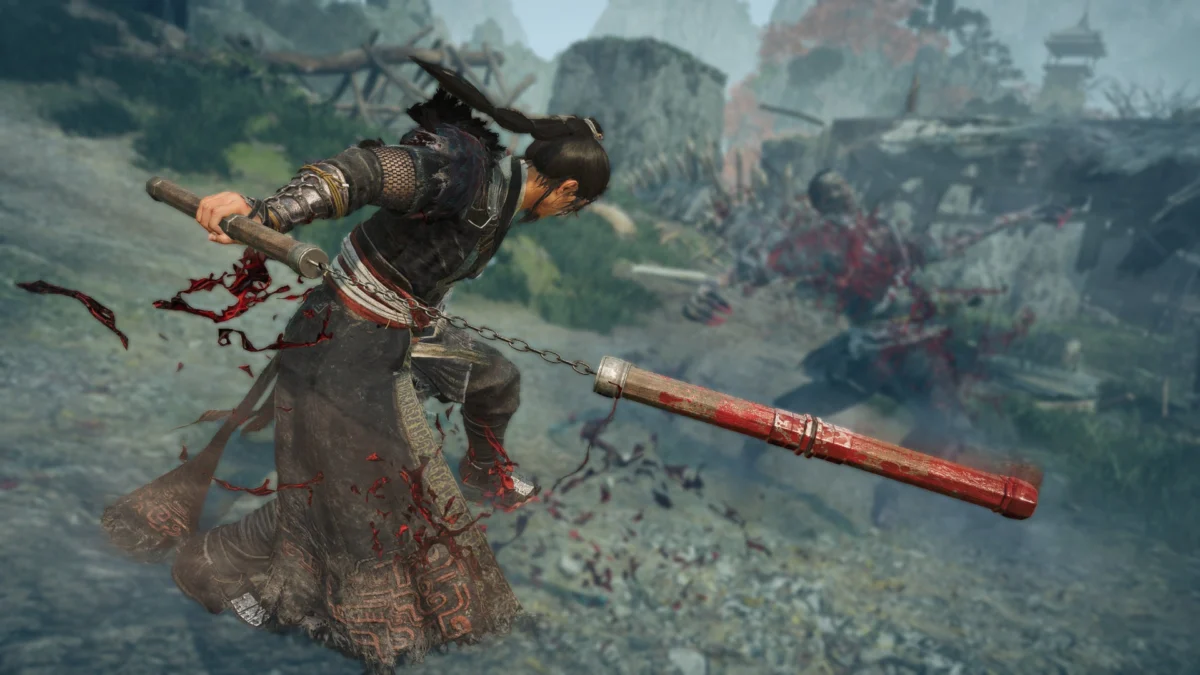
Following the critical and commercial success of the 2023 title Wo Long: Fallen Dynasty, developer Team Ninja and publisher Koei Tecmo have officially unveiled a deeper look into the highly anticipated sequel, Wo Long 2: Wings of Ember. During a recent five-hour hands-on demonstration, the title revealed itself to be a significant departure from its predecessor’s more grounded roots, instead opting for a high-octane synthesis of the studio’s most storied franchises. By integrating the verticality of the Ninja Gaiden series and the intricate character-based movesets of Dead or Alive, Team Ninja appears to be positioning Wings of Ember as the definitive evolution of the "Masocore" subgenre. Scheduled for a 2027 release, the game is currently available as a public demo across Steam, PlayStation 5, and Xbox Series X|S, allowing the broader gaming community to experience a combat system that prioritizes fluid motion and aggressive momentum over the static defensive playstyles often associated with traditional action-RPGs.
The Evolution of Team Ninja’s Action-RPG Formula
The original Wo Long: Fallen Dynasty was frequently categorized as a "spiritual successor" to the Nioh series, utilizing a similar mission-based structure and loot system while introducing the unique "Deflect" mechanic. While that title was praised for its rhythmic combat and innovative Morale System, some critics argued that its reliance on a single defensive gimmick occasionally limited tactical variety. Wo Long 2: Wings of Ember addresses these concerns by fundamentally restructuring the player’s interaction with the environment and the enemy.
Market data from the first game’s lifecycle indicated a strong desire among players for more varied movement options. In response, Team Ninja has overhauled the physics engine to remove the "high gravity" sensation prevalent in the first installment. This shift is not merely cosmetic; it is a structural necessity driven by the game’s new emphasis on three-dimensional combat. By drawing from the development cycle of Ninja Gaiden 4, which was produced in tandem with Wings of Ember, the developers have successfully transitioned the series from a horizontal plane to a fully realized vertical space.
Integrating the Legacy of Ninja Gaiden: Verticality and Aerial Dominance
One of the most striking additions to Wo Long 2: Wings of Ember is the requirement for aerial engagement. In the previous game, jumping was primarily a tool for light platforming or initiating a singular "Fatal Strike" on unsuspecting foes. In the sequel, the combat loop is explicitly designed around the "Air-to-Ground" transition. Enemies are no longer passive observers of the player’s vertical movement; they possess sophisticated AI routines capable of tracking players mid-air, necessitating a mastery of aerial parries and mid-flight adjustments.
This "three-dimensionality" transforms the encounter design. Players are encouraged to use the environment to gain height, executing plunging attacks that can be chained into ground combos. This synergy is a direct result of Team Ninja’s internal knowledge sharing between the Ninja Gaiden and Wo Long teams. The result is a protagonist who feels significantly more lethal and agile, capable of navigating complex battlefields with a grace previously reserved for Ryu Hayabusa.
Combat Mechanics: The Synergy of Deflection and Momentum
At the heart of Wings of Ember lies an evolved version of the Spirit Gauge system. While the ability to deflect almost every incoming attack remains a cornerstone of the experience, the sequel introduces layers of complexity to prevent the "repetitive" gameplay loops noted in the first game’s post-launch analysis. Even standard "trash" mobs now utilize specialized maneuvers that cannot be mitigated by simple deflections. Instead, players must utilize a combination of dodges, jumps, and counters.
A key mechanical addition is the "Critical Parry," executed by combining a shoulder button input with the deflect command (R1/RB + Deflect). This maneuver features a significantly tighter timing window than a standard parry but rewards the player with massive stamina and health damage against the opponent. This system mirrors the "Burst Counter" from Nioh 2 but offers greater utility across a wider range of enemy states. Furthermore, hitting a shoulder button and jumping simultaneously allows players to intercept an enemy’s "Red Flash" telegraph, effectively knocking them out of their animation and dealing substantial posture damage. This high-risk, high-reward system ensures that players must remain hyper-focused on enemy telegraphs, elevating the learning curve beyond that of its predecessor.
Weapon Diversity and the Influence of Fighting Game Architecture
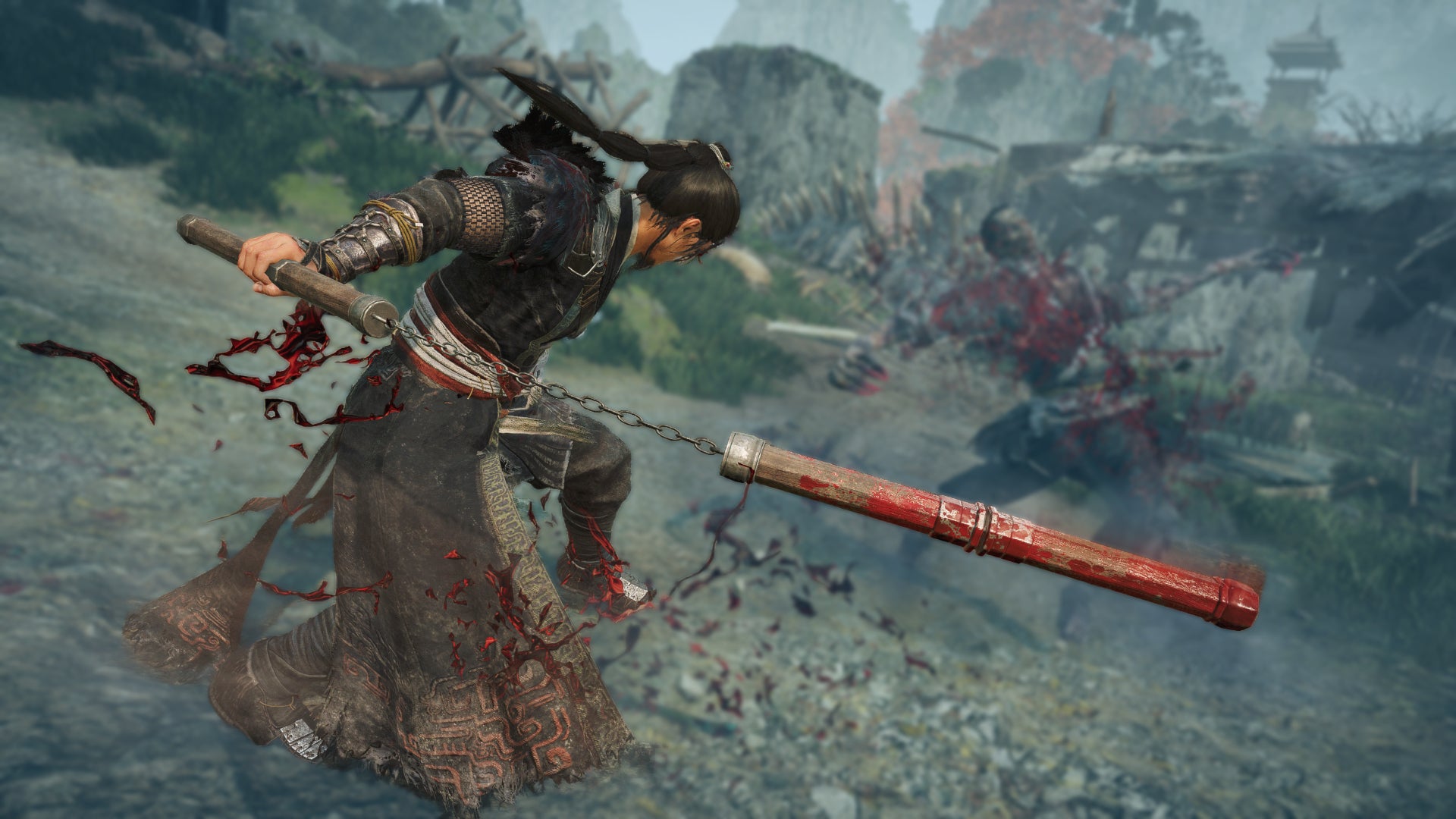
In a move that highlights Team Ninja’s roots in the fighting game genre, particularly the Dead or Alive series, Wo Long 2: Wings of Ember treats its weapon classes as distinct character archetypes. Each of the six confirmed weapon classes—straight sabres, spears, staves, glaives, hammers, and jointed flails—features a unique moveset that feels reminiscent of a fighting game roster.
The depth of these weapons is expanded by the "Martial Arts" skills, which are now more customizable and integral to the combat flow. Unlike the first game, where Martial Arts often felt like secondary considerations, in Wings of Ember, they are the connective tissue between ground and air combos. A player using a spear might initiate a combo on the ground, use a Martial Art to launch an enemy into the air, follow up with a series of aerial strikes, and finish with a plunging Fatal Strike. This level of technical expression allows for a highly personalized playstyle, though the developers have opted to keep the system streamlined compared to the complex stance-switching of the Nioh series to maintain the game’s focus on forward momentum.
A New Standard for Level Design: Semi-Open Worlds and Vertical Exploration
The level design in Wings of Ember marks a departure from the linear corridors of the first game. Drawing inspiration from the semi-open world structure seen in Nioh 3, the environments in Wo Long 2 are vast, interconnected, and highly vertical. The iconic "Flags"—which represent the player’s progress and increase their Morale rank—are now placed in more challenging, out-of-the-way locations that require light platforming and environmental puzzle-solving to reach.
This openness encourages exploration and rewards players for mastering the new movement mechanics. The Morale System, which was a "best-in-class" feature of the original, returns with refined balancing. It continues to incentivize completionism by rewarding players who clear out sub-bosses and find hidden flags with a higher power level for the region’s main boss encounter. However, the verticality adds a new layer to this system; players can now scout enemy camps from rooftops or cliffsides, planning their approach with a level of tactical depth that was previously absent.

Development Timeline and Platform Accessibility
The journey toward Wo Long 2: Wings of Ember began shortly after the completion of the first game’s DLC cycle in late 2023. Team Ninja’s internal structure allowed for a collaborative development process where assets and mechanical philosophies were shared between the teams working on Ninja Gaiden 4 and Wo Long 2. This "cross-pollination" is cited by industry analysts as the primary reason for the sequel’s rapid advancement in technical fidelity and gameplay depth.
- June 2026: Official reveal at the Xbox Games Showcase with the "Wings of Ember" subtitle.
- January 2027: First public hands-on demo released on all major platforms.
- Q3 2027: Targeted global release date.
The current demo offers a substantial look at the first two major regions of the game, including three boss fights that showcase the new aerial and critical parry mechanics. Early data from the demo suggests a positive reception toward the increased difficulty and the more fluid movement, with Steam concurrent player counts reaching significant heights within the first 48 hours of availability.
Industry Outlook: The Future of the Masocore Genre
As the action-RPG market continues to grow, Team Ninja is carving out a specific niche that prioritizes mechanical precision and high-speed aggression over the slower, more methodical pace of other titles in the genre. Wo Long 2: Wings of Ember represents a confident step forward for a studio that is no longer content to simply follow the "Soulslike" blueprint. By leaning into their own history with Ninja Gaiden and Dead or Alive, they are creating a hybrid experience that appeals to both fighting game veterans and RPG enthusiasts.
The implications for the genre are significant. If Wings of Ember succeeds in its goal of making verticality and complex aerial combat a standard for the series, it could force a shift in how other developers approach encounter design in 3D action games. The emphasis on "forward momentum" and "breaking the guard" rather than passive observation suggests a future where the player is always the aggressor, a philosophy that resonates with a modern audience seeking more proactive gameplay experiences.
With a 2027 release on the horizon, Wo Long 2: Wings of Ember is not just a sequel; it is a statement of intent from Team Ninja. By refining the gems of the first game and placing them front and center within a more sophisticated technical framework, the studio is poised to deliver a title that could define the next generation of action-oriented role-playing games. The available demo serves as a testament to this ambition, offering a glimpse into a world where the lethal grace of Chinese martial arts meets the punishing challenge of a dark fantasy epic.