
 Vera Intan Clara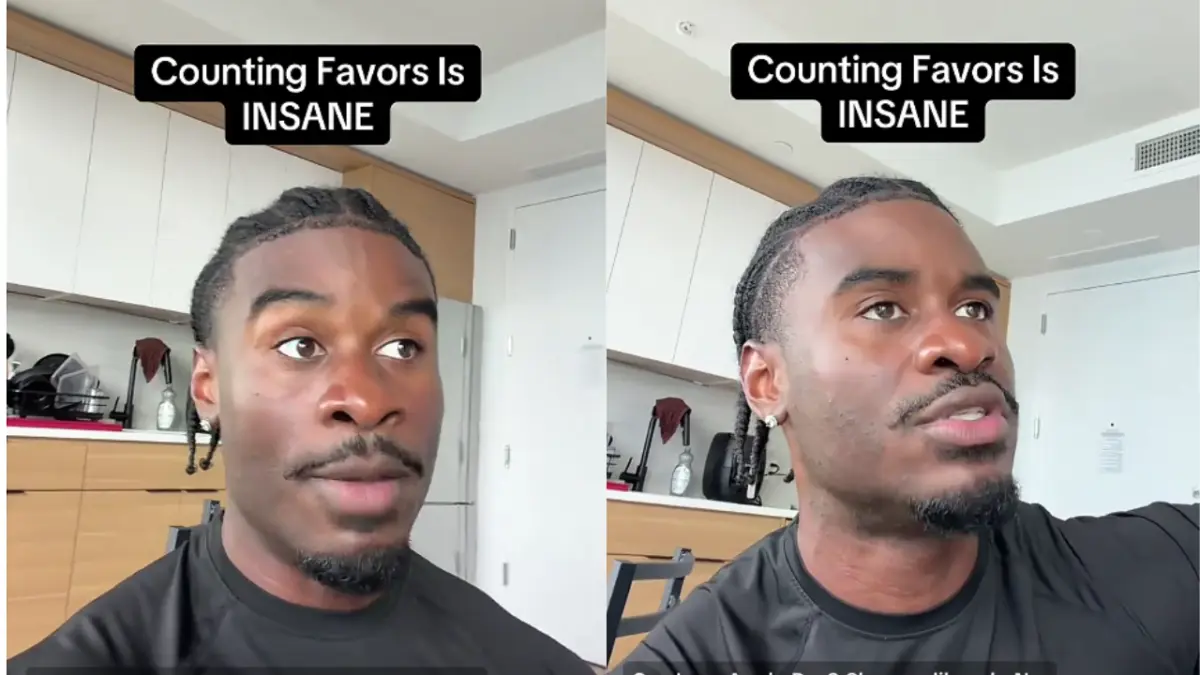
A recent viral video shared by TikTok creator @maxwellvision has ignited a significant online discussion regarding the delicate balance of financial interactions within friendships, specifically the interpretation of a "favor" versus a "loan." The creator’s account of a friend who initially declined repayment for a meal, only to confront him about it weeks later, has resonated with millions, drawing 1.7 million views and over a thousand comments, underscoring a common yet often unaddressed social dilemma. The incident, which highlights the complexities of unspoken expectations and the potential for miscommunication in close relationships, offers a poignant case study into modern social dynamics where digital transactions intersect with traditional social norms.
A Birthday Celebration Turns Complicated: The Genesis of the Dispute
The narrative unfolded during a celebratory birthday dinner for a mutual female friend, attended by a group of close acquaintances. The evening, initially marked by camaraderie and enjoyment, took an unexpected turn when the bills arrived. It was at this juncture that Maxwell encountered an unforeseen personal logistical challenge that would eventually become the catalyst for the broader dispute. The group had opted for separate checks, a common practice that aims to streamline payment and avoid the often-awkward process of splitting a collective bill. Maxwell, upon receiving his $65 bill, which he noted was an accurate reflection of his food and drink orders, discovered a critical oversight: his wallet was not with him.
-
The Unexpected Snag: A Missing Wallet
Realizing his pockets were empty, Maxwell quickly retraced his steps, deducing that his wallet was either left in the ride-share vehicle he had taken to the restaurant or, more fortunately, safely at home. A quick check of his phone, utilizing the AirTag tracking device attached to his wallet, confirmed the latter, bringing a moment of relief that his valuables were secure. However, this comfort was short-lived, as the immediate problem of paying his dinner bill persisted. Without physical cash or credit cards, Maxwell found himself in a predicament that many modern consumers, increasingly reliant on digital payment methods, might face. -
Seeking Solutions: Digital Payments and Declining Options
Initially, Maxwell considered the direct approach of asking a friend to cover his meal, a common fallback in such situations. Yet, he admitted to a degree of discomfort with this idea, indicating an underlying desire to avoid imposing on his friends. He first inquired with the waitress about the restaurant’s acceptance of Apple Pay, a convenient mobile payment solution. Unfortunately, he was informed that the Apple Pay system was temporarily out of service. This rejection led him to recall the existence of peer-to-peer payment applications like Zelle and PayPal, which offered a seemingly perfect solution: a friend could cover his bill, and he could immediately transfer the funds back. He approached his friend, Jack, with this proposition, explicitly stating his intention to reimburse him via Zelle.
The "Favor" Extended: Jack’s Initial Gesture
What transpired next formed the core of Maxwell’s viral account and the subsequent public debate. To Maxwell’s surprise, Jack not only agreed to cover the $65 bill but emphatically declined any immediate repayment. Jack’s exact words, "Zelle me the money? You good… You don’t gotta Zelle me nothing. How much is it? $65.00… Bro, you good," were unambiguous in their rejection of an immediate reimbursement. This gesture, from Maxwell’s perspective, transformed a potential loan into a clear act of generosity—a favor.
-
Interpreting Generosity: Maxwell’s Perspective
Maxwell interpreted Jack’s refusal of immediate repayment as a definitive signal that the $65 was a gift, not a debt. He explicitly stated in his video that when someone, especially a friend, offers to purchase something and explicitly states that repayment is unnecessary, it is processed in his mind as a favor. His internal logic dictated that, in the spirit of friendship and reciprocity, he would seek an opportune moment to reciprocate this kindness, perhaps by covering Jack’s meal or expenses during a future outing. This informal system of "taking turns" or "balancing accounts" over time is a common, often unspoken, understanding in many close friendships, predicated on mutual trust and a long-term view of give-and-take. Maxwell’s initial assessment was that the night had concluded positively, with a friendly gesture cementing their bond. -
The Unspoken Expectation: Jack’s Later Revelation
The perceived clarity of this transaction, however, was shattered two weeks later, revealing a stark divergence in understanding between the two friends. This incident serves as a powerful illustration of the potential pitfalls of implicit agreements, particularly concerning financial matters within social relationships. While Maxwell believed a favor had been extended and accepted, Jack harbored an unstated expectation of reimbursement, which he later admitted he withheld out of social courtesy. This clash of interpretations underscores a fundamental challenge in human communication: the assumption that explicit declarations (like "you don’t have to pay me back") are always taken at face value, without underlying social pressures or unstated intentions.
Two Weeks Later: The Confrontation at the Gym
The true nature of Jack’s initial gesture came to light approximately two weeks after the birthday dinner, during a casual gathering that inadvertently created the perfect storm for confrontation. Maxwell had been invited by another friend, Jay, to play basketball at a local gym, with the promise that other friends, including Jack, would also be present. The invitation seemed innocuous, a typical social outing among peers.
-
A Seemingly Innocent Exchange: Cash for Gatorade
After several games, the group was tired and thirsty. One friend, Eric, expressed a desire for a Gatorade from a vending machine, which, inconveniently, only accepted cash. Eric inquired if anyone had spare change. Maxwell, possessing about $4 in cash, readily offered it to Eric. This small, helpful act, commonplace among friends, was observed by Jack. The moment Maxwell handed over the money, Jack’s demeanor visibly shifted, leading to an immediate and unexpected confrontation. -
The Catalyst: Jack’s Accusation and Maxwell’s Response
Jack’s reaction was swift and laced with incredulity: "For real, bro? That’s crazy… That’s wild." Maxwell, genuinely confused by the sudden shift in tone and the implied accusation, asked for clarification. Jack’s subsequent response brought the two-week-old dinner payment to the forefront: "Bro, you don’t think it’s weird that you’re giving other people money when you owe me money? I paid for your dinner, you said you would pay me back." This statement directly contradicted Maxwell’s understanding of their prior interaction. Maxwell immediately reminded Jack of their conversation at the restaurant, emphasizing that he had offered immediate repayment via Zelle, and Jack had explicitly refused, stating he didn’t need to be reimbursed.
The Unraveling of Intentions: Reciprocity vs. Reimbursement
The gym confrontation laid bare the significant gap in communication and expectation between Maxwell and Jack. It moved beyond a simple disagreement about money to a deeper issue concerning the integrity of their friendship and the nature of their social contract.
-
Maxwell’s Stand: The Principle of Explicit Communication
From Maxwell’s perspective, Jack’s initial refusal of repayment was a clear and binding statement. He argued that if a friend offers to cover an expense and explicitly says "you don’t have to pay me back," that statement should be taken at face value. For Maxwell, this constituted a favor, implying that the giver had no expectation of immediate or direct monetary return. He articulated a common sentiment that such gestures, if later used as leverage or brought up as an unfulfilled debt, undermine the very essence of friendship. His core principle was that if repayment is expected, it should be stated upfront and clearly, preventing any ambiguity. The act of "counting favors" after declaring "no strings attached" was, to him, a betrayal of the unwritten rules of platonic relationships. -
Jack’s Rationale: The Social Pressure of Nicety
Jack, in his defense, offered a different explanation: he had only said he didn’t need repayment "to be nice." He admitted that he had, in fact, expected Maxwell to reimburse him, implying that his initial refusal was a performative gesture of generosity, a social nicety rather than a genuine waiver of debt. He further complicated matters by adding that he would "understand" if Maxwell couldn’t pay him back, which Maxwell interpreted as an insinuation about his financial capability, adding insult to injury. This admission by Jack highlights a common social dynamic where individuals might say one thing to maintain a polite facade, while harboring entirely different, unstated expectations. Such situations often lead to resentment and conflict when the unstated expectation is not met. Feeling the weight of the implied accusation and the sudden shift in their dynamic, Maxwell immediately used his phone to Zelle Jack the $65, seeking to resolve the monetary aspect and remove the "favor" from hanging over their friendship.
The Broader Context: Money, Friendship, and Social Norms
The incident shared by @maxwellvision transcends a simple misunderstanding over $65; it taps into a universal discussion about the complexities of money in friendships, a topic frequently fraught with unspoken rules, differing cultural norms, and potential for conflict.
-
The Psychology of Favors: Social Exchange Theory
Social psychology offers frameworks to understand such interactions. Social Exchange Theory posits that human relationships are formed and maintained based on a cost-benefit analysis, where individuals strive for a balance of giving and receiving. Favors, in this context, are often perceived as investments in a social relationship, creating a sense of obligation or expectation of future reciprocity, even if not explicitly stated as a debt. When Jack initially said, "you don’t gotta Zelle me nothing," Maxwell perceived it as a gift, moving it outside the immediate repayment structure. Jack, however, likely viewed it as an informal loan with an unspoken expectation of return, perhaps within a reasonable timeframe. The disparity arises when the implicit "contract" of social exchange is interpreted differently by the parties involved. Studies on social interactions suggest that explicit communication significantly reduces ambiguity and prevents such misunderstandings, yet social pressures often deter directness in financial matters among friends. -
Navigating Financial Boundaries in Relationships
Surveys consistently show that financial disagreements are a leading cause of strain in personal relationships, including friendships. A 2022 survey by LendingTree, for example, revealed that 40% of Americans have had a friendship end over money. The incident highlights the critical importance of clear financial boundaries and communication. Whether it’s splitting bills, lending money, or offering a favor, ambiguity can quickly erode trust and lead to resentment. The social pressure to appear generous or "nice" can often lead individuals to make statements that contradict their true intentions or expectations, setting the stage for future conflict. Experts in financial psychology often advise that when money changes hands between friends, it should either be treated as an unequivocal gift (with no expectation of return) or a clear loan (with agreed-upon terms for repayment). -
The Role of Digital Payment Platforms
The ubiquity of digital payment applications like Zelle, PayPal, and Venmo has significantly altered the landscape of financial transactions between individuals. These platforms have made it incredibly easy to transfer money instantly, often eliminating the need for cash or physical cards. While this convenience can streamline the process of splitting bills or repaying small debts, it also introduces new dynamics. The ease of sending money might lead some to assume that if a friend could easily repay, they should, even if repayment was initially declined verbally. Conversely, the immediate nature of these apps also provides an easy way to resolve disputes quickly, as Maxwell demonstrated by instantly Zelling Jack the money. The incident underscores how technology, while simplifying transactions, does not necessarily resolve the underlying complexities of human social interaction and expectation.
Public Reaction and Commentary: A Shared Experience
Maxwell’s video quickly went viral, attracting a deluge of comments that largely sided with his perspective, demonstrating the widespread resonance of his experience. The comments section transformed into a forum for shared anecdotes and collective wisdom on friendship etiquette.
-
Echoes from the Digital Community: Validating Maxwell’s Stance
Many commenters expressed strong agreement with Maxwell, affirming that an explicit declaration of "no need to pay me back" should be honored as a genuine favor. One popular sentiment echoed Maxwell’s personal philosophy: "Me and my buddies don’t pay each other back, we just take turns buying stuff for everyone." This comment highlights a common informal system of reciprocity within close-knit groups, where the long-term balance of contributions is more important than precise, immediate repayment of every small sum. This form of "communal reciprocity" thrives on trust and a shared understanding that generosity will eventually be returned, even if not in exact monetary terms. -
Diverse Perspectives: The Nuance of Financial Etiquette
Another significant portion of the commentary focused on the importance of clear communication. A commenter articulated this succinctly: "He should’ve been straight forward with his intentions. Also, if you don’t rock with him like that, you could’ve sent him the money right away to avoid this." This perspective suggests that while Jack’s initial statement was misleading, Maxwell also had the option to insist on repayment, especially if there was any lingering doubt about Jack’s sincerity or the nature of their friendship. This highlights the dual responsibility in such interactions: the giver should be clear about their expectations, and the receiver should also consider the implications and, if unsure, proactively offer repayment. The comments collectively illustrate that while there’s a general consensus on the principle of honesty, the practical application can be nuanced and dependent on the specific relationship dynamics.
Implications for Modern Friendships and Digital Discourse
The virality of Maxwell’s story underscores several key implications for contemporary social interactions and the role of digital platforms in shaping them.
-
The Power of Social Media: Amplifying Personal Narratives
TikTok, like other social media platforms, has become a powerful amplifier for personal anecdotes, transforming individual experiences into collective discussions. Maxwell’s story, relatable to many, quickly transcended his personal circle to become a public debate on social norms, ethics, and friendship. This phenomenon allows individuals to seek validation, share advice, and foster a sense of community around shared dilemmas, but it also exposes personal conflicts to public scrutiny. The ability of a single video to spark such widespread engagement highlights the platform’s influence in shaping cultural conversations and challenging existing social protocols. -
Fostering Clear Communication: Lessons Learned
The most salient lesson from Maxwell’s experience is the imperative for explicit and honest communication, particularly concerning money. While social graces often dictate a certain level of politeness, especially when offering help, this incident demonstrates that ambiguity can lead to greater discomfort and damage to relationships in the long run. Friends and individuals engaging in financial transactions, however minor, are encouraged to clarify expectations upfront. If a payment is a gift, it should be stated as such, with no expectation of return. If it is a loan, the terms of repayment—even informal ones—should be discussed. This proactive approach can prevent future misunderstandings and preserve the integrity of the relationship. -
The Evolving Landscape of Social Obligations
As societies evolve, so do the unwritten rules governing social interactions. The blending of digital convenience with traditional face-to-face exchanges creates new challenges in interpreting intentions and managing expectations. The incident serves as a reminder that while technology can facilitate transactions, it cannot replace the fundamental human need for clear, empathetic communication to navigate the complexities of social obligations and maintain healthy, trusting relationships.
Conclusion: Beyond the $65 Meal
The $65 meal, initially a minor inconvenience, evolved into a significant social commentary, thanks to Maxwell’s decision to share his experience. It serves as a stark reminder that even seemingly small financial transactions between friends can carry substantial emotional weight and expose underlying differences in expectations and communication styles. The widespread reaction to his video demonstrates that this is not an isolated incident but a common conundrum faced by many. Ultimately, the story advocates for greater transparency and directness in financial dealings among friends, suggesting that while generosity is commendable, clarity is paramount to safeguarding the bonds of friendship against the corrosive effects of unspoken resentments and misinterpreted intentions.
The Daily Dot was unable to independently verify the events described by @maxwellvision, which are based solely on his account of the interaction with his friend.








