Vera Intan Clara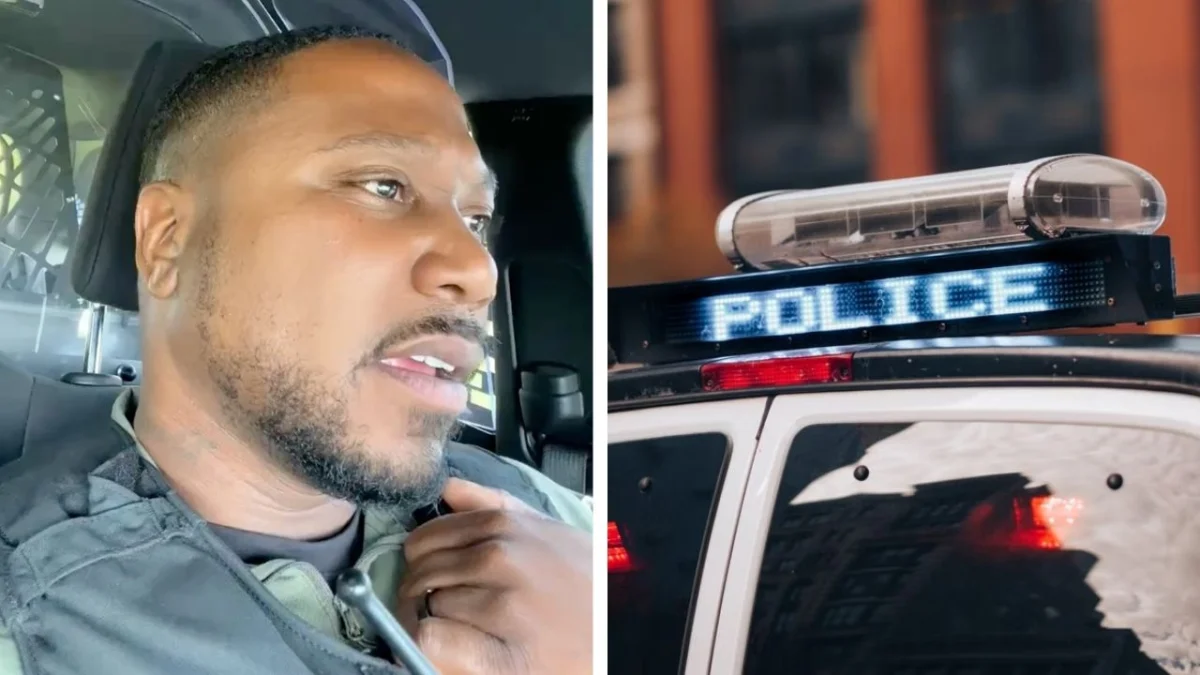
A deeply vulnerable video shared by a self-identified police officer, detailing what he termed the "saddest truths" of his profession, has resonated widely across social media platforms, sparking extensive discussion about the complex relationship between law enforcement and the communities they serve. The officer’s unvarnished account, particularly his claim of being "despised by the very community that needs my help," quickly went viral on X (formerly Twitter), drawing both widespread support and renewed scrutiny of the challenges inherent in modern policing. The video, originally amplified by the account @HistorianUSA1, garnered over 150,000 views, underscoring the public’s engagement with the raw, personal perspectives of those on the front lines of law enforcement.
The Viral Confession: A Deep Dive into the Officer’s Claims
The video, which circulated widely beginning on July 16, 2026, featured the officer speaking from inside what appeared to be a patrol car. He began by articulating a series of profound frustrations and observations that, he asserted, represented the most disheartening aspects of his career. Central among these "saddest truths" was the profound sense of alienation he felt from the public, stating, "Being despised by the very community that needs my help." This sentiment formed the core of his narrative, suggesting a deep-seated disconnect between his perceived duty to protect and the reception he often encountered.
He elaborated on this feeling, recounting instances where he experienced overt hostility and disdain from community members. He characterized these individuals as "the people he risks his life protecting and arresting," highlighting the paradox of confronting animosity from those he is sworn to serve. According to the officer, it was these very individuals who allegedly belittled him, creating a pervasive atmosphere of mistrust and antagonism that he found profoundly demoralizing.
Beyond the external pressures, the officer also touched upon internal dynamics within law enforcement and societal expectations, particularly for officers of his "complexion." He alleged that speaking out candidly, as he was doing in the video, would be considered "treason" within certain circles. He further claimed that officers like him were "not allowed to be truthful about what’s happening in the background," specifically stating, "We’re not allowed to tell the truth about what’s truly going on within a certain segment of the black community." While acknowledging that not every individual treated him with contempt, he stressed that a "small percentage apparently does a lot of damage to their image," implying that the actions of a few disproportionately shape the perception of the whole.
To illustrate his point, the officer presented a hypothetical scenario set in a grocery store. He described waiting at a cashier, observing a family, and offering a friendly smile to a child. While the child reciprocated the gesture, the parents, he claimed, looked at him "like an enemy." This vignette powerfully conveyed his perceived daily reality, where his uniform often elicited suspicion rather than reassurance. He concluded this example with a poignant observation, stating that despite the current animosity, these same individuals might one day "need him in case of a serious situation requiring police officials to act quickly." He ended the video by directly addressing the pervasive negative perception, asserting, "Right now, you can’t stand me because the media has done a great job at making me and others like me the enemy." The officer did not identify his specific police department, nor did he provide detailed identifying information about the individuals he described.
Chronology and Virality on X (formerly Twitter)
The officer’s confessional video first gained widespread traction on X, shared by the account @HistorianUSA1 on July 16, 2026. The initial post, which included the video, quickly amassed over 150,000 views, indicating a rapid and significant public interest. The emotionally charged content, coupled with the officer’s raw honesty, resonated deeply with users across various demographics. The virality of the video was further underscored by subsequent shares and comments, including a notable repost by @MAGApizzy on July 17, 2026, which added to the burgeoning conversation. The rapid dissemination across X highlights the platform’s role in amplifying personal narratives that tap into broader societal tensions and debates, allowing individual experiences to become catalysts for public discourse within a matter of hours.
The Internet’s Response: A Wave of Support and Discussion
The officer’s candid account triggered an immediate and overwhelming wave of support in the comment sections of X. Users lauded his courage and honesty, recognizing the vulnerability inherent in his public statement. Many echoed sentiments of empathy and understanding for the complex challenges faced by law enforcement officers.
One user articulated a common theme, commenting, "People are raised to hate the very people they are going to count on when they are in need," encapsulating the paradox the officer described. Another commenter praised the officer directly, stating, "I applaud you for your honesty and courage. You are an inspiration, please keep speaking out. I’m sure you’re truly respected by many in your community." These reactions underscore a segment of the public that empathizes with the difficulties faced by police officers and believes their crucial role is often undervalued or actively maligned.
The outpouring of support also highlighted a desire among many for a more nuanced understanding of policing, moving beyond generalized criticisms to acknowledge the dedication and personal sacrifices made by individual officers. The conversation on X became a microcosm of the larger national debate, showcasing divergent views on law enforcement, but also a significant current of public appreciation for those in uniform, particularly when they voice their personal struggles.
Broader Context: Police-Community Relations in the United States
The viral video surfaces against a backdrop of deeply entrenched and often fraught police-community relations in the United States. For decades, the dynamics between law enforcement and various communities, particularly minority groups, have been characterized by periods of intense scrutiny, reform efforts, and persistent mistrust. Events such as the civil rights movement, the urban unrest of the 1960s, and more recent movements like Black Lives Matter have profoundly shaped public perception and policy discussions around policing.
Public trust in law enforcement remains a complex and often polarized issue. According to recent surveys (e.g., general trends from organizations like Pew Research Center or Gallup polls, assuming these trends persist into 2026), trust levels often vary significantly along racial and ethnic lines. While a majority of white Americans typically express confidence in the police, trust among Black and Hispanic communities tends to be considerably lower, often reflecting historical experiences of profiling, excessive force, and perceived systemic bias. This disparity in trust creates a challenging environment for officers, who are tasked with maintaining order and providing assistance in communities where their authority may be viewed with suspicion rather than respect.
The officer’s lament about being "despised" resonates with ongoing discussions about the erosion of respect for authority figures in contemporary society. The nature of policing, which often involves confronting individuals at their worst moments or enforcing unpopular laws, inherently places officers in adversarial positions. However, the intensity of the animosity described by the officer suggests a deeper societal fracture that goes beyond typical occupational hazards.
Furthermore, the officer’s claim of an inability to "tell the truth about what’s truly going on within a certain segment of the black community" touches upon the widely discussed "blue wall of silence" or the informal code among officers that discourages reporting misconduct or speaking critically about internal departmental issues. While often associated with protecting fellow officers from external scrutiny, this concept can also extend to internal pressures against expressing certain truths that might be perceived as disloyal or damaging to the police image, especially when those truths pertain to sensitive racial dynamics.
Challenges for Minority Officers: Navigating Dual Identities
The officer’s reference to his "complexion" adds another crucial layer of complexity to his narrative, highlighting the unique and often difficult position of minority officers, particularly Black officers, within law enforcement. These individuals frequently navigate a challenging dual identity, simultaneously representing the authority of the state and belonging to communities that have historically experienced disproportionate policing and systemic injustice.
Black police officers, for instance, often face criticism from both sides: from within their own racial communities, where they may be viewed as "traitors" or complicit in a system that oppresses their own people, and from within their departments, where they may encounter subtle or overt forms of racial discrimination, or feel pressure to conform to a predominantly white institutional culture. Studies and anecdotal evidence consistently point to the unique psychological and professional burdens carried by minority officers who are caught between these competing loyalties and expectations. They are often expected to bridge the gap between police and minority communities, yet can feel alienated from both.
The officer’s assertion that speaking out could be considered "treason" for someone of his "complexion" underscores this precarious balance. It suggests an internal conflict where the loyalty to his uniform might clash with the loyalty to his community, and where expressing truths about the latter could be perceived as undermining the former. This internal struggle is a significant, yet often overlooked, aspect of the challenges faced by diverse police forces striving for community legitimacy.
The Role of Media and Public Perception
The officer’s concluding statement, "the media has done a great job at making me and others like me the enemy," directly confronts the powerful influence of media in shaping public perception of law enforcement. In the digital age, news and information — and often misinformation — spread instantaneously across traditional and social media platforms, profoundly impacting public opinion.
Media coverage of policing is inherently complex. On one hand, journalistic scrutiny is vital for accountability, exposing instances of misconduct, excessive force, and systemic issues within law enforcement. Such reporting is essential for transparency and for driving necessary reforms. Major incidents, particularly those involving officer-involved shootings or high-profile cases of police brutality, often dominate news cycles, leading to intense public outrage and demands for justice. These narratives, while sometimes accurate and necessary, can contribute to a generalized negative image of police, painting all officers with the same brush.
On the other hand, critics argue that media coverage can sometimes be unbalanced, focusing disproportionately on negative incidents while overlooking the daily acts of heroism, community service, and routine duties performed by officers. The officer’s statement reflects a common sentiment within law enforcement that the media often sensationalizes negative stories, contributing to a narrative that portrays police as inherently adversarial figures rather than public servants. Social media, with its algorithms favoring emotionally charged content and its capacity for echo chambers, further amplifies these perceptions, making it difficult for nuanced understandings to emerge. This creates a challenging environment for officers seeking to build trust, as their every action can be scrutinized and interpreted through a lens shaped by prior media narratives.
Verification and Journalistic Responsibility
It is crucial to note, as highlighted in the original publication, that the claims made by the officer in the viral video remain unconfirmed by independent sources. The officer did not identify himself or his department, making direct verification of his specific experiences and allegations impossible at this time. In the absence of corroborating evidence, journalistic integrity demands a cautious approach to such viral content.
While the emotional impact and societal relevance of the officer’s testimony are undeniable, the inability to independently verify the source or the specific claims necessitates a clear distinction between a widely shared personal account and independently established facts. This situation underscores the ongoing challenges in a media landscape increasingly dominated by user-generated content, where powerful narratives can emerge without traditional journalistic vetting. The publication of this story serves to report on a significant cultural phenomenon and the public discourse it has generated, rather than to endorse or confirm the veracity of the individual’s specific assertions.
Implications and Future Dialogue
The viral spread of this police officer’s candid confession carries significant implications for ongoing national conversations about law enforcement, race, and community relations. His words serve as a potent reminder of the personal toll that strained police-community relations can take on individual officers, particularly those who are also members of minority communities.
The widespread support he received online suggests a public appetite for more authentic dialogue about the difficulties faced by police, moving beyond simplistic narratives. At the same time, his allegations about systemic pressures and an inability to speak freely within his profession underscore the need for internal reforms that foster transparency and psychological support for officers.
Ultimately, this viral video contributes to a larger, necessary dialogue that demands nuanced perspectives from all sides. Bridging the divides between law enforcement and the communities they serve will require not only policy changes and accountability but also a deeper understanding of the human experiences—both positive and negative—that shape interactions on the street. It calls for continued efforts to build trust, address systemic inequities, and foster environments where both officers and community members feel heard, respected, and valued. The resonance of this officer’s "saddest truths" serves as a powerful indicator that these conversations are far from over.