Sisilia Frederika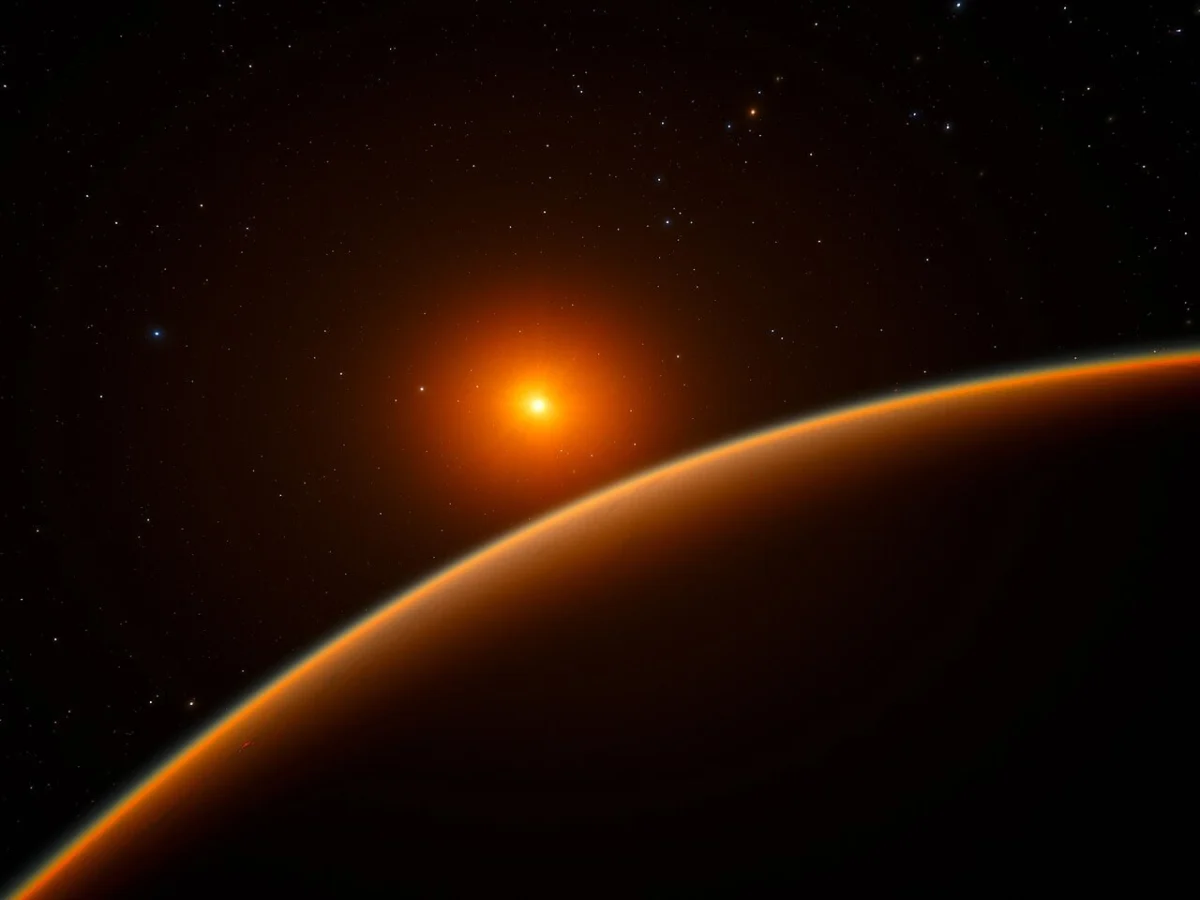
In a landmark development for the field of exoplanetary science, an international team of astronomers has confirmed the presence of an atmosphere surrounding a rocky planet situated within the habitable zone of its host star. This discovery, centered on the exoplanet LHS 1140 b, represents a pivotal shift in the search for life beyond our solar system. While thousands of exoplanets have been cataloged over the last three decades, this finding marks the first time scientists have moved beyond the mere identification of a "Goldilocks" orbital position to confirm the existence of the protective gaseous envelope necessary to sustain liquid water and potentially support biological processes.
The research, led by Collin Cherubim of Harvard University and published in the prestigious journal Science, provides a definitive answer to a question that has long plagued astronomers: can rocky worlds orbiting small, volatile stars actually retain their atmospheres? The confirmation of an atmosphere on LHS 1140 b suggests that the conditions for habitability may be more resilient than previously theorized, offering a new roadmap for the study of terrestrial worlds throughout the Milky Way galaxy.
The Profile of LHS 1140 b: A "Super-Earth" in Focus
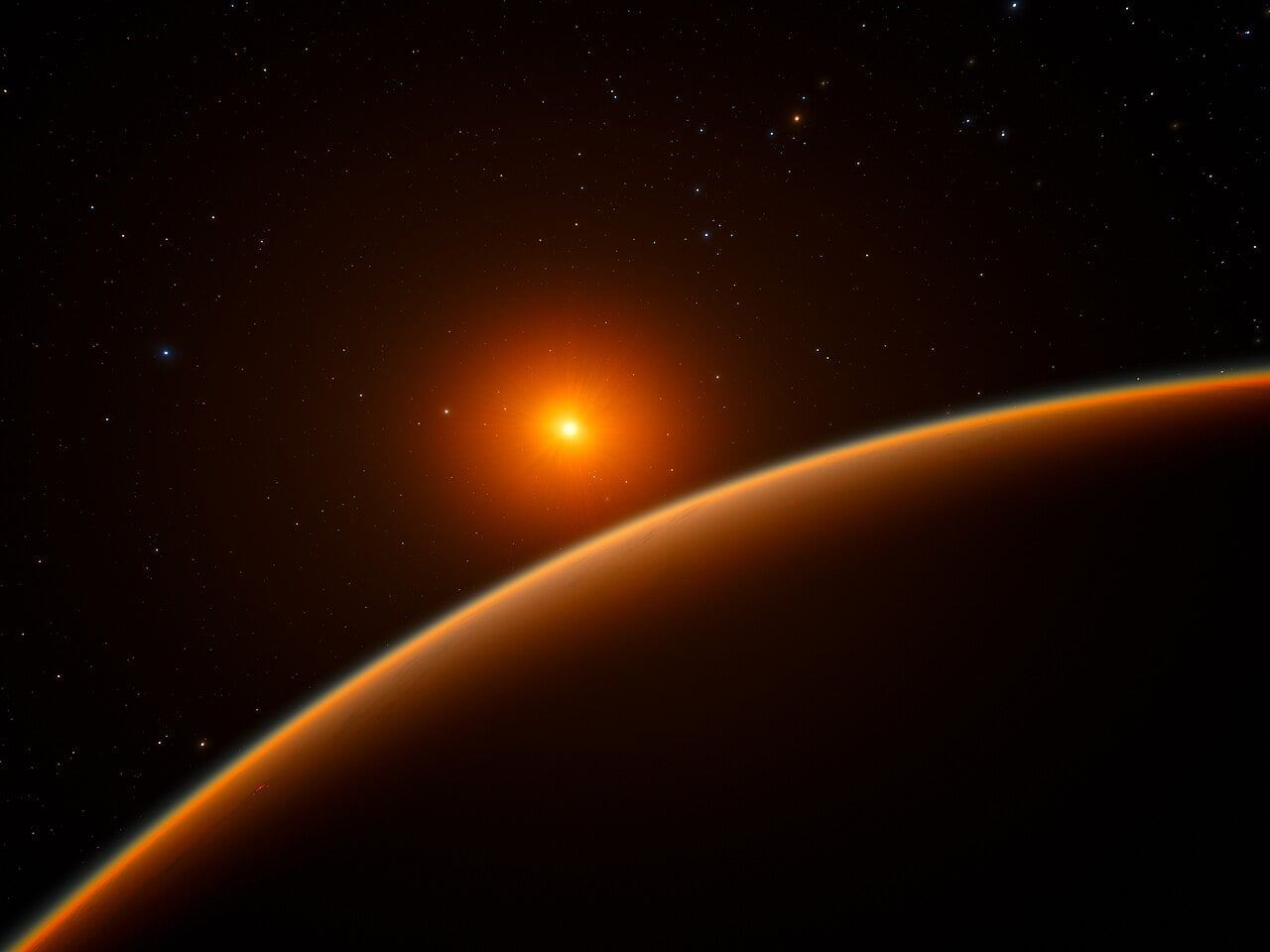
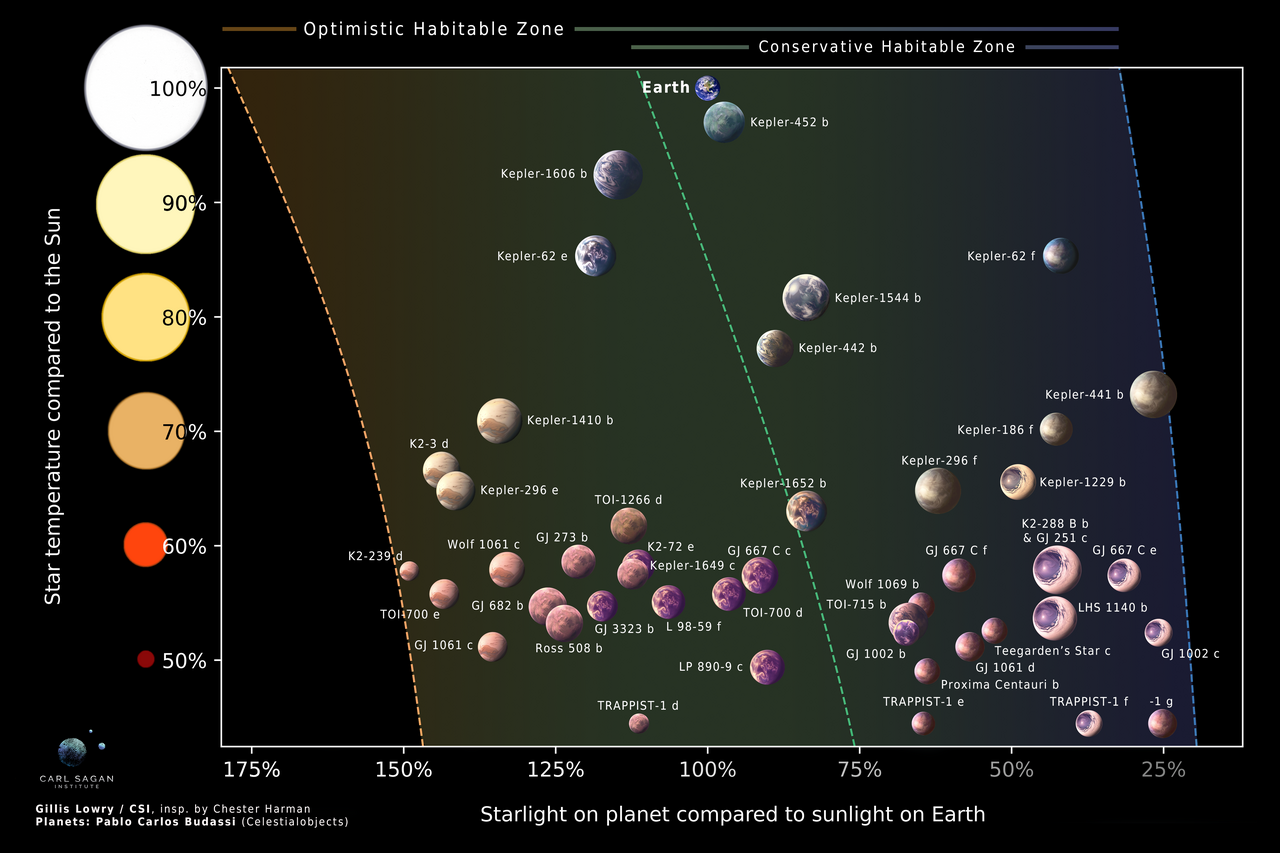
Located approximately 48 light-years from Earth in the constellation Cetus, LHS 1140 b is classified as a "Super-Earth"—a rocky planet larger than our own but smaller than gas giants like Neptune. It orbits a red dwarf star, LHS 1140, which is significantly smaller and cooler than the Sun. Despite the star’s lower temperature, LHS 1140 b sits in a tight orbit that places it squarely within the habitable zone, the region where stellar flux allows for temperatures that could support liquid water on a planetary surface.
Physical data regarding LHS 1140 b has been meticulously gathered since its initial discovery in 2017. The planet possesses a radius roughly 1.7 times that of Earth and a mass approximately 5.6 times greater. These dimensions result in a density that confirms its rocky composition, though its relatively low density compared to a pure iron-rock mix has led some researchers to speculate that it could be a "water world," with a significant portion of its mass consisting of ice or liquid oceans.
The primary challenge in studying planets like LHS 1140 b is the nature of their host stars. Red dwarfs, or M-dwarfs, are known for their longevity but also for their intense magnetic activity and frequent stellar flares. In many cases, this high-energy radiation is believed to strip away the atmospheres of nearby planets, leaving them as airless, irradiated husks. The discovery that LHS 1140 b has maintained its atmosphere for over three billion years provides crucial evidence that some rocky worlds can withstand the early, violent phases of M-dwarf evolution.
The Mathematical Foundation and the WINERED Breakthrough
The path to this discovery was not linear. Unlike many astronomical findings that occur through serendipitous observation, the detection of LHS 1140 b’s atmosphere was the result of a rigorous "prediction-first" methodology. Collin Cherubim and his colleagues at the Harvard-Smithsonian Center for Astrophysics (CfA) developed a mathematical model suggesting that if LHS 1140 b possessed a hydrogen-rich or helium-rich upper atmosphere, the gas would be slowly escaping into space due to stellar heating.
This prediction focused on helium, the second most abundant element in the universe. While helium is difficult to detect in the atmospheres of small, cool planets, the team hypothesized that the specific radiation environment of LHS 1140 would create a detectable "tail" of escaping helium gas.
To test this hypothesis, the researchers utilized the WINERED (Warm INfrared Echelle spectrograph to Realize Extreme Dispersion) instrument mounted on the 6.5-meter Magellan Clay Telescope at the Las Campanas Observatory in Chile. WINERED is designed to operate in the near-infrared spectrum with high spectral resolution, making it uniquely capable of identifying the subtle "fingerprints" of specific gases as they absorb light from the host star.
Chronology of the Observation: A Rare Astronomical Alignment
The critical data was captured during a highly specific window of time when the geometry of the system worked in the researchers’ favor. On the night of the observation, not one, but two planets in the system—LHS 1140 b and its neighbor LHS 1140 c—transited the face of their host star.
- Initial Transit (LHS 1140 c): The inner planet, LHS 1140 c, which orbits closer to the star and is outside the habitable zone, crossed the stellar disk first. Observations of this planet showed no significant spectral absorption, indicating a lack of an extended helium atmosphere. This served as a vital "control" for the experiment, proving that the equipment and the star itself were not producing false signals.
- Primary Transit (LHS 1140 b): As LHS 1140 b began its transit, the WINERED spectrograph immediately detected a significant dip in specific infrared wavelengths. This absorption was the unmistakable signature of helium gas.
- Data Analysis: The team observed that the helium signal persisted longer than the physical transit of the planet’s solid disk. This indicated that the planet is surrounded by a large, escaping envelope of gas—an atmosphere in the process of being "puffed up" and slowly lost to space, yet still substantial enough to be detected.
The statistical weight of the data was described by the team as "rock solid," overcoming initial skepticism from senior members of the project. David Charbonneau, a pioneer in exoplanet research and a co-author of the study, noted that the transition from a mathematical prediction to a confirmed physical reality was a textbook example of the scientific method in action.
Comparative Context: Why This Discovery Surpasses Previous Findings
To understand the weight of this discovery, it must be compared to other high-profile exoplanetary systems, most notably TRAPPIST-1. Located 40 light-years away, the TRAPPIST-1 system contains seven Earth-sized planets, several of which are in the habitable zone. However, recent observations by the James Webb Space Telescope (JWST) have suggested that the innermost TRAPPIST-1 planets may lack substantial atmospheres, likely due to the intense flare activity of their host star.
LHS 1140 b stands out because it provides the first "yes" in a field of "maybes." While gas giants like Jupiter-sized "Hot Jupiters" have had their atmospheres analyzed for years, rocky planets are much smaller and their atmospheres are much thinner, making them exponentially harder to detect. By confirming an atmosphere on a habitable-zone rocky world, the Harvard-led team has proven that the search for life-supporting environments is not a futile endeavor.
Scientific Reactions and Implications for Habitability
The astronomical community has reacted to the news with cautious optimism. The detection of helium is a "proxy" for an atmosphere, but it does not yet tell us the full composition of the air on LHS 1140 b.
"This is the threshold we have been waiting to cross," said an independent researcher not involved in the study. "We are no longer just looking at the ‘where’ of a planet, but the ‘what.’ Finding an atmosphere that has survived for billions of years around an M-dwarf suggests that these planets have a mechanism for retaining or regenerating their gases, perhaps through volcanic outgassing or a protective magnetic field."
The presence of helium is particularly interesting because it suggests the atmosphere may be a "secondary" atmosphere. While "primary" atmospheres consist of hydrogen and helium captured from the original protoplanetary disk, they are usually lost quickly. A secondary atmosphere is one that is created later in a planet’s life through internal processes. If LHS 1140 b has managed to hold onto a thick envelope of gas, it increases the likelihood that heavier gases like nitrogen, carbon dioxide, and water vapor are also present in the lower layers.
The Path Forward: Searching for Water and Biosignatures
The confirmation of an atmosphere on LHS 1140 b has immediately prioritized the planet for follow-up observations with the James Webb Space Telescope and future ground-based facilities like the Extremely Large Telescope (ELT).
The next phase of research will focus on "atmospheric retrieval," a process where astronomers use more intensive spectroscopy to look for the signatures of water (H2O), methane (CH4), and carbon dioxide (CO2). If water vapor is detected, it would strengthen the hypothesis that LHS 1140 b is a water world with a global ocean.
Furthermore, the technique used by Cherubim’s team—detecting escaping gases—can now be applied to other candidate planets. This expands the toolkit available to astronomers, allowing them to survey a wider variety of stars and planetary systems.
Conclusion: A New Chapter in Exoplanetary Exploration
The discovery of an atmosphere on LHS 1140 b represents a milestone in the human endeavor to understand our place in the cosmos. It validates the rigorous mathematical models used to predict planetary behavior and proves that ground-based observatories, equipped with next-generation spectrographs, remain at the cutting edge of space exploration.
While it remains unknown whether LHS 1140 b possesses the specific chemical cocktail required for life, the confirmation of its atmosphere ensures that it will remain one of the most studied objects in the sky for decades to come. For the first time, the "habitable zone" is not just a theoretical calculation on a star chart; it is a physical reality where a rocky world holds onto its air against the vacuum of space, waiting for the next generation of telescopes to reveal what lies beneath its clouds.