Garick Elordi
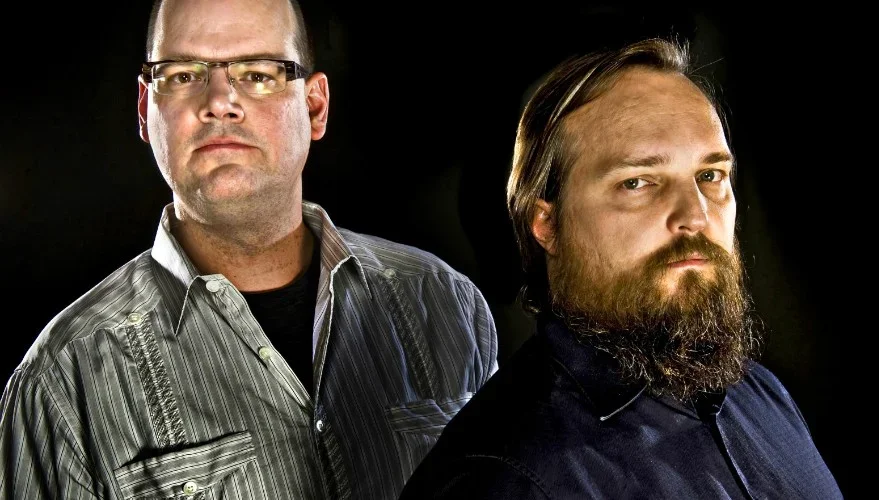
The video game industry was sent into a state of shock following the recent announcement that BioWare, the legendary developer behind iconic franchises such as Mass Effect and Dragon Age, has officially ceased operations. In the wake of this closure, Greg Zeschuk, one of the studio’s original "doctor-founders," has broken his long-standing silence regarding the state of the company he helped build from the ground up. Speaking in a comprehensive interview with 80 Level, Zeschuk characterized the studio’s demise as a "sad" end to a decades-long legacy, citing the recent private acquisition of Electronic Arts (EA) by a Saudi-backed consortium as the "final nail in the coffin" for the Edmonton-based developer.
Zeschuk, who founded BioWare in 1995 alongside fellow medical students Ray Muzyka and Augustine Yip, recounted the moment he learned of the studio’s dissolution. At the time the news broke, Zeschuk was on a fishing trip, isolated from the immediate media firestorm. Upon returning to cellular range, he was met with a deluge of messages. "I came off the river and got to my little room and opened my phone, and it’s like, ‘I’m so sorry to hear about BioWare.’ And I’m like, ‘Oh shit,’" Zeschuk recalled. Despite the abruptness of the notification, Zeschuk noted that having a few days of isolation allowed him to process the news away from the immediate industry discourse, though he admitted the reality of the situation remains painful.
The Genesis of an RPG Powerhouse
To understand the weight of BioWare’s closure, one must look back at its unconventional origins. Founded in Edmonton, Alberta, BioWare was the brainchild of three medical doctors who traded stethoscopes for source code. The studio quickly established itself as a premier developer of narrative-heavy role-playing games (RPGs). Their early success with Baldur’s Gate (1998) revitalized the isometric RPG genre, blending complex tactical combat with deep, choice-driven storytelling.
Throughout the early 2000s, BioWare became synonymous with high-quality world-building. Star Wars: Knights of the Old Republic (2003) is still frequently cited as one of the greatest licensed games ever made, while original properties like Jade Empire and Mass Effect cemented the studio’s reputation for creating universes that felt lived-in and reactive to player agency. At its peak, BioWare was not just a developer; it was a cultural touchstone for the gaming community, proving that big-budget "AAA" titles could possess the literary depth of classic novels.
The EA Acquisition and the Shift in Corporate Strategy
The trajectory of BioWare changed significantly in 2008 when Electronic Arts acquired the studio’s parent company, VG Holding Corp (which included Pandemic Studios), in a deal valued at approximately $860 million. While the acquisition initially provided BioWare with the capital necessary to produce massive hits like Dragon Age: Origins and the Mass Effect trilogy, it also integrated the studio into the rigid corporate structure of one of the world’s largest publishers.
Zeschuk noted that at the time of the sale, the founders had multiple options, but chose EA with the hope of scaling their creative visions. However, the pressures of the corporate environment eventually took their toll. In 2012, both Zeschuk and Muzyka announced their retirement from the gaming industry, a move that many fans viewed as the end of an era. Zeschuk reflected on this departure, dismissing the "hubris" that he and Muzyka were the only things holding the company together. Instead, he described the decline as a "slow and insidious" process driven by the natural turnover of talent. "The people are the key," Zeschuk emphasized, suggesting that as the original culture diluted over time, the studio’s identity began to fray.
The $55 Billion Buyout and the "Final Nail"
The most significant catalyst for the recent closure appears to be the structural overhaul of Electronic Arts itself. The publisher was recently taken private in a $55 billion deal involving a group of high-profile investors, including Saudi Arabia’s Public Investment Fund (PIF). According to Zeschuk, this shift in ownership fundamentally altered the risk appetite of the organization.
In a private equity environment, the pressure to deliver consistent, high-margin returns often clashes with the development cycles of complex, narrative-driven RPGs. BioWare’s games were notorious for their long development periods, often spanning five to seven years, and their high degree of technical complexity. Zeschuk argued that from a purely cold, business-oriented perspective, BioWare’s model was less attractive than the annualized release schedules of sports titles like FIFA (now EA Sports FC) and Madden.
"BioWare makes these kinds of unusual games that take a long time and they’re complicated and so it’s easier just to pump out sports games every year, and that’s a better business model in some ways," Zeschuk stated. This sentiment highlights a growing tension in the modern gaming industry: the struggle between creative ambition and the financial predictability demanded by large-scale investment consortiums.
Impact on the Edmonton Tech Sector
Beyond the loss of a beloved game developer, the closure of BioWare represents a significant blow to the regional economy of Edmonton. For nearly three decades, BioWare served as a cornerstone of the Canadian tech industry, attracting international talent to Alberta and proving that a world-class studio could thrive outside of traditional hubs like San Francisco, Montreal, or Tokyo.
Zeschuk expressed particular sadness for his hometown, describing BioWare as a "beacon of hope and excitement." The studio provided thousands of jobs over its lifespan and inspired a local ecosystem of smaller indie developers and tech startups. The disappearance of such a major employer creates a void in the local labor market and signals a potential retreat of high-tech investment in the region.
The Cancelation of Future Projects
The closure has also resulted in the immediate termination of several highly anticipated projects. Most notably, the next installment in the Mass Effect series, which had been teased with a cryptic "N7 Day" trailer, has been officially canceled. Fans who had been waiting years for a return to the Milky Way or Andromeda galaxies are now left with a series of unanswered questions and a franchise in limbo.
Industry analysts suggest that while the BioWare brand may be gone, Electronic Arts still holds the intellectual property rights to its franchises. There is speculation that EA may eventually task other internal studios with reviving these IPs, but without the specific "BioWare DNA"—the writers, designers, and directors who understood the intricacies of the studio’s storytelling—many fear that future iterations will lack the soul of the originals.
A Legacy in Hindsight
Since leaving the industry in 2012, Greg Zeschuk has largely moved away from the world of digital entertainment. He currently operates Blind Enthusiasm, a successful beer-brewing company in Edmonton. Despite his pivot to the craft beverage industry, his observations on the gaming world remain sharp. He noted a personal shift in his gaming habits, moving away from the sprawling narratives he once created in favor of action-oriented titles like Elden Ring and the Nioh series.
His partner and co-founder, Ray Muzyka, has remained even further removed from the limelight, focusing on impact investing and charitable endeavors, and has so far declined to comment on the studio’s closure. The third founder, Augustine Yip, returned to the medical profession in the late 1990s, long before the studio reached its global heights.
The story of BioWare serves as a cautionary tale regarding the consolidation of the gaming industry. As studios are absorbed into massive corporate entities and investment funds, the creative freedom that allowed BioWare to flourish in its early years often becomes a liability in the eyes of shareholders.
Conclusion and Industry Outlook
The shuttering of BioWare marks the end of a chapter for the RPG genre. The studio’s influence is visible in almost every modern narrative game, from the choice-consequence systems of The Witcher to the cinematic presentation of The Last of Us. However, the "insidious" change Zeschuk described—the gradual erosion of a studio’s core identity under the weight of corporate expectations—is a challenge currently facing many veteran developers across the globe.
As Electronic Arts moves forward under its new ownership structure, the gaming community is left to mourn a studio that once represented the pinnacle of interactive storytelling. For the city of Edmonton and the fans who grew up on the adventures of Commander Shepard and the Grey Wardens, the closure is more than just a business decision; it is the loss of a creative North Star. While the bottles of beer from Zeschuk’s brewery may now ship by the thousands, the days of BioWare’s digital epics have officially come to a close.