Sisilia Frederika
NASA officially announced on September 23, 2024, that the PRobe far-Infrared Mission for Astrophysics (PRIMA) has been selected as the first entry in a revolutionary new class of space science endeavors known as Probe Explorers. This mission represents a strategic pivot in NASA’s astrophysics portfolio, designed to fill a critical observational gap between the agency’s flagship missions and its smaller, more frequent Explorer-class projects. By focusing on the far-infrared spectrum, PRIMA aims to unlock secrets regarding the cooling of gas in galaxies, the growth of supermassive black holes, and the chemical origins of planetary systems, providing a missing link in our understanding of the cosmic timeline.
The Probe Explorer program was established following the specific recommendations of the National Academies of Sciences, Engineering, and Medicine (NASEM) 2020 Decadal Survey, titled "Pathways to Discovery in Astronomy and Astrophysics for the 2020s" (Astro2020). The survey identified a need for "Probe-class" missions—projects with a cost cap significantly higher than traditional Explorers but lower than multi-billion-dollar flagships like the James Webb Space Telescope (JWST). PRIMA emerged as the top candidate after a rigorous evaluation process that weighed scientific merit, technological feasibility, and cost-effectiveness.
A New Tier of Space Exploration: The Probe Explorer Class
For decades, NASA’s astrophysics missions have generally fallen into two categories: high-cost, high-capability "Flagship" missions and lower-cost, focused "Explorer" missions. The new Probe Explorer class introduces a middle ground, with a cost cap of approximately $1.2 billion per mission. This category is intended to provide the scientific community with more frequent opportunities to deploy sophisticated, large-aperture telescopes that can tackle specific, high-priority questions identified by the Decadal Survey.
PRIMA’s advancement to Phase B development marks the beginning of this new era. In this phase, the mission team will refine the spacecraft’s preliminary design, finalize the telescope’s instrumentation, and begin the rigorous testing of the detectors required to capture far-infrared light. If the mission passes its upcoming confirmation reviews, it will proceed to Phase C, involving final design and fabrication, with an anticipated launch window in 2033.
The mission will be managed by NASA’s Jet Propulsion Laboratory (JPL) in Southern California, a center with a long pedigree in infrared astronomy, having managed the Spitzer Space Telescope and the Wide-field Infrared Survey Explorer (WISE). Collaborative support will be provided by the Goddard Space Flight Center in Greenbelt, Maryland, and the Marshall Space Flight Center in Huntsville, Alabama.
Scientific Objectives: Piercing the Cosmic Dust
The primary goal of PRIMA is to observe the universe in far-infrared (FIR) wavelengths, a region of the electromagnetic spectrum that is largely inaccessible from Earth due to atmospheric interference. While the James Webb Space Telescope observes the near- and mid-infrared, and radio telescopes like the Atacama Large Millimeter/submillimeter Array (ALMA) observe longer wavelengths, the far-infrared remains one of the last "unmapped" frontiers of modern astronomy.
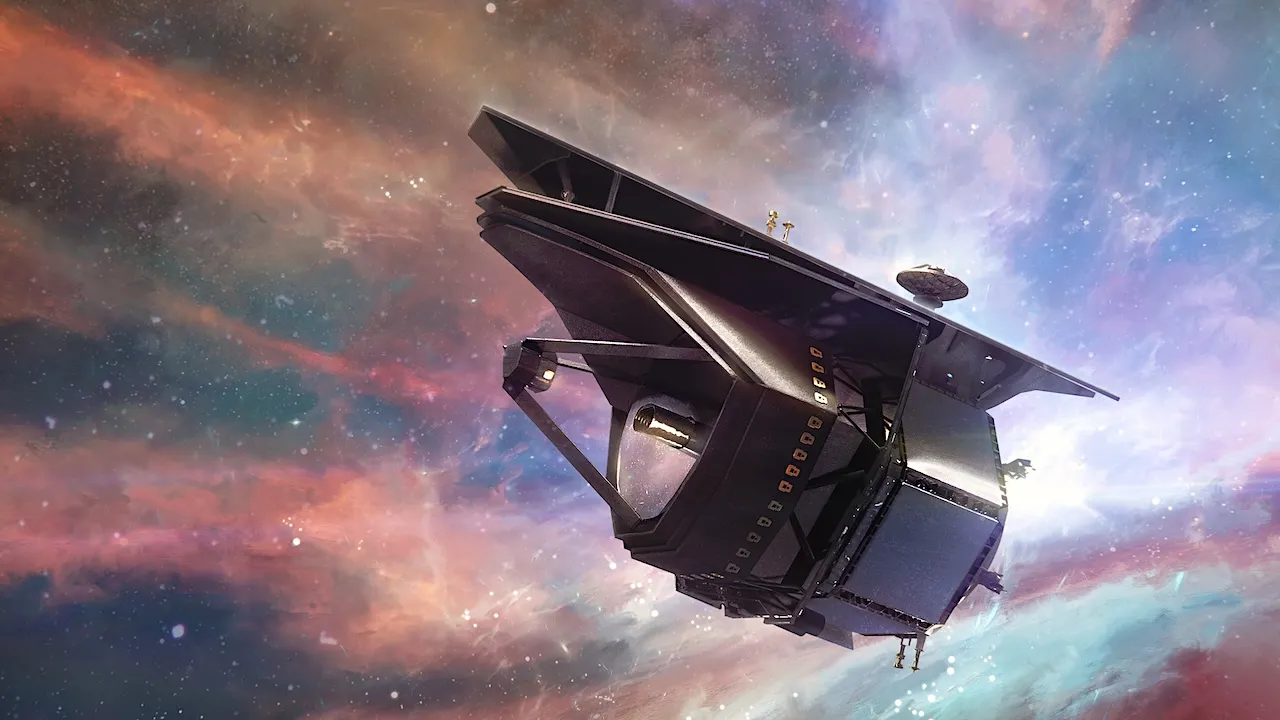
Far-infrared light is essential for studying the "cool" universe. This includes the cold dust and gas that act as the nurseries for new stars and the building blocks of planets. PRIMA’s 1.8-meter (5.9-foot) telescope will be optimized to detect the faint thermal signatures of these materials. By doing so, the mission will address three fundamental scientific pillars:
1. The Evolution of Galaxies and Black Holes
One of the greatest mysteries in astrophysics is the co-evolution of galaxies and the supermassive black holes (SMBHs) at their centers. Astronomers have observed that the mass of a central black hole is almost always proportional to the mass of its host galaxy, suggesting they grow in tandem. However, the exact mechanisms of this relationship remain obscured by thick clouds of interstellar dust. Far-infrared light can penetrate these clouds, allowing PRIMA to measure the rate of star formation and the growth of black holes simultaneously across billions of years of cosmic history.
2. The Accumulation of Heavy Elements and Dust
The early universe consisted almost entirely of hydrogen and helium. Heavier elements—the oxygen we breathe, the silicon in our computers, and the iron in our blood—were forged inside stars and dispersed through supernova explosions. PRIMA will track the buildup of these "metals" and cosmic dust over time, helping scientists understand how the chemical composition of the universe transitioned from a simple primordial gas to the complex, life-sustaining environment we see today.
3. The Origins of Water and Planetary Systems
PRIMA will play a crucial role in the search for the origins of water on Earth. By observing the far-infrared signatures of water vapor in protoplanetary disks—the swirling rings of gas and dust around young stars—scientists can trace the "water trail" from the interstellar medium to the formation of oceans on newly born planets. This data will provide essential context for understanding the habitability of exoplanets beyond our solar system.
Technological Heritage and Performance
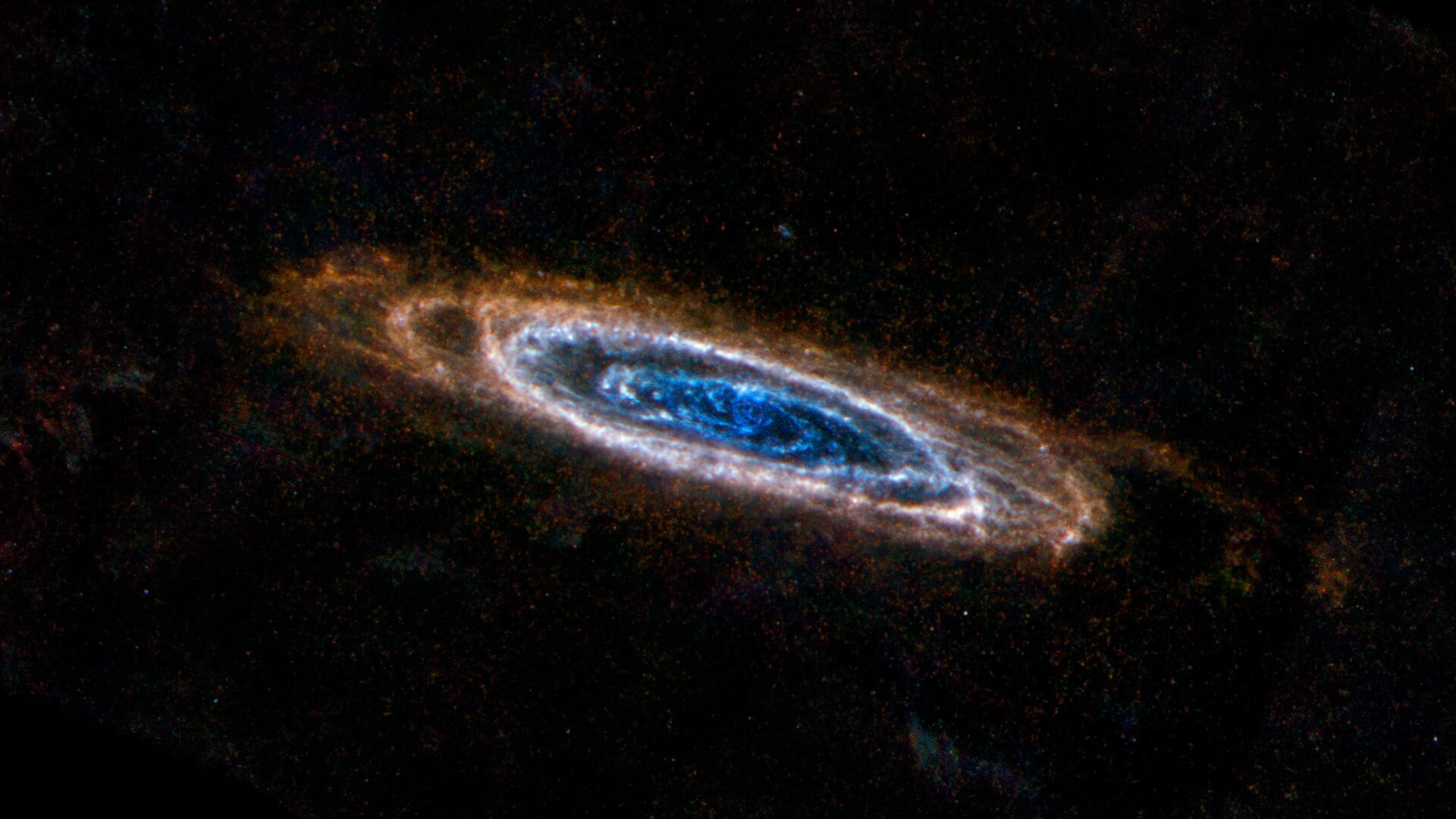
PRIMA is designed to build upon the legacy of the European Space Agency’s (ESA) Herschel Space Observatory, which operated from 2009 to 2013. While Herschel was a pioneer in far-infrared astronomy, PRIMA will offer a massive leap in sensitivity. Through the use of advanced, ultra-sensitive kinetic inductance detectors (KIDs) and a cryogenically cooled telescope, PRIMA is expected to be 100 to 1,000 times more sensitive than its predecessor.
The 1.8-meter telescope, while smaller than Webb’s 6.5-meter mirror, is specifically tailored for the far-infrared. At these longer wavelengths, a larger mirror is less critical for resolution than the temperature of the telescope itself. To detect the faint heat of distant cosmic dust, PRIMA’s optics must be kept at temperatures near absolute zero. This cooling prevents the telescope’s own thermal radiation from drowning out the signals from deep space.
International Cooperation and Strategic Importance
The selection of PRIMA highlights the increasingly global nature of space exploration. The mission features a robust framework of international partnerships, with contributions from a diverse array of space agencies. These partners include:
- UK Space Agency (UKSA)
- Centre National d’Études Spatiales (CNES – France)
- Agenzia Spaziale Italiana (ASI – Italy)
- Deutsches Zentrum für Luft- und Raumfahrt (DLR – Germany)
- Canadian Space Agency (CSA)
- Korea Astronomy and Space Science Institute (KASI)
- Korea AeroSpace Administration (KASA)
- Japan Aerospace Exploration Agency (JAXA)
This coalition ensures that the best technological resources and scientific minds from across the globe are integrated into the mission’s design and data analysis phases. For instance, European and Asian partners are expected to contribute specialized cooling systems and high-precision spectrometers that will enhance PRIMA’s ability to dissect the chemical makeup of distant galaxies.
Nicky Fox, the associate administrator of NASA’s Science Mission Directorate, emphasized the mission’s broad reach. "The PRIMA mission is humanity’s next window into the deep universe," Fox stated. "It will unveil the obscure across cosmic time to better understand the formation of planets, stars, black holes, and even how water on Earth came to be."
Timeline and Future Milestones
With the announcement of its selection, PRIMA enters the rigorous "Phase B" of NASA’s mission lifecycle. This phase focuses on preliminary design and technology completion. The chronology for the mission’s development is projected as follows:
- 2024–2026 (Phase B): Refinement of the mission architecture, detector testing, and finalization of international agreements.
- 2026 (Confirmation Review): A critical decision point where NASA headquarters evaluates the mission’s budget, schedule, and technical readiness to commit to full-scale development.
- 2027–2031 (Phases C and D): Final design, fabrication of the telescope and spacecraft bus, and integration of the scientific instruments.
- 2032: Environmental testing, including thermal vacuum and vibration testing, to ensure the spacecraft can survive the rigors of launch and the vacuum of space.
- 2033: Targeted launch date.
Analysis: The Impact on Modern Astrophysics
The selection of PRIMA is a clear signal that NASA is prioritizing "the gap" in our observational capabilities. While the James Webb Space Telescope has provided stunning images of the early universe, it cannot see the coldest gas and dust that PRIMA is designed to detect. Without the far-infrared data that PRIMA will provide, our models of galaxy formation and the "cosmic noon"—the period about 10 billion years ago when star formation peaked—remain incomplete.
Furthermore, the Probe Explorer class represents a shift in risk management and cadence. By launching $1 billion-class missions every decade, NASA can maintain a steady flow of high-impact science without the 20-year development cycles often associated with flagship missions. This cadence allows for more rapid technological turnover, ensuring that the latest detector technologies are put into orbit more quickly.
Shawn Domagal-Goldman, the director of the Astrophysics Division at NASA Headquarters, noted the strategic importance of this cadence. "A single mission alone can’t probe all the universe’s mysteries," he explained. "But by extending the survey capabilities of our fleet into far-infrared wavelengths with PRIMA, we’re enabling an incredibly comprehensive look at the cosmos."
As PRIMA moves forward, it carries the expectations of an international scientific community eager to peel back the dusty layers of the universe. From the formation of the first heavy elements to the delivery of water to the early Earth, PRIMA stands poised to provide the definitive answers to how the cosmos evolved from a hot, dense state into the complex structure of galaxies and planetary systems we inhabit today.