Sisilia Frederika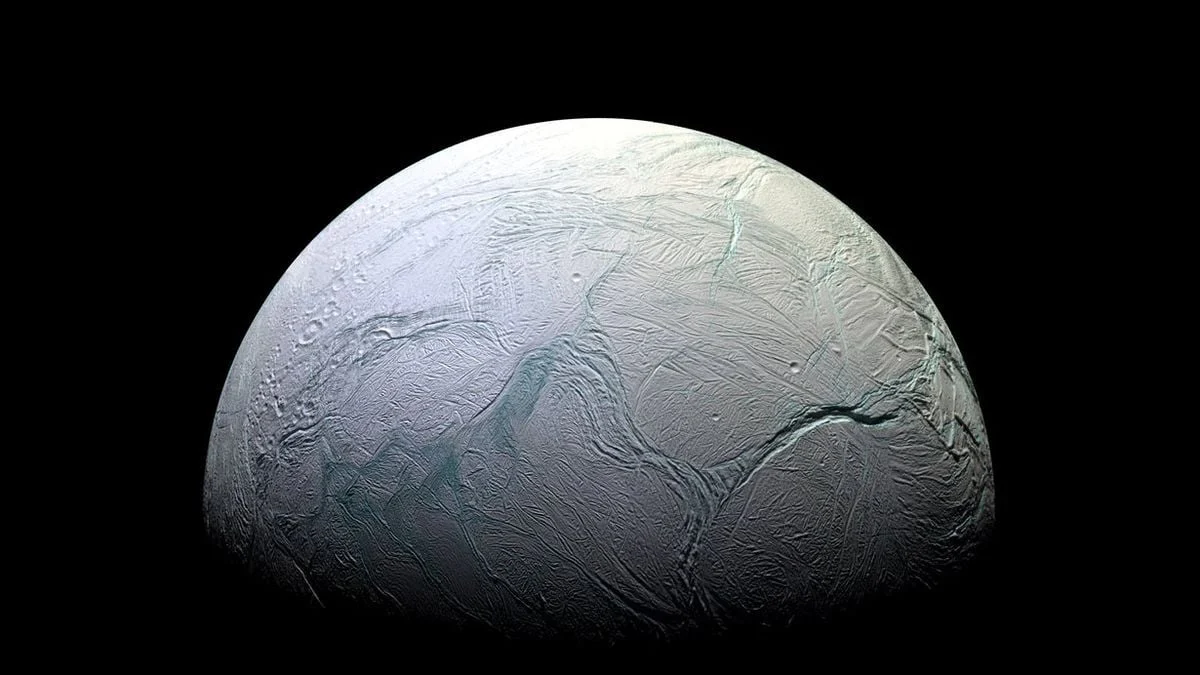
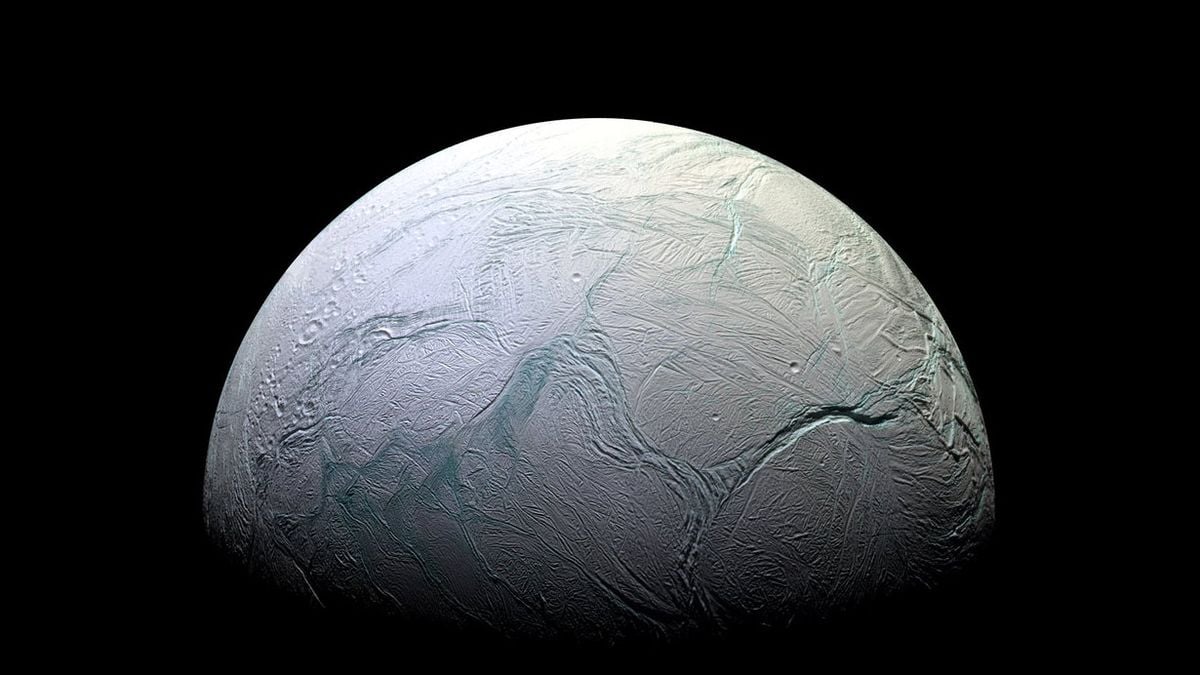
Enceladus, a small, icy moon of Saturn, has emerged as a premier candidate in the search for extraterrestrial life, bolstered by new research suggesting that biological signatures may be far easier to detect in its erupting plumes than previously estimated. Recent studies conducted by researchers at Freie Universität Berlin and Ludwig-Maximilians-Universität have provided a significant boost to the feasibility of upcoming astrobiology missions. By simulating the unique physical and chemical conditions of the moon’s subsurface ocean and its journey through the icy crust, the research teams have demonstrated that the dynamics of Enceladus’ plumes naturally concentrate organic material, making it more accessible to robotic sensors. This development comes as international space agencies, including NASA and the European Space Agency (ESA), finalize plans for dedicated missions to explore the "Ocean World" in the coming decades.
The Berlin Studies: Enhancing Biosignature Visibility
The core of this renewed scientific optimism lies in two papers published in the journal Science Advances, led by Professor Frank Postberg and Dr. Vanessa Helmbrecht. The first study focused on the physical behavior of ocean water as it rises through the fractures in Enceladus’ ice shell. Enceladus is known for its spectacular plumes, which eject water vapor and ice grains hundreds of kilometers into space from the moon’s southern polar region.
Previously, it was hypothesized that the rapid ascent and freezing of these water droplets might dilute or trap organic compounds in a way that would make them difficult for a passing spacecraft to analyze. However, Postberg’s team discovered that ocean droplets freeze more slowly than anticipated as they move through the "Tiger Stripe" fractures. This slower freezing process allows for a phenomenon known as "solute rejection," where salts and organic compounds are pushed into specific regions of the forming ice grain. As these grains are accelerated into the vacuum of space, they fragment, creating a population of ice grains that contain highly concentrated organic substances. For a spacecraft equipped with a mass spectrometer, such as the proposed Enceladus Orbilander, this concentration effect means that even a small sample size could yield definitive evidence of complex chemistry or biological byproducts.
The second study, led by Dr. Helmbrecht, addressed the biological viability of the moon’s interior. The researchers simulated the high-pressure, hydrothermal environment of Enceladus’ seafloor to determine if Earth-based microorganisms could survive. Specifically, they focused on methanogens—microbes that produce methane as a metabolic byproduct. The results were definitive: methane-producing bacteria could not only survive but thrive under the simulated conditions of Enceladus. This suggests that the methane already detected by the Cassini mission in the moon’s plumes could potentially have a biological origin, rather than being purely the result of geochemical processes.
Geological Context: The Engine of Enceladus
Enceladus is a relatively small moon, roughly 500 kilometers in diameter, but it possesses a complex internal structure that makes it geologically active. Unlike many other moons that are "geologically dead" ice balls, Enceladus benefits from tidal flexing. As the moon orbits Saturn in an elliptical path, the massive planet’s gravitational pull creates internal friction, a process known as tidal heating. This heat is sufficient to maintain a liquid water ocean between the moon’s icy outer crust and its rocky, metallic core.
The presence of a rocky core is crucial for astrobiology. It facilitates hydrothermal activity at the core-mantle boundary, similar to the hydrothermal vents found on Earth’s ocean floors. On Earth, these vents support thriving ecosystems independent of sunlight, utilizing chemical energy through a process called chemosynthesis. The discovery of molecular hydrogen (H2) in Enceladus’ plumes by the Cassini spacecraft in 2017 provided strong evidence of ongoing serpentinization—a chemical reaction between water and rock that produces the energy needed to support microbial life.
A Chronology of Discovery and Exploration
The journey to understanding Enceladus has been one of steady escalation in scientific interest.
- 1789: William Herschel discovers Enceladus, though it remains a mere point of light for nearly two centuries.
- 1980-1981: The Voyager 1 and Voyager 2 flybys provide the first close-up images, revealing a surprisingly smooth and bright surface, suggesting recent geological activity.
- 2004: The Cassini-Huygens mission arrives at Saturn, beginning a 13-year deep dive into the Saturnian system.
- 2005: Cassini discovers the south polar plumes, transforming Enceladus from a cold moon into a "top-tier" astrobiological target.
- 2015-2017: Final close flybys by Cassini through the plumes detect salts, ammonia, and complex organic molecules, as well as evidence of a global subsurface ocean.
- 2024: Publication of the Freie Universität Berlin studies, providing the theoretical and experimental framework for detecting life in future missions.
Mission Outlook: The Next Frontier
The findings from the Berlin research group are expected to directly influence the design and instrumentation of several high-profile missions currently in the planning stages.
NASA Enceladus Orbilander
One of the most ambitious proposals is the Enceladus Orbilander, a NASA Flagship mission identified as a high priority in the 2023-2032 Planetary Science Decadal Survey. The mission profile involves a dual-phase approach: the spacecraft would first spend 1.5 years orbiting Enceladus, flying repeatedly through the plumes to collect and analyze ice grains. Following the orbital phase, the craft would land on the surface near a "Tiger Stripe" fracture for a two-year mission. The Orbilander would carry a suite of advanced mass spectrometers and "life-finding" instruments designed to detect amino acids, lipids, and even DNA-like polymers.
ESA L4 Enceladus Mission
The European Space Agency has also designated a dedicated mission to a "Moon of a Giant Planet" as a primary goal of its Voyage 2050 long-term plan. The L4 Enceladus Mission, proposed for a launch in the early 2040s, aims to build on the success of the JUICE (JupitEr ICy moons Explorer) mission. ESA’s approach likely involves a lander specifically designed to analyze a geyser at the south pole, utilizing high-resolution imaging and subsurface sampling to look for biosignatures.
Breakthrough Enceladus
In addition to government-funded efforts, the private sector has shown unprecedented interest. Breakthrough Initiatives, founded by Yuri Milner, is developing "Breakthrough Enceladus," a low-cost, privately funded flyby mission. The goal is to send a lightweight probe to Saturn much sooner than the flagship missions, providing a "scout" function to identify the most promising plume sites for later, more complex missions.
Scientific Analysis: Implications for Astrobiology
The implications of the Berlin studies extend beyond mission logistics; they represent a shift in the philosophy of space exploration. For decades, the search for life focused on "following the water," leading to a primary focus on Mars. However, the realization that "Ocean Worlds" like Enceladus and Jupiter’s moon Europa possess all the necessary ingredients for life—liquid water, energy, and essential chemical elements—has shifted the focus toward the outer Solar System.
The fact that Enceladus actively "samples" its own interior and ejects it into space provides a unique advantage. Unlike Europa, where the ice shell may be tens of kilometers thick and lacks consistent venting, Enceladus offers a direct window into its internal environment. The new research confirms that we do not necessarily need to drill through kilometers of ice to find evidence of life; the moon’s own geological activity is doing the hard work for us.
Furthermore, the survival of methanogens in simulated Enceladus conditions suggests that if life exists there, it may not be drastically different from the extremophiles found in Earth’s deep oceans. This allows scientists to use Earth-based biology as a reliable proxy for developing detection algorithms, reducing the "unknown" factors in mission planning.
Conclusion
The recent studies from Freie Universität Berlin have provided the scientific community with a clearer roadmap for the exploration of Saturn’s most intriguing moon. By demonstrating that biosignatures are likely concentrated within plume ice grains and that microbial life is theoretically sustainable in the moon’s interior, the researchers have moved the conversation from "Is Enceladus habitable?" to "How do we find the life that may be there?"
As NASA, ESA, and private entities move forward with their respective missions, Enceladus stands as a beacon for modern astrobiology. The coming decades of exploration promise to answer one of humanity’s oldest questions, with a small, icy moon around Saturn potentially providing the first definitive evidence that we are not alone in the universe. The synergy of geological activity, chemical richness, and accessible sampling makes Enceladus not just a point of interest, but a primary destination for the next great era of discovery.