Sisilia Frederika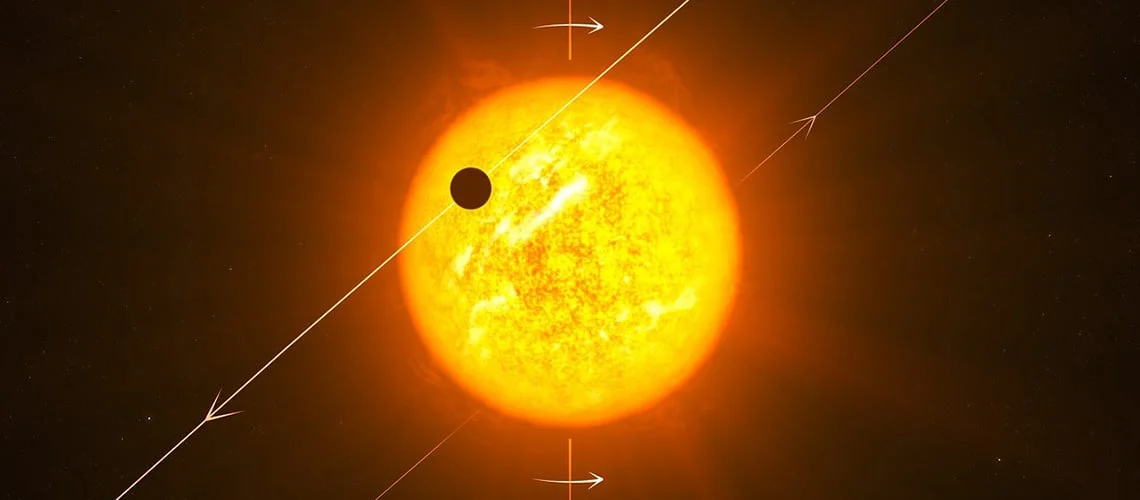
Astronomers have long utilized the architectural stability of our own solar system as a baseline for understanding the cosmos. In our local neighborhood, the eight major planets maintain a remarkably orderly configuration, orbiting the Sun in a nearly flat plane with inclinations rarely exceeding seven degrees relative to the solar equator. Furthermore, every planet in our system revolves in the same direction as the Sun’s own rotation, a consequence of the conservation of angular momentum from the primordial cloud of gas and dust that birthed our star. However, a groundbreaking discovery by an international team of researchers, led by Yann Carteret of the University of Geneva (UNIGE), has introduced a profound anomaly into this established framework. For the first time, scientists have confirmed the existence of an exoplanet orbiting a red dwarf star in a "retrograde" motion—traveling in the opposite direction of its parent star’s rotation.
The planet, designated GJ 3090 b, was detailed in a recent study published in the journal Astronomy & Astrophysics. Located approximately 73 light-years from Earth in the southern constellation of Phoenix, the system centers on a cool, dim M-dwarf star. The discovery of GJ 3090 b’s "rebellious" orbit is more than a celestial curiosity; it represents a technical milestone in exoplanetary science and poses a significant challenge to classical theories regarding how planetary systems evolve.
The Physical Profile of GJ 3090 b
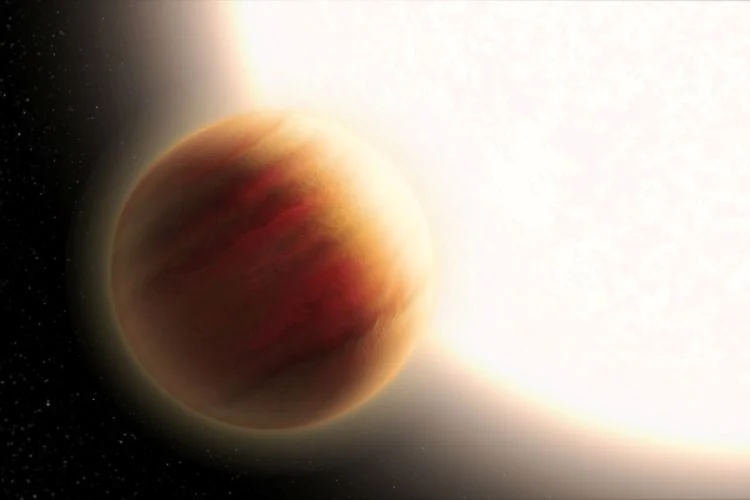
GJ 3090 b belongs to a class of planets known as "sub-Neptunes." These worlds are larger than Earth but smaller than Neptune, a category of planet that is notably absent from our own solar system but appears to be incredibly common throughout the Milky Way. Specifically, GJ 3090 b possesses a radius roughly 2.2 times that of Earth and a mass approximately 4.5 times greater than our home planet.
The planet is locked in a tight embrace with its parent star, completing a full revolution every 2.9 days. This proximity results in high surface temperatures, though the star itself is a red dwarf, which is significantly smaller and cooler than our Sun. Red dwarfs, or M-dwarfs, are the most numerous stars in the galaxy, and understanding the planets that orbit them is a primary goal for modern astrobiology and astrophysics.
The research team utilized the 3.6-meter telescope at the European Southern Observatory (ESO) in La Silla, Chile. Specifically, they employed the Near-Infrared Planet Searcher (NIRPS) and the High Accuracy Radial velocity Planet Searcher (HARPS) to gather the high-precision data required to map the planet’s unusual trajectory.
The Science of the Rossiter-McLaughlin Effect
To determine the direction of the planet’s orbit, the researchers relied on a phenomenon known as the Rossiter-McLaughlin (RM) effect. This effect occurs during a planetary transit—the period when a planet passes directly between its star and the observing telescope.
Stars are not static points of light; they rotate on an axis. As a star spins, one hemisphere moves toward the observer, while the other moves away. Due to the Doppler effect, the light from the side moving toward the observer is shifted toward the blue end of the spectrum (blueshifted), and the light from the side moving away is shifted toward the red end (redshifted).
In an aligned system like ours, a transiting planet first obscures the blueshifted side of the star, causing a temporary "reddening" of the total starlight. As the planet continues its transit, it moves to the redshifted side, causing a temporary "blueing" of the starlight. However, when Carteret and his team observed GJ 3090 b across five separate transits, they found the sequence was reversed. The planet first blocked the redshifted light and then the blueshifted light. This provided incontrovertible evidence that the planet was moving in the opposite direction of the star’s rotation.
Quantitative analysis of this data revealed an orbital obliquity of approximately 136 degrees. In celestial mechanics, any orbital tilt greater than 90 degrees is classified as retrograde. For comparison, the most "tilted" major planet in our solar system, Uranus, has an axial tilt of 98 degrees, but its orbital path remains aligned with the solar plane. GJ 3090 b’s 136-degree tilt places it in a rare category of "upside-down" worlds.
Investigating the Origins of Orbital Misalignment
The discovery of retrograde planets is not entirely new; several "Hot Jupiters"—massive gas giants orbiting very close to their stars—have been found with similarly extreme tilts. However, the mechanisms that cause these misalignments in massive planets are generally well-understood. They typically involve "gravitational drama," such as the Lidov-Kozai mechanism, where the gravitational influence of a distant, massive companion (either another planet or a second star in a binary system) gradually pumps up the eccentricity and inclination of the inner planet’s orbit.
The mystery of GJ 3090 b lies in the fact that it appears to lack the necessary "culprits" for such gravitational interference. While the researchers detected evidence of a second planet in the system, it is not nearly massive enough to have forced GJ 3090 b into such a radical retrograde state. Furthermore, there is no evidence of a stellar companion that could have exerted the necessary tidal forces.
This absence of traditional causes has forced researchers to look toward more exotic explanations. One leading hypothesis proposed by the study’s authors is the "primordial disk flip."
The Primordial Disk Flip and Peter Pan Disks
Standard planet formation theory, often referred to as the Core Accretion Model, suggests that planets form from a protoplanetary disk of gas and dust that rotates in the same direction as the central star. If this disk remains undisturbed, the resulting planets should remain aligned with the star’s equator.
However, the team suggests that in the case of GJ 3090 b, the original disk may have dissipated, only to be replaced by a second "stream" of material from the surrounding interstellar medium. If this new gas and dust fell toward the star at a steep angle, it could have formed a second protoplanetary disk with an angular momentum vector entirely different from the star’s original rotation. This would result in planets forming on a "backwards" or highly inclined path from the very beginning.
This theory is supported by the observation of "Peter Pan disks" in other stellar systems. These are long-lived protoplanetary disks that persist for tens of millions of years—far longer than the typical 5 to 10 million years predicted by current models. These "disks that never grow up" are thought to be fed by external gas reservoirs, providing a plausible mechanism for the formation of retrograde planets in systems without massive gravitational perturbers.
Implications for Exoplanetary Science and Future Research
The discovery of GJ 3090 b is a significant breakthrough for several reasons. First, it is the smallest exoplanet to have its orbital obliquity mapped around a red dwarf star. Previous measurements of the Rossiter-McLaughlin effect were largely restricted to larger, Jupiter-sized planets because the signal produced by smaller planets is incredibly faint and difficult to isolate from stellar noise.
The success of the UNIGE team demonstrates the increasing sensitivity of next-generation instruments like NIRPS. By observing in the near-infrared, NIRPS is uniquely suited to studying M-dwarfs, which emit the bulk of their energy at longer wavelengths. This capability opens the door to surveying a vast population of sub-Neptunes and Earth-sized planets orbiting the galaxy’s most common stars.
Furthermore, the "primordial disk flip" hypothesis suggests that planetary system architectures may be far more diverse and chaotic than previously imagined. If retrograde orbits can form primordially rather than through later gravitational scattering, it implies that the "orderly" nature of our solar system might be an outlier rather than the rule.
The team at the University of Geneva plans to continue their observations of the GJ 3090 system. They are particularly interested in confirming the orbital characteristics of the second suspected planet. If the second planet is also found to be in a retrograde orbit, it would provide overwhelming evidence for the primordial disk flip theory, as it would indicate that the entire system formed from a misaligned reservoir of material.
As astronomers continue to refine their techniques and deploy more powerful telescopes, the "rebellious" nature of GJ 3090 b may eventually be understood not as a freak occurrence, but as a key piece of the puzzle in the grand narrative of how planets are born. For now, GJ 3090 b stands as a stark reminder that the universe is under no obligation to conform to the orderly patterns observed in our own cosmic backyard. The discovery marks a new chapter in the study of M-dwarf systems, promising further revelations about the nature of the "backwards" worlds that populate the deep reaches of space.