Sisilia Frederika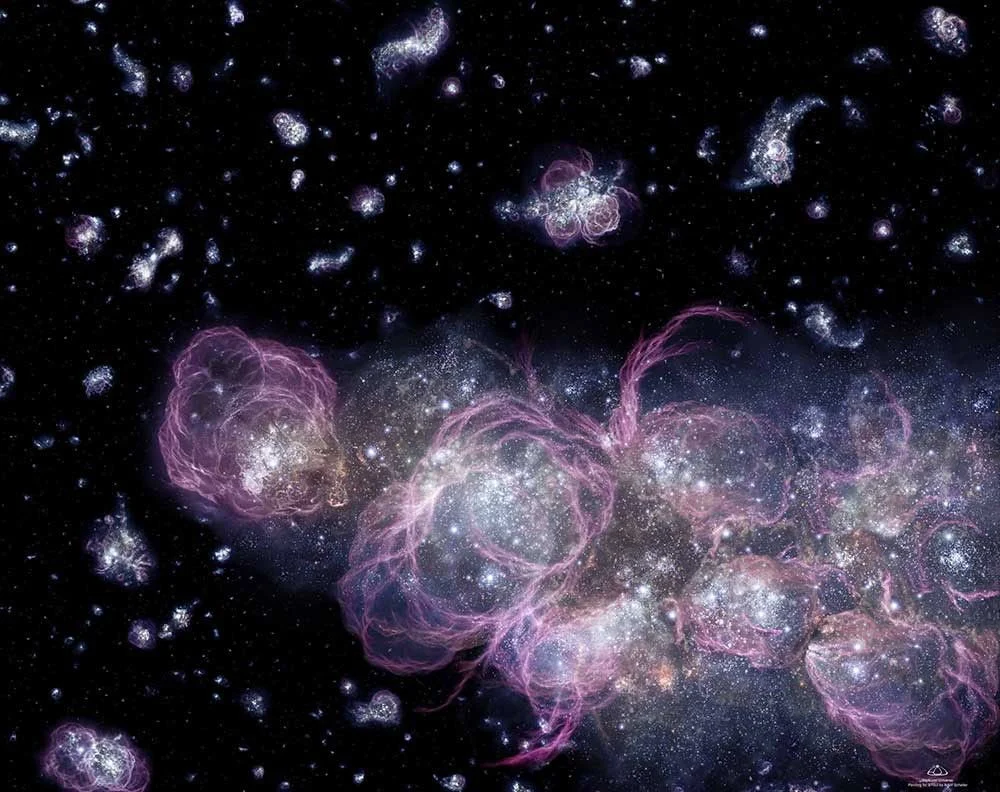
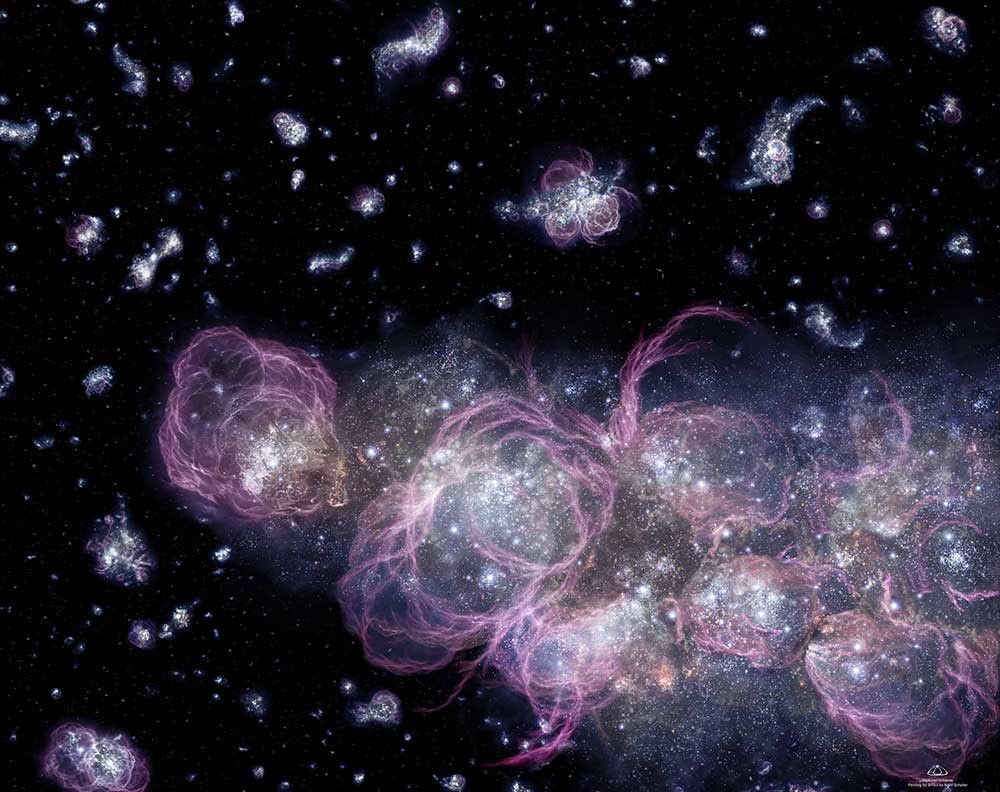
The cosmos as it exists today is a structured, chemically diverse expanse, populated by galaxies that have matured over nearly 14 billion years. However, the infant Universe was a starkly different environment—a "weird" and volatile landscape dominated by massive, short-lived stars that lacked the complex chemical signatures seen in modern stellar populations. To bridge the gap between the modern era and the ancient past, a team of researchers at the University of Utah has embarked on a landmark initiative known as the Treasury of Extremely Metal-Poor O Stars (TEMPOS) survey. By utilizing the unique ultraviolet capabilities of the Hubble Space Telescope, this study provides a critical look at nearby "analog" stars that mimic the conditions of the first stars to ever ignite in the darkness of the early Universe.
The Mystery of the Cosmic Dawn
In the first few hundred million years following the Big Bang, the Universe was composed almost entirely of hydrogen and helium. The first generation of stars, theoretically categorized as "Population III" stars, were massive, luminous monsters that forged the first heavy elements within their cores. Because they lacked "metals"—a term astronomers use for any element heavier than helium—these stars functioned differently than the stars we observe in our own Milky Way today.
The TEMPOS survey, led by Grace Telford, an assistant professor of Physics and Astronomy at the University of Utah, aims to solve the puzzle of how these primitive stars influenced the growth of the first galaxies. While the James Webb Space Telescope (JWST) is currently capturing images of the most distant, ancient galaxies ever seen, these targets are often too far away for scientists to resolve individual stars in high detail. By finding "metal-poor" stars in nearby dwarf galaxies, the TEMPOS team has found a way to study the physics of the early Universe in our own cosmic backyard.
The Role of O-Type Stars and the TEMPOS Methodology
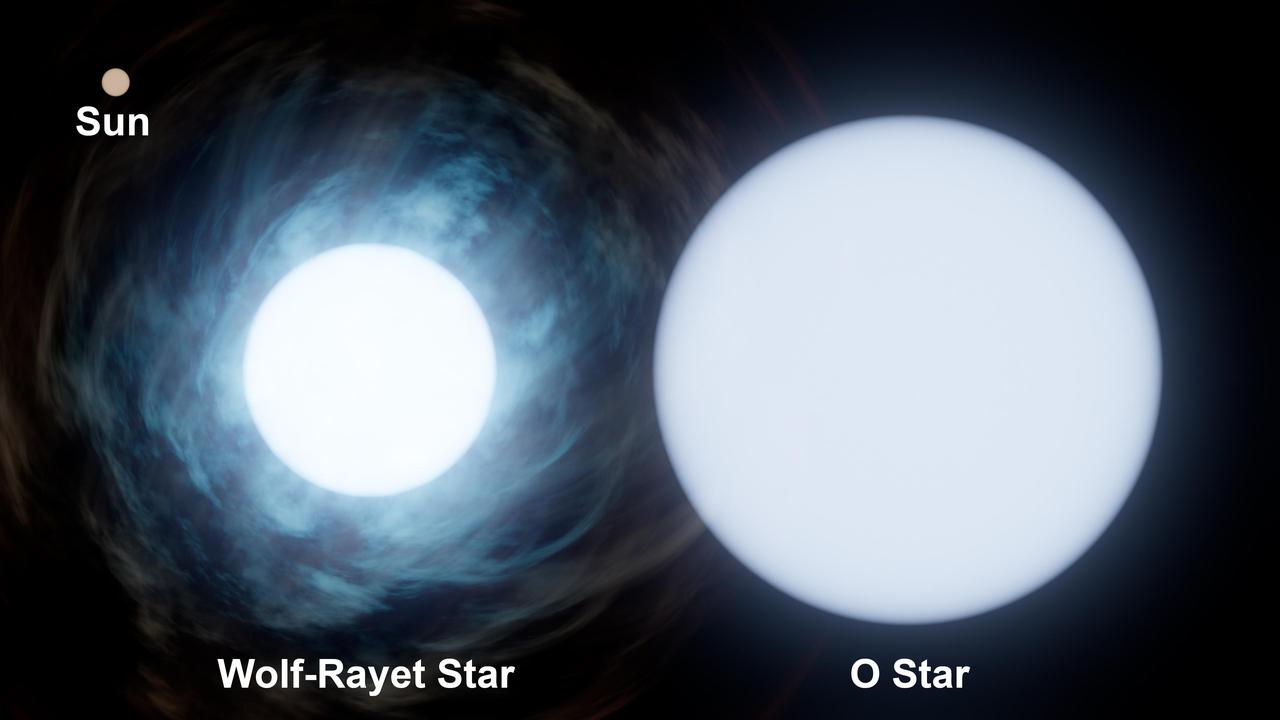
At the heart of this research are O-type stars. These are among the most massive and hottest stars in existence, often exceeding 10 to 100 times the mass of the Sun. Because they burn through their nuclear fuel at an incredible rate, they live for only a few million years—a blink of an eye compared to the Sun’s 10-billion-year lifespan.
The TEMPOS survey focused on 29 of these massive, metal-poor O-type stars located in nearby low-mass dwarf galaxies. These galaxies serve as "time capsules" because they have not undergone the extensive chemical enrichment seen in larger spirals like the Milky Way. To analyze these stars, the team utilized the Hubble Space Telescope’s Cosmic Origins Spectrograph (COS) to capture ultraviolet (UV) light. UV light is the primary output of hot O-stars and contains the "spectral fingerprints" of elements like carbon, nitrogen, oxygen, and iron.
"They burn very hot, bright, and fast, and they end their short lives as supernova explosions that deposit a lot of energy and material into the surrounding gas," explained Telford. "They govern the evolution of their host galaxies by heating and essentially regulating the gas that’s then available to cool and form into new stars."
Chronology of Discovery: From the First Deep Field to TEMPOS
The quest to understand these ancient conditions began in earnest in 1995 with the original Hubble Deep Field. That historic observation revealed that galaxies in the distant past were smaller, more irregular, and fundamentally "stranger" than modern galaxies. This prompted a decades-long investigation into why the early Universe looked so different.
Astronomers eventually realized that the "metallicity" of a galaxy—the concentration of heavy elements—was the deciding factor. The Milky Way is a "metal-rich" environment, having been enriched by billions of years of stellar deaths. In contrast, the first galaxies were "metal-poor." Over the last two decades, telescopes like Hubble have refined our understanding of how stars produce elements through nucleosynthesis, but a gap remained in our observational data regarding how extremely low metallicity affects a star’s physical behavior, specifically its "stellar winds."
The TEMPOS survey represents the latest chapter in this chronology, moving beyond general galaxy observations to the "deep astrophysical study" of individual massive stars that serve as proxies for the first generation of stellar life.
Scientific Analysis: The Physics of Stellar Winds and Mass Loss
One of the most significant findings of the TEMPOS survey involves the relationship between a star’s metal content and its stellar winds. Stellar winds are streams of charged particles ejected from a star’s atmosphere. In massive stars, these winds are driven by radiation pressure; photons from the star’s core hit metal ions in the atmosphere, pushing them outward and carrying mass away into space.
In the metal-rich stars of the Milky Way, these winds are powerful and cause the star to lose a significant portion of its mass before it eventually explodes. However, the TEMPOS data confirms that in metal-poor environments, these winds are significantly weaker.
"Massive stars at low metallicity are particularly important for building accurate models of early galaxies," Telford noted. "And we can’t just study how metal-rich massive stars in the Milky Way behave to interpret those observations."
The implications of weaker winds are profound. If a star loses less mass during its life, it remains more massive until the moment of its death. This results in a more energetic supernova and the potential formation of heavier black holes. Furthermore, because these stars retain more of their heat and radiation, they play a larger role in "re-ionizing" the surrounding galactic gas, a process that was crucial during the first billion years of the Universe’s history.
The Iron Signal and Galaxy Evolution
A particularly intriguing aspect of the TEMPOS research is the detection of iron absorption features in the UV spectra. Iron is a late-stage product of stellar evolution, primarily created in the final moments of a massive star’s life or through the collision of white dwarfs. In the extremely metal-poor stars surveyed by the Utah team, iron is rare, yet its presence (or absence) dictates the strength of the stellar wind.
The TEMPOS team found that massive stars in high-metallicity galaxies have significantly stronger iron signals than those in metal-poor galaxies. However, the data also suggested a range of iron abundances even within low-metallicity regions. This discovery suggests that the early Universe may not have been chemically uniform. If metal-poor stars at early epochs possessed varying amounts of iron, the "feedback" they provided to their host galaxies—via radiation and kinetic energy—would have been equally varied, leading to a diverse range of galaxy evolution paths.
Broader Impact and Integration with JWST
The timing of the TEMPOS survey is critical as it provides a foundational dataset for the James Webb Space Telescope (JWST). While JWST is designed to look back at the "Cosmic Dawn" using infrared light, it requires accurate stellar models to interpret the light coming from those distant, unresolved clusters of stars.
By providing a high-resolution UV library of metal-poor O-stars, the TEMPOS team is giving the global astronomical community the "Rosetta Stone" needed to translate JWST’s observations. Without the ground-truth data provided by Hubble’s UV observations of nearby analogs, scientists might miscalculate the mass, age, and star-formation rates of the first galaxies.
The data from the TEMPOS survey has been made public through the Mikulski Archive for Space Telescopes (MAST) at the Space Telescope Science Institute. This open-access approach ensures that theorists and observers worldwide can use the data to refine their simulations of the early Universe.
Conclusion: Reimagining the Infant Universe
The work of Grace Telford and the TEMPOS team reinforces the idea that to understand the vast distances of the early Universe, we must first understand the fundamental physics of the stars closer to home. The "weirdness" of early galaxies is not a mystery of distance, but a mystery of chemistry.
As we move forward, the TEMPOS catalog will serve as a vital benchmark for astrophysical models. By proving that metal-poor stars lose less mass and burn more intensely than their modern counterparts, the survey has shifted our understanding of how the first galaxies were sculpted. These "monster" stars were not just passive residents of the early cosmos; they were the engines of change, regulating the gas that would eventually form the next generation of stars, planets, and ultimately, the heavy elements required for life itself. Through the lens of the Hubble Space Telescope, the University of Utah researchers have successfully peered into a nearby mirror to see the reflection of our ancient, volatile, and spectacular origins.