Garick Elordi
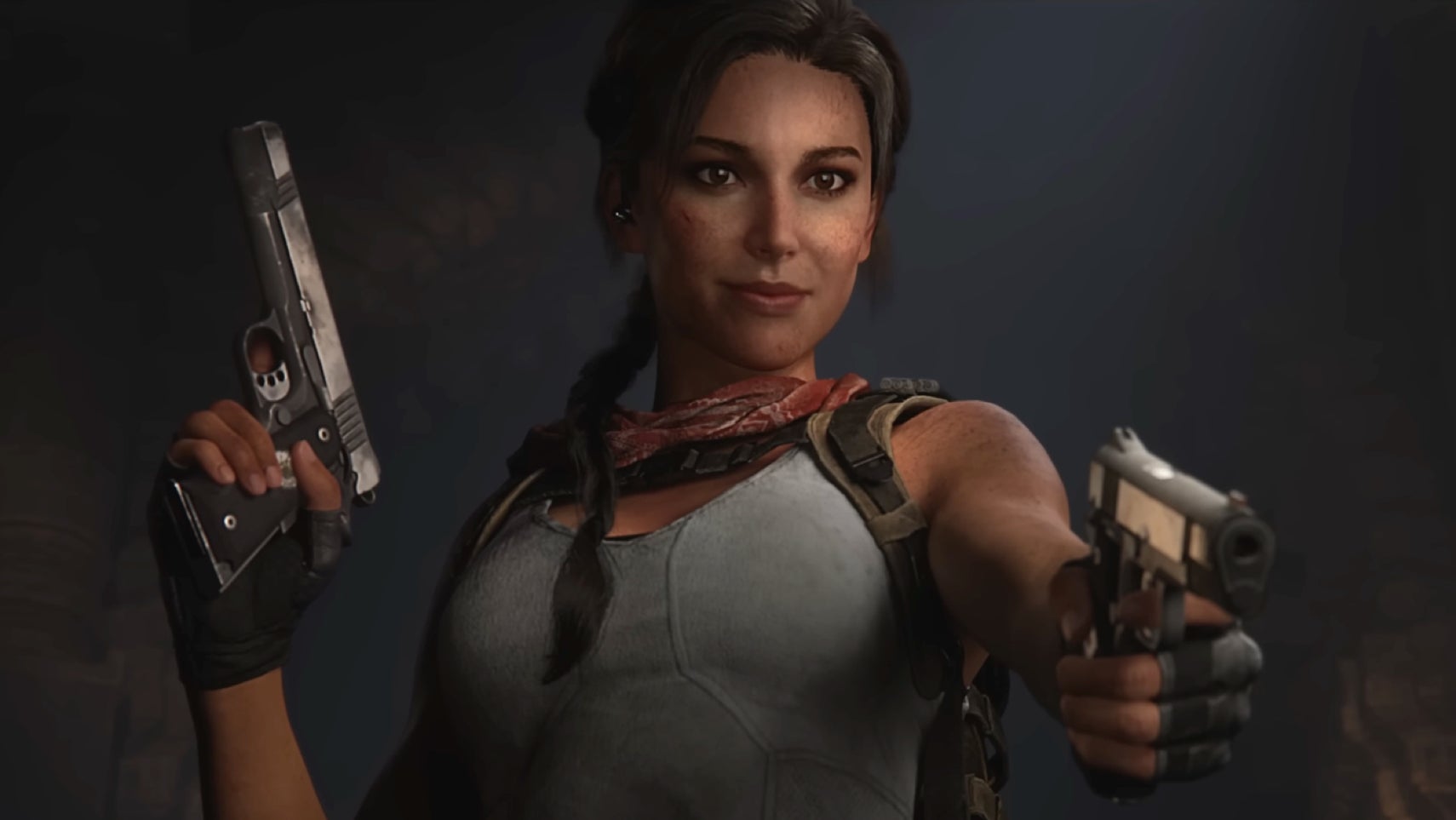
Amazon Games has officially confirmed that the highly anticipated next mainline entry in the long-running Tomb Raider franchise, titled Tomb Raider: Catalyst, has been delayed to a 2028 release window. This announcement marks another significant hurdle for the ambitious revival of the Lara Croft brand, which includes a multi-game publishing deal with Crystal Dynamics and a high-profile live-action television adaptation for Amazon Prime Video. The news of the delay was disclosed by Jeffrey Gattis, Amazon’s Head of Gaming, during an interview with The Game Business. While discussing the company’s broader strategy for its gaming portfolio and the recent relaunch of the Luna streaming platform, Gattis provided an updated timeline for the two currently announced Tomb Raider projects. According to Gattis, the first title, Tomb Raider: Legacy of Atlantis—a ground-up remake of the original 1996 game—is scheduled for release on February 12, 2027, with Tomb Raider: Catalyst following a year later in 2028.
The delay of Tomb Raider: Catalyst represents a substantial shift from previous expectations. Initial industry projections and internal goals had suggested a 2026 or 2027 release for the new adventure, which is set to take Lara Croft to India for a fresh archaeological mystery. This latest setback follows a pattern of rescheduling that has plagued the franchise since Amazon Games and Crystal Dynamics announced their partnership in December 2022. As the gaming industry grapples with ballooning development cycles and corporate restructuring, the road back to prominence for one of gaming’s most iconic protagonists has proven to be more arduous than initially anticipated.
A Chronology of the Amazon and Crystal Dynamics Partnership
The current era of Tomb Raider began in May 2022, when the Swedish conglomerate Embracer Group acquired Crystal Dynamics, Eidos-Montréal, and Square Enix Montréal, along with a catalog of intellectual properties including Tomb Raider and Deus Ex, for approximately $300 million. Following this acquisition, Crystal Dynamics sought a publishing partner to fund and distribute the next generation of Lara Croft’s adventures.
In December 2022, Amazon Games announced it would provide full support and publish the next major multi-platform Tomb Raider title. This agreement was described as the "biggest and most expansive" in the franchise’s history. By late 2023, the scope of this partnership expanded, revealing a dual-track development strategy:
- December 2022: Amazon Games and Crystal Dynamics officially announce their publishing partnership.
- December 2023: Reveal of two distinct projects: Tomb Raider: Legacy of Atlantis (a remake) and Tomb Raider: Catalyst (a new mainline entry).
- June 2024: Legacy of Atlantis, originally slated for a late 2024 or early 2025 release, is delayed to February 2027.
- Late 2024: Jeffrey Gattis confirms Tomb Raider: Catalyst is now targeting a 2028 release window.
The multi-year gaps between these releases suggest that Amazon is prioritizing a long-term franchise "beat" rather than a rapid-fire release schedule, though the delays also reflect the internal pressures and technical challenges facing the development team at Crystal Dynamics.
Technical Ambitions and the Legacy of Atlantis Remake
Tomb Raider: Legacy of Atlantis is intended to be more than a simple remaster. Billed as a "from-the-ground-up reimagining," the title aims to modernize the mechanics and visuals of the original 1996 classic while retaining the atmosphere that defined the series. However, early previews of the game have met with a mixed critical reception. Following a hands-on session, industry analysts and journalists noted that the game felt "strangely double-A," a term used to describe games that lack the polish or scope of high-budget "triple-A" blockbusters.
The delay of Legacy of Atlantis to 2027 is widely viewed as an attempt by Crystal Dynamics to address these concerns. By extending the development cycle by nearly two years, the studio hopes to elevate the production values to meet the expectations of modern audiences. This remake serves as a critical bridge for the franchise; if it fails to capture the interest of both nostalgic fans and newcomers, the momentum for the 2028 release of Catalyst could be severely compromised.
The Role of Artificial Intelligence in Development
One of the most controversial aspects of the current development cycle involves the use of generative artificial intelligence. In mid-2024, it was revealed that Tomb Raider: Legacy of Atlantis was being developed with the assistance of AI tools, leading to the inclusion of an AI disclaimer in the game’s promotional materials and documentation.
Jeff Adams, the Director of Experience at Crystal Dynamics, defended the move by stating that AI helped the development team "get to the right answers faster," particularly concerning asset creation and iterative design. However, the use of AI in creative industries remains a flashpoint for debate, especially regarding job security for artists and the unique "soul" of hand-crafted game worlds. When pressed for further details on the extent of AI integration during press events, Amazon’s public relations representatives reportedly intervened to shut down the line of questioning, citing the proprietary nature of their development workflows. This lack of transparency has fueled speculation regarding how much of the "reimagining" is being driven by algorithms versus human designers.

Transmedia Synergies and the Amazon Prime TV Series
Amazon’s strategy for Tomb Raider extends beyond interactive entertainment. The company is pursuing a "transmedia" approach, intending to link the games, a live-action television series, and potentially a feature film into a unified Lara Croft universe. The TV adaptation, spearheaded by Fleabag creator Phoebe Waller-Bridge, is a cornerstone of this strategy.
The production of the series has faced its own set of challenges. Recently, it was confirmed that Sophie Turner (Game of Thrones) had been cast as Lara Croft. However, filming was temporarily halted earlier this year after Turner suffered a back injury on set. While Amazon has confirmed that shooting has since resumed at Croft Manor locations in the United Kingdom, the production delay mirrors the setbacks seen in the gaming division. The goal of releasing the TV series in close proximity to a game launch to maximize cross-promotional "hype" is now complicated by the 2027 and 2028 release dates for the titles.
Corporate Restructuring and Human Impact at Crystal Dynamics
The delays must also be viewed through the lens of the broader economic climate within the gaming industry. Crystal Dynamics has not been immune to the wave of layoffs that has swept through the sector over the past 18 months. Since its acquisition by Embracer Group, the studio has undergone at least four rounds of staff reductions.
In June 2024, the studio confirmed that another 20 employees were let go, following larger cuts in late 2023. These layoffs have impacted various departments, from community management to core engineering. While Crystal Dynamics leadership maintains that the development of both Legacy of Atlantis and Catalyst remains a top priority, the loss of institutional knowledge and the impact on team morale cannot be overlooked. Observers suggest that the 2028 delay for Catalyst may be a direct result of a reduced workforce attempting to manage two massive projects simultaneously.
Market Analysis: The Competitive Landscape of 2028
By the time Tomb Raider: Catalyst arrives in 2028, the gaming landscape will look vastly different. We will likely be in the twilight years of the PlayStation 5 and Xbox Series X/S console generation, or perhaps at the dawn of the next. Lara Croft will face stiff competition from other established action-adventure franchises.

The "Uncharted" series, which was heavily inspired by Tomb Raider, remains a benchmark for the genre, and rumors of a franchise revival at Sony frequently circulate. Additionally, MachineGames’ "Indiana Jones and the Great Circle" will have established its own footprint in the market. To succeed in 2028, Tomb Raider: Catalyst will need to offer more than just nostalgia; it must redefine what modern archaeological exploration looks like in a gaming context.
Official Stance and Future Outlook
Despite the delays, Amazon Games remains publicly committed to the franchise. Jeffrey Gattis emphasized that the company views Tomb Raider as a "pillar" of its gaming strategy. The decision to push Catalyst to 2028 is framed as a commitment to quality rather than a sign of internal failure.
"We want to ensure that when Lara Croft returns, she does so in a way that honors her legacy while pushing the boundaries of what is possible on modern hardware," a spokesperson for Amazon Games stated in a follow-up inquiry. "The additional time allows our partners at Crystal Dynamics to fully realize their vision for Catalyst without compromising on the scope or the technical fidelity the fans deserve."
For fans of the series, the wait until 2027 for a remake and 2028 for a new adventure is a test of patience. However, in an industry where "crunch" culture and rushed releases have often led to critical and commercial disasters, a deliberate, albeit slow, approach may ultimately be the best path forward for the world’s most famous tomb raider. As the 30th anniversary of the original game approaches in 2026, the franchise stands at a crossroads, balancing its legendary past with an increasingly distant, yet ambitious, future.