Garick Elordi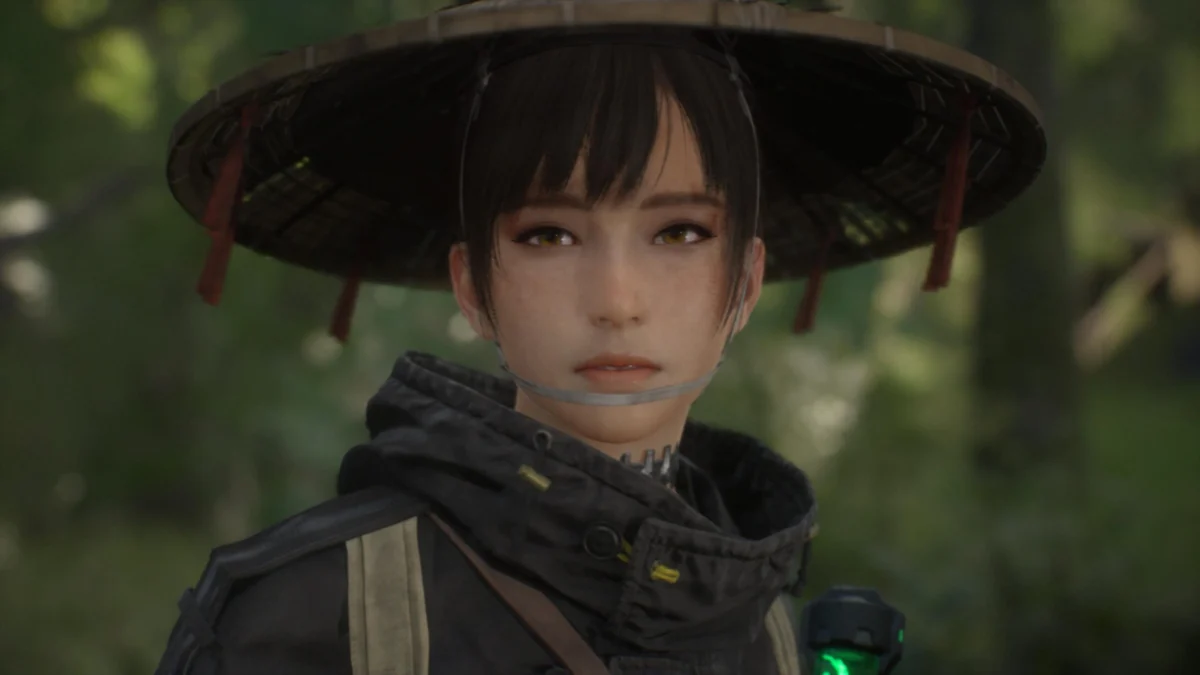
Narrative Framework and World-Building
The setting of Beast of Reincarnation is a meticulously crafted vision of a post-apocalyptic Japan, situated two millennia into the future. By the year 4026, the narrative posits that humanity has undergone a fundamental biological and psychological shift, opting to cast off emotional burdens and, in many instances, physical forms. These "souls" are housed within mechanical vessels known as golems. This transhumanist backdrop is complicated by the emergence of a "blight," a plague-like phenomenon that induces violent frenzies in golems and mutates local fauna into "Malefacts"—hostile floral-biological hybrids.
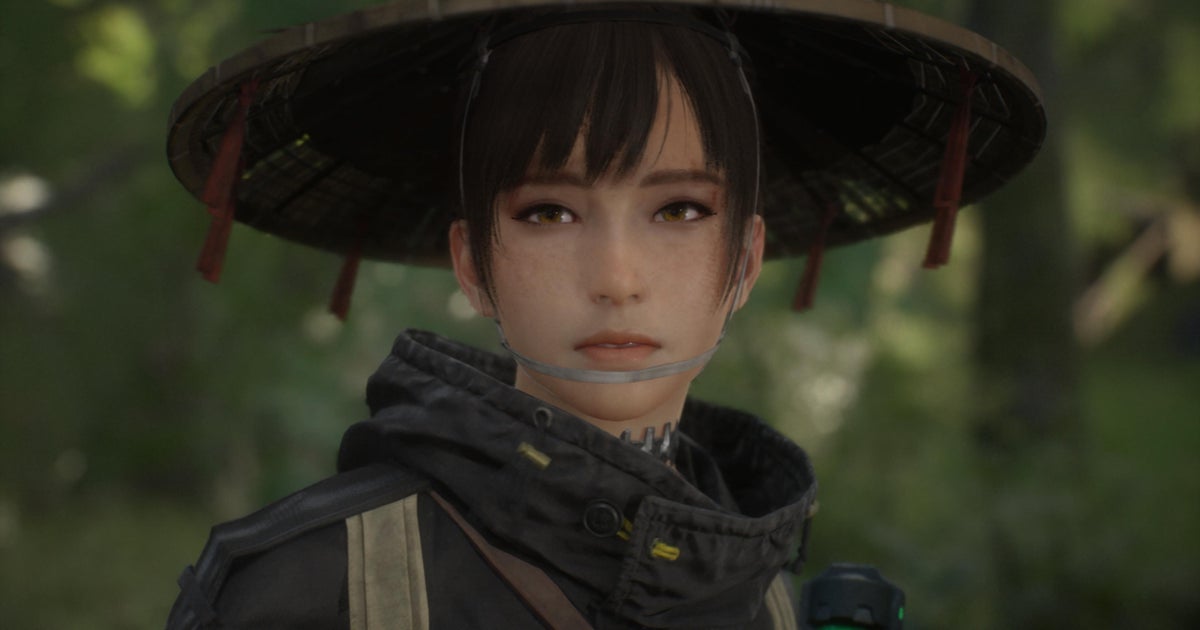
Players assume the role of Emma, a hunter characterized as possessing neither heart nor soul, who is tasked with navigating this verdant ruin. The central plot revolves around the re-emergence of the titular Beast of Reincarnation after a century-long dormancy and the search for "Shambhala," a mythical sanctuary. The narrative delivery is noted for its erratic pacing, often alternating between dense lore-heavy flashbacks and sudden action sequences, requiring players to engage deeply with in-game documentation to parse the complex history of the "Nushi"—majestic, nature-infused behemoths that serve as the game’s primary antagonists.
Mechanical Synthesis and Gameplay Systems
Beast of Reincarnation is built upon three primary pillars: high-speed traversal, precision combat, and regional exploration. The game’s traversal system is arguably its most innovative feature, utilizing "magic hair" abilities that grant Emma significant vertical and horizontal mobility.
- Hair-Based Traversal: Players can generate columns of blighted strands to propel themselves upward, conjure vine-like bridges to cross chasms, and utilize a ponytail-based grapple system to latch onto environmental anchor points. This system emphasizes fluidity and momentum, encouraging players to navigate the verticality of the game’s semi-open regions.
- The Entanglement Combat System: The combat is heavily influenced by the parry-centric mechanics seen in titles like Sekiro: Shadows Die Twice. Central to this is the "Entanglement meter." Rather than traditional blocking, players are incentivized to time parries to build this meter. Once filled, it triggers a slow-motion state, providing a tactical window for high-damage output.
- Bloom Arts and Resource Management: Successful parries also generate "bloom," a currency required to execute "Bloom Arts"—unlockable combat combos—and to issue commands to Koo, Emma’s giant canine companion. Koo functions as a tactical support unit, capable of performing vine-based crowd control or direct offensive strikes.
Despite these robust systems, the game has been criticized for its "convoluted interplay." The introduction of mechanics is rapid, often lacking sufficient tutorials, which forces a reliance on manual reading and trial-and-error during the opening hours.
Structural Design and the Nushi Cycle
The game’s progression follows a rhythmic, regional structure. As Emma travels across the ruins of Japan—from subterranean rural settlements to flooded urban centers and mountain temples—the objective remains consistent: locate and neutralize the regional Nushi.
The encounter with a Nushi is typically divided into two phases. The initial encounter serves as a reconnaissance mission, allowing the player to observe the behemoth’s moveset before the creature retreats. This is followed by a period of "busywork" or environmental puzzles, leading to a final, multi-stage rematch. Defeating these creatures grants Emma new abilities and allows for a return to the "Walker," an AT-AT-like mobile hub.
The Walker serves as the game’s primary management center. Here, players can engage in various activities designed to humanize the experience and provide mechanical buffs:

- Agricultural Management: Planting and harvesting crops for food bonuses.
- Social Bonding: Interacting with the "broken crew" of survivors to enhance narrative depth.
- Equipment Maintenance: Enhancing weapons with elemental upgrades and equipping "gem boons" for passive stat increases.
- Companion Interaction: Interacting with Koo to strengthen the combat bond.
Technical Analysis and Performance Challenges
While the artistic vision of Beast of Reincarnation is praised for its "picturesque apocalypses," the technical execution on the PlayStation 5 platform has faced scrutiny. Several "accumulative niggles" have been identified that impact the consistency of the gameplay experience.
Camera and Target Acquisition: The single-point lock-on system frequently struggles with the scale of the Nushi bosses. In group encounters, the camera has a documented tendency to switch targets involuntarily, often leading to off-screen attacks that the player cannot realistically anticipate.
Visual Clarity: The game’s reliance on "excessively flashy particle effects" can obscure enemy "wind-up" animations. In a combat system where death can occur in two to three hits, the lack of visual telegraphing creates a high level of frustration, particularly during encounters with smaller, faster Malefacts.
Input Latency and Registration: Reports indicate that critical actions, such as the consumption of health potions or the activation of the slow-motion ability, occasionally fail to register. This inconsistency in input response undermines the precision required for a parry-heavy combat system.

Environmental Integrity: The world geometry is prone to "clipping" issues. Players have reported getting caught on environmental assets or encountering invisible walls. Furthermore, there are instances of "polygons melting" and textures losing resolution, which detracts from the immersion of the otherwise beautiful environments.
Industry Context and Comparative Analysis
Game Freak’s move into this space is a bold strategic shift. Historically known for the Pokémon franchise, the developer is here competing with established giants of the action-RPG genre. The influence of Sony’s Horizon series is evident in the aesthetic of the "verdant post-apocalypse," while the scale of the Nushi battles draws direct comparisons to Shadow of the Colossus and Monster Hunter.
However, where those titles often feature densely packed worlds, Beast of Reincarnation’s regions have been described as "desolately empty." The Soulslike "runback"—the trek from a respawn point to a boss—is present here, but without the intricate level design or meaningful side-content typically found in FromSoftware titles. This leads to a perception of "time-wasting," as the rewards found away from the main path are often deemed inessential for progression.
Chronology of Development and Release
The development of Beast of Reincarnation marks a pivotal moment in Game Freak’s timeline. While the studio has occasionally released smaller, non-Pokémon titles (such as Little Town Hero or Giga Wrecker), this project represents their most ambitious attempt at a "AAA" scale action game.

- Pre-Production: Initial concepts for a post-apocalyptic, high-action title began as a way for the studio to flex its technical muscles outside of the constraints of its primary franchise.
- Announcement: The "Release Date Announce Trailer" showcased the game’s unique blend of sci-fi and nature, immediately drawing attention for its departure from the studio’s traditional art style.
- Launch: Upon release, the game was met with a polarized reception, praised for its "soul" and "exhilarating combat" but criticized for its lack of polish and technical stability.
Broader Implications and Conclusion
The significance of Beast of Reincarnation lies in its "unexpectedly tender" core. Despite the messy systems and technical flaws, the narrative themes of self-discovery, community, and belonging resonate with players. It suggests that Game Freak is capable of crafting mature, emotionally resonant stories that go beyond simple "collect-them-all" mechanics.
For the industry, this title serves as a case study in the challenges of genre-blending. While borrowing "liberally from the genre’s biggest hits" can provide a strong foundation, the successful integration of those ideas requires a level of technical refinement that Beast of Reincarnation currently lacks. The game’s future will likely depend on post-launch support and patches to address the input registration and camera issues that currently hinder the experience.
In conclusion, Beast of Reincarnation is a title of high ambition and inconsistent execution. It offers a "sweet spirit" and an "earnest heart" wrapped in a mechanically dense, often frustrating package. For players willing to overlook the technical shortcomings, it provides a unique vision of a future Japan—one that is as beautiful as it is broken. As Game Freak continues to evolve, this project will undoubtedly stand as a landmark, albeit a flawed one, in their pursuit of a more diverse developmental portfolio.