Sisilia Frederika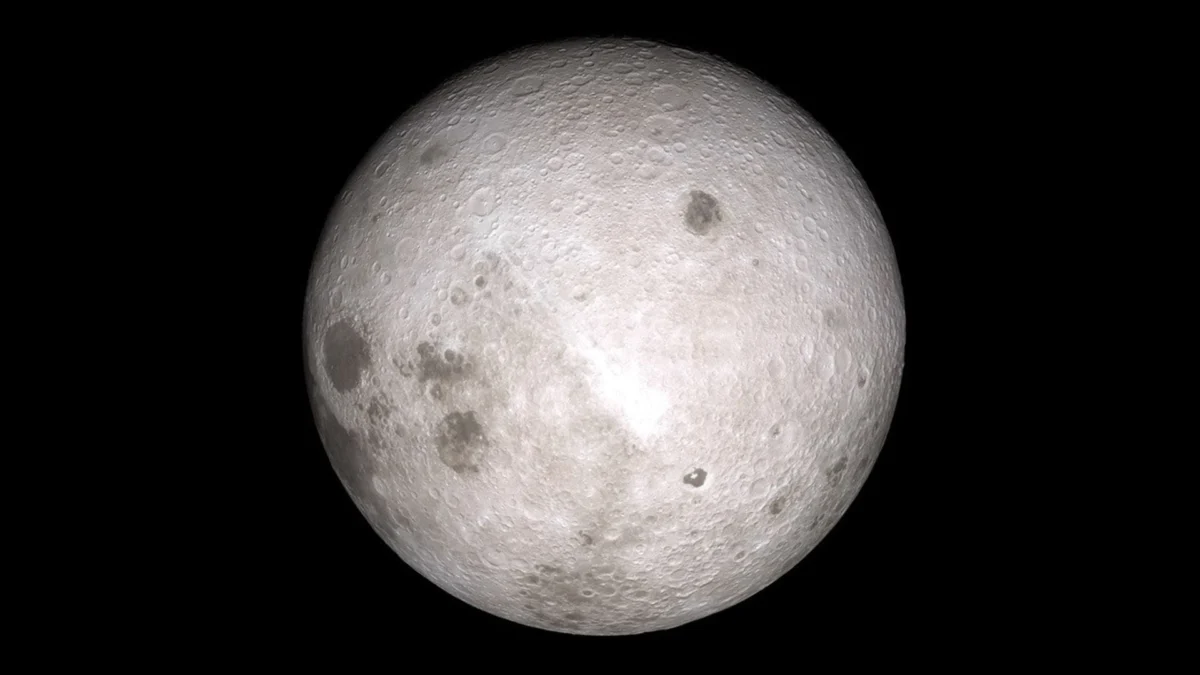
The successful return of lunar regolith and rock fragments by China’s Chang’e-6 mission has provided the international scientific community with an unprecedented window into the deep history of the Moon’s far side. For the first time in human history, researchers have access to geological material from the South Pole-Aitken (SPA) Basin, a region that has long remained a mystery due to its location and unique geological composition. Recent analyses of these samples, published in the journal Science Advances, are fundamentally challenging established theories regarding the timing and intensity of asteroid impacts in the early Solar System. By utilizing advanced geochronological techniques, a multi-institutional research team has discovered that the period of intense cosmic bombardment, once thought to be a brief and cataclysmic spike, was likely a much more protracted and gradual decline in impact activity. This discovery not only rewrites the lunar record but also provides critical insights into the environmental conditions of the early Earth during the era when life may have first begun to emerge.
The Significance of the Chang’e-6 Mission and the Far Side Samples
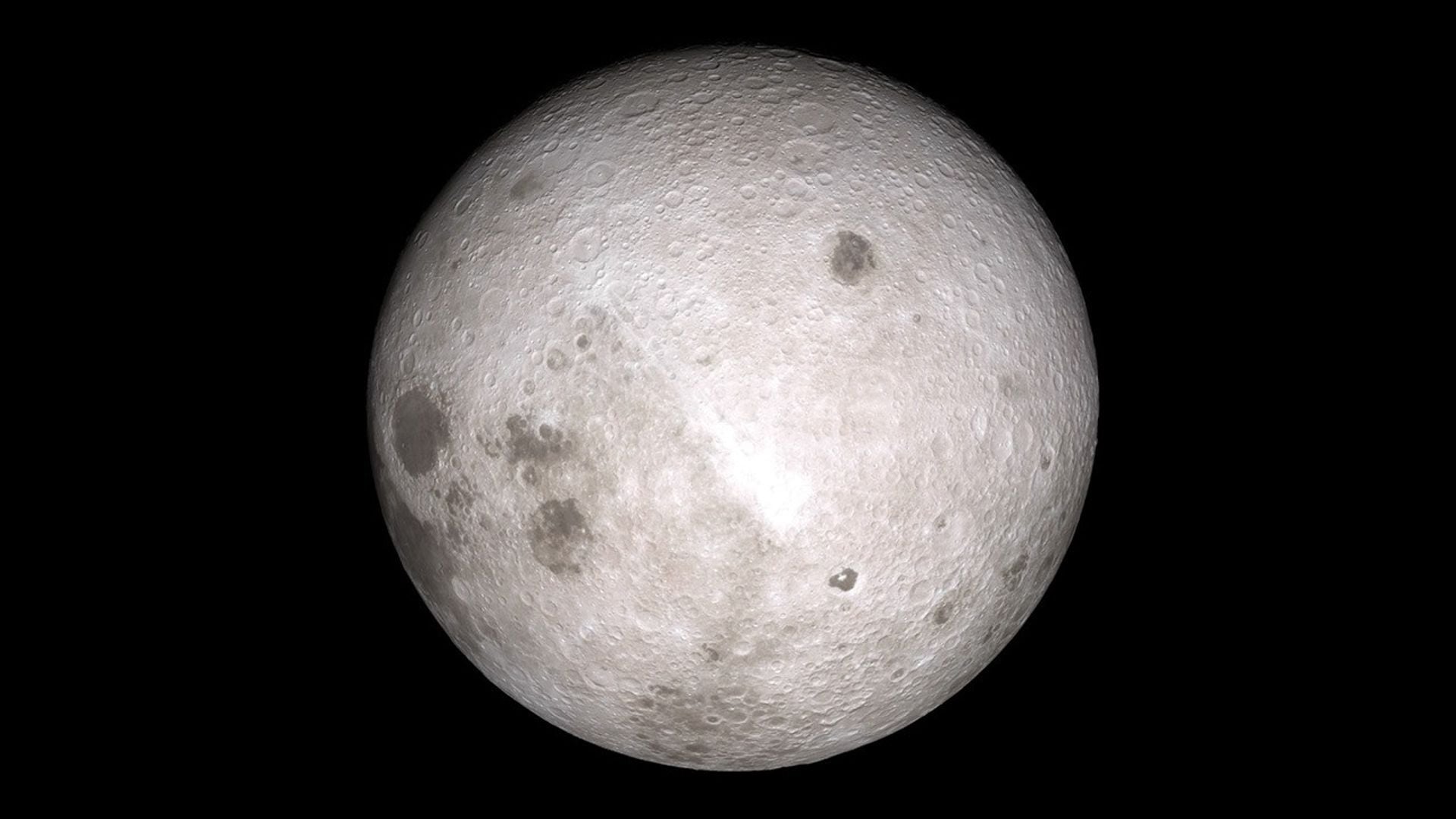
The Chang’e-6 mission, launched by the China National Space Administration (CNSA) in May 2024, marked a milestone in space exploration by becoming the first mission to collect and return samples from the lunar far side. While the Apollo and Soviet Luna missions of the 20th century provided a wealth of data from the near side, the far side has remained largely unexplored in terms of physical sample analysis. The geological asymmetry between the two hemispheres—specifically the difference in crustal thickness, volcanic activity, and the distribution of radioactive elements—has been a subject of intense debate for decades.
The samples were collected from the SPA Basin, the oldest, deepest, and largest confirmed impact structure on the Moon. Because the SPA Basin was formed by a massive impact early in the Moon’s history, it serves as a geological "window" into the lunar interior and the earliest epochs of the Solar System. The analysis of these rocks allows scientists to compare the evolutionary trajectories of the two lunar hemispheres. While the near side was heavily influenced by later volcanic activity that filled large impact basins with basaltic lava (mare), the far side preserves a cleaner, more ancient record of the bombardment that shaped the terrestrial planets.
Challenging the Late Heavy Bombardment Theory
For nearly half a century, the prevailing model for the early Solar System included a phenomenon known as the Late Heavy Bombardment (LHB). According to this theory, roughly 4.1 to 3.8 billion years ago, the Earth and Moon experienced a sudden and violent surge in asteroid and comet impacts. This "lunar cataclysm" was hypothesized to have been triggered by the orbital migration of the giant planets—Jupiter, Saturn, Uranus, and Neptune—which destabilized belts of smaller rocky and icy bodies, sending them hurtling into the inner Solar System.
The LHB theory was largely based on the dating of samples returned by the Apollo missions, which showed a clustering of impact ages around the 3.9 billion-year mark. However, some scientists argued that this clustering was a sampling bias, as the Apollo landing sites were all relatively close to each other on the near side and may have been dominated by debris from a single large event, such as the formation of the Imbrium Basin.
The new data from the Chang’e-6 samples provides a different narrative. By analyzing rock fragments from the far side, the research team, led by the State Key Laboratory of Deep Earth Processes and Resources and the Guangzhou Institute of Geochemistry, found evidence of impact events spanning a much broader timeline, from approximately 4.33 billion to 1.13 billion years ago. This range suggests that rather than a short-lived spike in activity followed by a sudden drop, the frequency of impacts declined gradually over billions of years. This finding aligns with more recent dynamical models of the Solar System that suggest a more steady clearing of debris following the initial formation of the planets.
Methodology: The Precision of Single-Clast Dating
To reconstruct this three-billion-year history, the research team employed a sophisticated geochronological technique known as single-clast ⁴⁰Ar/³⁹Ar (argon-argon) dating. This method is particularly effective for lunar samples because it allows scientists to date the exact moment a rock was melted by the heat of an impact.
The process involves several meticulous steps:
- Selection: Scientists isolate tiny "clasts" or fragments of impact melt within the lunar regolith.
- Irradiation: These samples are sent to a nuclear reactor where they are bombarded with neutrons, converting a portion of the potassium-39 in the rock into argon-39.
- Mass Spectrometry: The samples are then heated with a laser in a vacuum, and a noble gas mass spectrometer measures the ratio of argon-40 (the product of natural radioactive decay of potassium-40) to argon-39.
By analyzing the isotopic composition, researchers can determine the age of the melting event with high precision. Dr. Fred Jourdan, a co-author from the John de Laeter Center at Curtin University, emphasized the importance of this technique in isolating distinct impact events that would otherwise be blurred by the Moon’s complex geological history. The team’s ability to identify impact ages as old as 4.33 billion years provides a rare look at the "Pre-Nectarian" period, the earliest era of lunar history that is largely missing from the near-side record.
A Timeline of the Chang’e-6 Lunar Exploration
The discovery is the culmination of years of engineering and scientific planning. The timeline of the Chang’e-6 mission highlights the technical complexity of retrieving these precious samples:
- May 3, 2024: The Chang’e-6 probe launched from the Wenchang Space Launch Site atop a Long March 5 rocket.
- June 2, 2024: The lander successfully touched down in the Apollo Crater, located within the SPA Basin on the lunar far side.
- June 2–4, 2024: The mission performed automated surface sampling and drilling, collecting approximately 1,935 grams of material.
- June 4, 2024: The ascender vehicle launched from the lunar surface, marking the first time a spacecraft had taken off from the far side.
- June 25, 2024: The return capsule landed in Siziwang Banner, Inner Mongolia, delivering the samples to the Chinese Academy of Sciences (CAS).
- Late 2024 – Early 2025: Intensive laboratory analysis revealed the findings regarding the bombardment history and the delivery of volatiles like water to the Earth-Moon system.
Institutional Collaboration and Official Perspectives
The study represents a massive collaborative effort involving several of China’s most prestigious scientific institutions and international partners. Key contributors included the NWU-HKU Joint Center of Earth and Planetary Sciences, the Beijing Research Institute of Uranium Geology, and the John de Laeter Center at Curtin University in Australia.
Dr. Fred Jourdan noted that the Moon acts as a "time capsule" for the entire Solar System. "Samples collected from the Moon’s far side are particularly significant because they allow us to compare two very different parts of the Moon for the first time," Jourdan stated. He explained that the far side preserves a "cleaner record" because it was less affected by the massive basaltic floods that covered much of the near side, which often buried or melted the evidence of earlier impacts.
The Chinese Academy of Sciences has highlighted that these findings reinforce earlier radiometric analyses conducted by other teams, such as the Institute of Geology and Geophysics. Collectively, these studies are building a consensus that the "Late Heavy Bombardment" as traditionally defined may need to be retired or significantly modified in favor of a "long tail" model of asteroid impacts.
Broader Implications for Earth and the Emergence of Life
The implications of this research extend far beyond the lunar surface. Because the Earth and Moon share a common orbital space, they have been subjected to the same flux of asteroids and comets throughout their history. However, Earth’s active geology—plate tectonics, volcanism, and atmospheric erosion—has erased almost all evidence of its first billion years.
By studying the Moon’s impact record, scientists are essentially reading the "missing chapters" of Earth’s biography. A more gradual decline in impacts suggests that the early Earth was not necessarily a hellish landscape of constant fire and destruction for a brief, intense window. Instead, it was subject to a steady, declining rate of impacts that delivered essential ingredients for life.
Recent analysis of the Chang’e-6 samples also suggests that ancient meteorites were responsible for delivering water and other volatile elements to the Earth-Moon system. If the bombardment was gradual, it would mean that the delivery of water and organic molecules occurred over a longer period, potentially providing a more stable environment for the chemical precursors of life to take hold in Earth’s early oceans.
Furthermore, understanding the historical impact rate is vital for planetary defense. By mapping the size and frequency of past impacts, scientists can better calibrate their models for the current population of Near-Earth Objects (NEOs) and the statistical likelihood of future large-scale collisions.
Conclusion: A New Era of Lunar Science
The samples returned by Chang’e-6 have only begun to yield their secrets. As researchers continue to probe the mineralogy and isotopic signatures of these far-side rocks, more breakthroughs are expected regarding the Moon’s internal structure and the cooling history of its ancient magma ocean.
The shift from a "cataclysmic spike" to a "gradual decline" in impact history represents a major paradigm shift in planetary science. It demonstrates that our understanding of the Solar System is constantly evolving as new data becomes available. The Chang’e-6 mission has proven that the lunar far side is not just a mirror of the near side, but a distinct geological province that holds the key to understanding the violent yet creative forces that shaped our corner of the universe. For scientists, the far side is no longer just the "dark" side of the Moon—it is now one of the brightest beacons for exploring the origins of the Earth and the life that inhabits it.